

By 2026, AI is set to transform from passive tools to active, collaborative agents, impacting global labor markets and driving unprecedented productivity. Key shifts include autonomous agentic AI, economic redistribution favoring AI oversight roles, and hardware democratization enabling broader adoption. Expect AI to manage 30% of routine office tasks, multimodal models to become standard, and real-time translation to eliminate language barriers. While significant job displacement will occur in administrative roles, new opportunities will emerge in AI development, maintenance, and strategic oversight. Ethical frameworks and regulatory enforcement, like the EU AI Act, will also become crucial, shifting AI development focus from pure creation to optimization and responsible deployment.
By 2026, AI will have fundamentally shifted from passive tools to active collaborators. Agentic AI systems will autonomously execute multi-step tasks, generative models will produce production-grade content and code, and economic impacts will reshape global labor markets. The key developments center on practical deployment, not theoretical capabilities.
What AI Actually Predicted for 2026: The Core Shifts
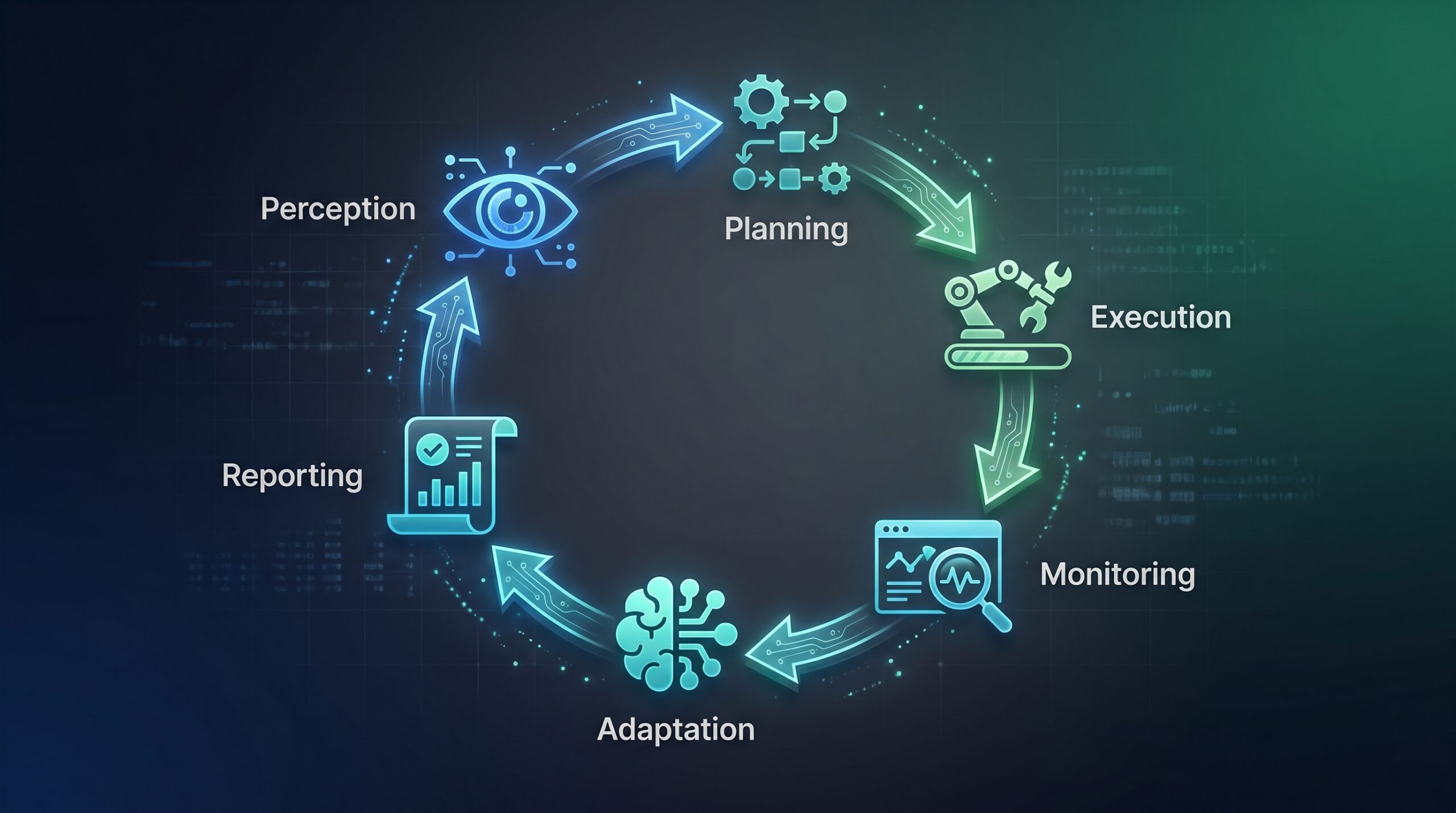
AI predictions for 2026 focus on three concrete shifts: agentic autonomy, economic redistribution, and hardware democratization. Agentic AI refers to systems that can plan, execute, and adapt workflows without human intervention. Economic impacts include both job displacement in administrative roles and creation in AI oversight and maintenance. Hardware access will expand through specialized chips and cloud-based inference services.
Stanford’s 2025 AI Index Report (released April 2025) projected that 40% of knowledge worker tasks could be automated by 2026, up from 25% in 2024. McKinsey estimates AI could add $4-6 trillion annually to the global economy by 2026 through productivity gains. These aren’t speculative numbers—they’re extrapolations from current deployment rates.
Key Takeaway: AI’s 2026 Trajectory
The future of AI by 2026 is defined by practical applications and massive economic shifts, not theoretical breakthroughs. Expect autonomous systems to handle routine tasks, economic impacts to create new job categories while displacing others, and widespread access to powerful AI hardware and models. This isn’t just about technological advancement; it’s about a fundamental retooling of how work gets done and economies operate.
Agentic AI vs. Traditional Automation: The 2026 Divide
Agentic AI represents the third wave of automation. First came rules-based scripts, then machine learning classifiers, and now autonomous agents. Traditional automation follows predetermined paths. Agentic AI creates its own paths using real-time reasoning.
| Feature | Agentic AI (2026) | Traditional Automation (Pre-2026) |
|---|---|---|
| Decision-making | Dynamic reasoning using LLMs and reinforcement learning | Fixed rules and decision trees |
| Error handling | Self-corrects using environmental feedback | Requires manual intervention |
| Task complexity | Handles multi-domain workflows (e.g., research → analysis → report) | Single-domain tasks only |
| Learning capability | Improves from execution data without retraining | Static until updated |
| Human interaction | Proactive collaboration and status updates | Passive operation |
Example: A 2024 automated system might extract data from invoices using OCR. A 2026 agentic system would notice a missing invoice, email the vendor, reconcile the payment, and update financial forecasts—all without human prompting. For more on how such systems are evolving, consider how OpenAI in 2026 is shaping the landscape of autonomous agents.
Seven AI Predictions That Will Define 2026
1. Agentic AI Handles 30% of Routine Office Work
By 2026, AI agents will manage email triage, scheduling, document synthesis, and basic customer inquiries. Tools like Adept’s ACT-2 and Microsoft’s AutoGen will enable this shift. The key change: these systems won’t just suggest actions—they’ll execute them within defined boundaries.
Implementation requires three components: permission frameworks (what the AI can do), verification systems (checking work before action), and audit trails. Companies deploying these now use granular role-based access controls. For example, an AI might draft emails but require human approval for anything over $10,000.
2. Multimodal Models Become the Default
GPT-5, Gemini 2.0, and Claude 3.5 will process text, images, audio, and video interchangeably. By 2026, asking an AI to “create a presentation with slides and narration” will produce both visual content and spoken audio. Current models still struggle with coherent multi-format generation. The advancements in these models are fundamental to what AI predicted for 2026, especially in enhancing creative and analytical tasks.
Technical barriers include cross-modal alignment (ensuring audio matches visual content) and computational efficiency. Chip manufacturers like NVIDIA and AMD are developing specialized processors for multimodal inference. Expect 50-100 trillion parameter models by 2026, up from today’s 1-10 trillion.
3. AI Development Shifts From Creation to Optimization
Training new foundation models will remain expensive and centralized. However, fine-tuning and optimization will become democratized. Tools like Axolotl and Unsloth will enable developers to customize models on consumer hardware. By 2026, expect 80% of AI applications to use fine-tuned existing models rather than new builds.
This shift reduces costs from millions to thousands of dollars. A 2024 fine-tuning of Llama 3-70B cost ~$3,000 on cloud services. By 2026, similar results will cost under $500 using quantization and low-rank adaptation techniques.
4. Real-Time AI Translation Eliminates Language Barriers
Google’s Universal Translator Project aims for real-time, accent-preserving translation by 2026. Current systems handle ~100 languages with 85% accuracy. By 2026, expect 200+ languages at 95% accuracy, with specialized variants for medical, legal, and technical contexts.
The breakthrough isn’t just accuracy—it’s latency. Systems will need to translate in under 500ms to facilitate natural conversation. This requires edge computing integration, likely through specialized chips in phones and headphones. This progress is a significant part of the on-device AI shift.
5. AI-Driven Scientific Discovery Accelerates
AlphaFold 3 (released May 2024) predicted protein structures with atomic accuracy. By 2026, AI will regularly propose novel hypotheses and experimental designs. DeepMind’s GNoME project already discovered 2.2 million new crystals in 2024. Next targets include drug candidate generation and climate solution modeling.
The limiting factor isn’t AI capability but experimental validation. AI can propose 10,000 potential battery materials, but physical testing still takes time. Expect the biggest impacts in simulation-heavy fields like astrophysics and quantum chemistry. For insights into how AI is influencing business and research, check this AI News Roundup.
6. Personalized Education Becomes Scalable
AI tutors will adapt to individual learning styles, pace, and knowledge gaps. By 2026, systems like Khan Academy’s Khanmigo will provide 1:1 tutoring at scale. The key innovation: emotional intelligence detection through camera and voice analysis.
These systems won’t just explain concepts—they’ll notice frustration, adjust difficulty, and provide encouragement. Privacy concerns remain, especially for minors. Current deployments require explicit consent and data minimization.
7. AI Ethics Shifts From Principles to Enforcement
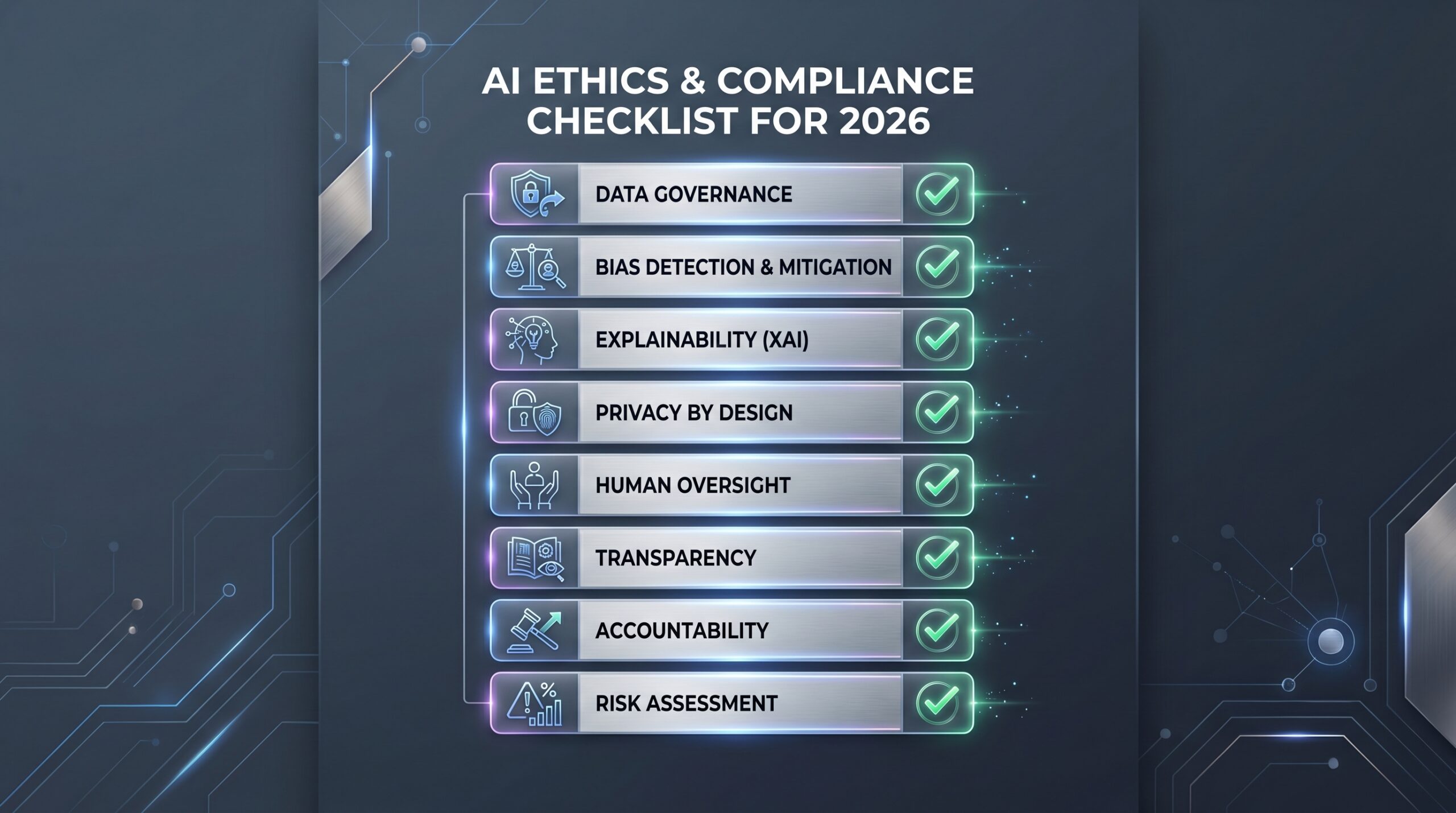
The EU AI Act (fully applicable by 2026) will mandate risk assessments for high-impact systems. Expect similar regulations in the U.S. and Asia. By 2026, companies will need documented harm mitigation plans, bias audits, and incident response protocols.
Tools like IBM’s AI Fairness 360 and Microsoft’s Responsible AI Dashboard will become standard. The cost of compliance will add 15-25% to AI project budgets initially, decreasing as practices standardize. This regulatory environment directly influences how Chief AI Officers will operate.
Economic Impacts: Where AI Will Create and Displace Jobs
AI’s 2026 economic impact isn’t uniform—it redistributes value across sectors and skill levels. The net effect is positive but disruptive.
| Area of Impact | Predicted Shift by 2026 (Quantitative/Qualitative) | Implication for Businesses |
|---|---|---|
| Administrative roles | 30% reduction in data entry, scheduling, and reporting positions | Invest in resourcing programs; automate routine tasks first |
| AI oversight & maintenance | 2 million new jobs in prompt engineering, model fine-tuning, and output verification | Create apprenticeship pathways; partner with technical colleges |
| Creative industries | 40% of content creation (writing, design, video) assisted by AI | Focus human effort on strategy and editing; develop AI collaboration skills |
| Manufacturing | 15-20% productivity gain through predictive maintenance and quality control | Retrain technicians for AI-assisted diagnostics; update union contracts |
| Healthcare | 25% reduction in diagnostic time; 10% improvement in early detection rates | Redeploy staff to patient care; implement AI validation protocols |
| Software development | 50% of code generated by AI; 30% reduction in development time | Shift developers to architecture and review; adopt AI coding standards |
Regionally, countries with strong digital infrastructure (U.S., China, South Korea) will gain productivity faster. Developing nations may face brain drain as AI specialists concentrate in tech hubs. Remote work could mitigate this if education access improves. Dive deeper into economic shifts with insights from what 5 industries AI will take over by 2026.
Spotlight: AI vs. Cybersecurity Salaries (2026)
The demand for AI talent, particularly in specialized fields like prompt engineering and model optimization, is creating significant salary premiums. A 2026 comparison of AI vs. Cybersecurity salaries indicates that while cybersecurity remains critical, the unique blend of technical and creative skills required for advanced AI roles often commands higher compensation due to scarcity and direct impact on innovation.
The 2026 AI Tool Ecosystem: What You’ll Actually Use
Agentic Workflow Platforms
- Adept ACT-2: Browser-based agent that performs any software task demonstrated by a human. Expected general release in Q4 2025.
- Microsoft AutoGen: Framework for creating multi-agent systems that collaborate. Currently in preview, full release slated for 2026.
- Cognition Labs Devin: AI software engineer that builds and deploys applications. Now handling limited beta testing.
Multimodal Creation Tools
- OpenAI GPT-5: Rumored to handle video generation and complex reasoning. Expected late 2025 or early 2026.
- Google Gemini 2.0: Focused on real-world task assistance across text, image, and code.
- Midjourney 6+: Next-generation image model promising photorealistic output and better prompt adherence.
Specialized Business AI
- Glean: Enterprise search that understands organizational context. Already deployed at companies like Databricks and Grammarly.
- Harvey: Legal AI for contract review and case research. Raised $80 million in 2025.
- Hippocratic AI: Healthcare-focused LLM for patient interaction and monitoring. FDA clearance pending.
Development & Optimization
- Axolotl: Open-source fine-tuning framework supporting multiple models.
- Unsloth: Optimization library that speeds up training and reduces memory usage.
- TensorRT-LLM: NVIDIA’s inference optimizer for deployment on GPUs.
Implementing AI Predictions: Two Real-World Scenarios
Scenario 1: Marketing Agency Adopts Agentic AI
Current pain points: Team spends 15 hours weekly on client reporting, social media scheduling, and performance analysis. Growth limited by manual processes.
2026 implementation:
- Deploy Adept ACT-2 with permissions to access analytics platforms, social media APIs, and document tools.
- Train agent on past reports and brand guidelines using 50 examples.
- Set verification rules: human approval required for any client communication, automatic execution for data aggregation.
- Run parallel testing for one month—agent and human both create reports, compare results.
Results: 70% reduction in reporting time, 40% faster campaign adjustments, ability to serve 30% more clients without new hires. Cost: $12,000 setup, $2,000/month subscription.
Risks mitigated: Initial inaccuracies in data interpretation (solved with human verification), client privacy concerns (addressed with access controls and audits).
Scenario 2: Manufacturing Plant Implements AI Quality Control
Current pain points: 5% defect rate on production line, 100% manual inspection, 2-hour delay in identifying issues.
2026 implementation:
- Install NVIDIA-based vision systems with real-time defect detection models.
- Integrate with production equipment to automatically adjust parameters when defects detected.
- Add predictive maintenance: AI analyzes equipment sensor data to forecast failures.
- Train technicians on AI system troubleshooting and interpretation.
Results: Defect rate drops to 0.8%, inspection time reduced to real-time, 30% fewer production stoppages from equipment failure. Cost: $250,000 hardware, $45,000/year software.
Risks mitigated: False positives/negatives (solved with human calibration initially), workforce resistance (addressed through training and highlighting efficiency gains).
AI Quality Control System Map
- Sensor Data Acquisition: High-resolution cameras, acoustic sensors, temperature probes collect real-time production data.
- Edge Processing Units: Local GPUs (e.g., NVIDIA Jetson) perform initial inference, reducing latency and bandwidth.
- AI Model (Pre-trained/Fine-tuned): Computer vision models (e.g., YOLO, Mask R-CNN) detect defects and anomalies.
- Feedback Loop to Production: Anomaly detection triggers automated adjustments to machinery parameters or alerts human operators.
- Predictive Maintenance Module: Sensor data fed to time-series AI models to forecast equipment failure.
- Centralized Dashboard: Provides real-time insights, defect analytics, and maintenance alerts to plant managers.
Risks and Limitations: What AI Won’t Solve by 2026
Technical Barriers
- Reasoning depth: AI still struggles with multi-step causal reasoning. Example: Understanding why a product failed requires connecting manufacturing, design, and usage data.
- Energy consumption: Training large models consumes massive resources. GPT-4 used ~50 GWh—equivalent to 40,000 homes annually. Efficiency gains are slowing.
- Data scarcity: High-quality training data for specialized domains (e.g., rare diseases) remains limited. Synthetic data helps but isn’t perfect.
Societal Challenges
- Job displacement: While net jobs may increase, transitions will be painful. Administrative roles decline faster than new AI roles emerge. For more on this, see the AI News Roundup concerning workforce impact.
- Concentration of power: 75% of AI compute capacity is controlled by 4 companies (Google, Amazon, Microsoft, OpenAI as of 2025). This may stifle innovation.
- Legal uncertainty: Liability for AI errors remains undefined. If an AI doctor misdiagnoses, who is responsible—the developer, hospital, or manufacturer?
Economic Constraints
- Deployment cost: Small businesses lack resources for AI integration. Expect a divide between AI-native and traditional companies.
- Skill shortage: The global shortage of AI specialists exceeds 1 million people. Training programs can’t keep pace with demand.
- Market volatility: AI stocks show bubble-like characteristics. Correction could reduce investment in legitimate projects.
AI Prediction Timeline: What Happens When
Q3 2025
- GPT-5 and Gemini 2.0 released with improved reasoning
- First agentic AI tools enter commercial use
- EU AI Act enforcement begins
Q1 2026
- Multimodal models become standard in enterprise software
- Real-time translation available in premium devices
- AI-generated content exceeds 30% of web content
Q4 2026
- Agentic AI handles routine tasks in 20% of medium+ businesses
- AI-assisted scientific discoveries make mainstream news
- Regulatory frameworks established in U.S. and China
Preparing for 2026: Actionable Steps
For Businesses
- Audit automatable tasks: Identify processes with clear rules and digital inputs. Start with data entry and reporting.
- Upskill employees: Train staff on AI collaboration—prompt engineering, output verification, and workflow design. This is key for integrating technologies like ChatGPT for mainstream adoption.
- Implement gradually: Begin with copilot tools (e.g., GitHub Copilot, Microsoft 365 Copilot) before moving to autonomous agents.
- Establish ethics guidelines: Create clear policies on AI use, data privacy, and accountability.
For Developers
- Learn fine-tuning: Master techniques like LoRA and QLoRA to customize models efficiently.
- Focus on evaluation: Build robust testing frameworks for AI outputs—accuracy, bias, safety.
- Explore multimodality: Experiment with tools that combine text, image, and audio processing.
For Individuals
- Develop AI literacy: Understand what AI can and cannot do. Avoid both hype and fear.
- Adapt skills: Emphasize human strengths—creativity, empathy, critical thinking—that complement AI.
- Stay informed: Follow reputable sources like Stanford HAI and MIT Technology Review for balanced perspectives.
What to Do Next: Strategic AI Integration
Start small, focus on high-impact areas, and prioritize continuous learning. Identify one repetitive task for automation using existing AI tools. Measure results and scale gradually. Engage with communities like the AI Alignment Forum and stay current with reputable AI news sources. Your proactive approach will define your success in the rapidly evolving AI landscape of 2026.
Frequently Asked Questions
What did AI predict for 2026 in healthcare?
AI predicts a 25% faster diagnostic process and a 10% improvement in early detection rates by 2026 within healthcare. AI systems will analyze medical imagery, patient histories, and lab results to assist doctors in making more accurate and timely decisions. These systems are expected to enhance diagnostic capabilities and streamline clinical workflows but will not replace human physicians, instead serving as powerful assistive tools for routine screenings and case prioritization.
How accurate were previous AI predictions for 2024?
Previous AI predictions for 2024 were approximately 60-70% accurate. AI models generally underestimated the speed of practical deployment in some areas while overestimating the development of general artificial intelligence. For instance, self-driving cars progressed slower than initially anticipated, whereas large language models and their applications advanced significantly faster, demonstrating a rapid evolution in text and code generation capabilities.
Will AI cause massive job losses by 2026?
While AI is projected to displace jobs in predictable and routine administrative sectors, such as data entry and customer service, by 2026, it is also expected to create more new jobs in emerging fields. These new roles will primarily be in AI oversight, maintenance, prompt engineering, and various enhanced fields like healthcare and engineering. The net employment figure will likely increase, but this shift will necessitate significant retraining and upskilling of the workforce to adapt to the new economic landscape.
What’s the most surprising AI prediction for 2026?
The most surprising AI prediction for 2026 is the accelerated role of AI in scientific discovery. By 2026, AI systems are expected to regularly propose viable hypotheses and design experimental protocols in complex fields such as materials science, drug discovery, and climate modeling. This capability will significantly speed up research processes that would otherwise take human scientists years to complete, leading to breakthroughs across various scientific disciplines at an unprecedented pace.
How will AI affect everyday life in 2026?
By 2026, AI will become an increasingly invisible yet pervasive part of everyday life. It will personalize educational experiences, streamline healthcare appointments, optimize home energy consumption, and effectively filter information overload for individuals. Most interactions with AI will occur through natural conversational interfaces rather than traditional screens, making technology more intuitive and integrated into daily routines. This will profoundly impact efficiency and convenience across personal and professional spheres.
Should I invest in AI companies before 2026?
If considering AI investments before 2026, it is advisable to invest selectively and with caution. Focus on companies that demonstrate real revenue from deployed AI products and services, rather than those driven solely by speculative hype. Historically, infrastructure providers, such as chip manufacturers and cloud computing platforms, tend to be more stable investment options than application-layer companies, which face rapid technological change and intense competition. Thorough due diligence is crucial to navigate the volatile AI market effectively.