
If you want to know what pays more, AI or cybersecurity, the direct answer is: AI roles, particularly in senior research and specialized engineering, currently command the higher absolute top-end salaries in 2026, often exceeding $300,000 to $500,000+ in major tech hubs. However, cybersecurity offers a more stable and accessible high-income floor, with senior roles consistently reaching $150,000 to $250,000 and a lower barrier to entry for six-figure careers. The real comparison isn’t about which field pays more, but which career path delivers the highest compensation for you based on your location, skills, risk tolerance, and career timeline.
TL;DR Key Points:
- AI’s Peak is Higher: Machine Learning Research Scientists, AI Product Engineers at top firms (OpenAI, Anthropic, Google DeepMind) can see total compensation packages well above $400,000. Salaries are heavily concentrated in tech hubs (SF, NYC, Seattle) and driven by PhD-level research and cutting-edge model development.
- Cybersecurity’s Floor is Broader: Senior Cloud Security Architects, Security Engineering Managers, and Principal Threat Intelligence analysts commonly earn between $160,000 and $250,000. These roles are in demand across every industry (finance, healthcare, retail, government), not just tech.
- Entry-Level is Closer: Junior AI Engineer ($95k-$130k) vs. Junior Security Analyst ($75k-$100k). The AI role often requires a stronger formal math/CS foundation.
- Cybersecurity Bonuses & Perks Can Close the Gap: Roles in financial services or consulting often include significant performance bonuses (15-30%). Clearance-based government contractor roles in cybersecurity can add a 10-20% premium.
- Future-Proofing Differs: AI salaries are tied to a volatile hype and investment cycle. Cybersecurity salaries are tied to a permanent, legislated risk (cyber threats, compliance mandates).
- Your Decision Should Be 60% Fit, 40% Finance: A high salary is miserable if you hate the daily work. Use the detailed tables below to map your aptitude and interests to the real-world roles.
Key Definitions: AI and Cybersecurity Careers in 2026
Understanding the modern scope of these fields is critical for accurate salary comparison.
- Artificial Intelligence (AI) Careers: In 2026, this extends far beyond basic data science. It encompasses Machine Learning Engineering (building and deploying models), AI Research Science (advancing core algorithms, LLMs, multimodal systems), MLOps Engineering (the infrastructure pipeline: Kubernetes, Docker, CI/CD for models), AI Product Management (defining AI feature roadmaps), and Prompt Engineering & LLM Ops (specializing in optimizing and securing large language model applications).
- Cybersecurity Careers: This field has specialized intensely. Key areas include Cloud Security (securing AWS, Azure, GCP environments, using tools like Wiz, Orca, Palo Alto Prisma Cloud), Threat Intelligence & Detection Engineering (using SIEMs like Splunk, data lakes, and writing detection rules), Security Engineering & Architecture (building secure systems from the ground up, implementing Zero Trust), Governance, Risk & Compliance (GRC) (managing frameworks like NIST, ISO 27001, SOC 2), and Offensive Security (penetration testing, red teaming with tools like Burp Suite, Cobalt Strike).
AI vs. Cybersecurity: Average Base Salary Comparison (2026 Projections)
This high-level table shows the salary bands you can expect based on experience category. Figures are USD and represent base salary, not total compensation (which includes bonus, stock, etc.).
| Job Role Category | AI Average Salary Range | Cybersecurity Average Salary Range | Key Differentiating Factor |
|---|---|---|---|
| Entry-Level (0-3 yrs) | $95,000 – $135,000 | $75,000 – $110,000 | AI roles often require a stronger published portfolio (GitHub, Kaggle) or advanced degree. Cybersecurity often values certifications (Security+, CySA+) and hands-on lab experience. |
| Mid-Career (4-7 yrs) | $145,000 – $220,000 | $120,000 – $180,000 | AI compensation sees a major stock/equity component at tech firms. Cybersecurity sees a rise in cash bonuses, especially in finance and consulting. |
| Senior/Expert (8+ yrs) | $200,000 – $350,000+ | $150,000 – $250,000+ | AI "expert" roles at top labs can exceed $500k TC. Cybersecurity "expert" roles with deep niche skills (ICS/SCADA, cloud forensics) or clearance can hit $300k+ in specific markets. |
| Leadership/Management | $250,000 – $500,000+ | $180,000 – $350,000+ | AI VP/Director roles are often tied to product revenue. CISO (Cybersecurity) salaries are heavily influenced by company size and regulatory exposure. |
Source: Synthesis of 2025-2026 data from Levels.fyi, Glassdoor, Dice Salary Report, and specialized recruiting firms (Selby Jennings, LHH). Figures are pre-tax and location-adjusted for major US metros.
Detailed Salary Breakdown by Specific Role & Experience (2026)
This granular table is your primary planning tool. It matches exact job titles with realistic 2026 salary projections and the specific skills that drive those numbers.
| Role Title | Field | Entry-Level Salary (USD) | Mid-Career Salary (USD) | Senior/Expert Salary (USD) | Key Skills/Certifications Driving High Pay |
|---|---|---|---|---|---|
| Machine Learning Engineer | AI | $105,000 – $140,000 | $155,000 – $230,000 | $220,000 – $350,000+ | PyTorch/TensorFlow mastery, MLOps (Kubeflow, MLflow), distributed training, model optimization, CUDA. |
| AI Research Scientist | AI | $120,000 – $160,000* | $180,000 – $300,000+ | $250,000 – $500,000+ | PhD with published papers (NeurIPS, ICML), deep theoretical knowledge, expertise in LLMs, diffusion models, reinforcement learning. |
| MLOps Engineer | AI | $100,000 – $135,000 | $140,000 – $200,000 | $190,000 – $280,000 | Kubernetes, Docker, CI/CD (Jenkins, GitLab), cloud infra (AWS SageMaker, GCP Vertex AI), monitoring (Evidently, WhyLabs). |
| Security Engineer (Cloud) | Cybersecurity | $90,000 – $125,000 | $130,000 – $190,000 | $170,000 – $260,000+ | Deep AWS/Azure/GCP certs (AWS Security Specialty), IaC (Terraform), CSPM tools, container security (Kubernetes). |
| Security Operations Center (SOC) Analyst L2/L3 | Cybersecurity | $75,000 – $105,000 | $100,000 – $150,000 | $130,000 – $180,000 | SIEM mastery (Splunk, Sentinel), EDR (CrowdStrike, SentinelOne), threat hunting, automation (SOAR, Python). |
| Penetration Tester / Ethical Hacker | Cybersecurity | $85,000 – $120,000 | $120,000 – $180,000 | $160,000 – $230,000+ | OSCP, GPEN, exploit development, web/app testing (Burp Suite Pro), red teaming frameworks, report writing. |
| Governance, Risk & Compliance (GRC) Analyst | Cybersecurity | $70,000 – $95,000 | $95,000 – $140,000 | $130,000 – $190,000 | CISSP, CISM, deep knowledge of NIST CSF, ISO 27001, GDPR, audit management. |
| AI Security Specialist (Adversarial ML) | Convergence | $115,000 – $150,000+ | $170,000 – $250,000+ | $220,000 – $350,000+ | Hybrid role. Requires both ML knowledge and security skills. Focus on model poisoning, evasion attacks, securing LLM prompts. High demand, low supply. |
Note: *Entry-level AI Research Scientist roles almost universally require a relevant PhD.
The Core Drivers of AI Salaries in 2026
AI compensation isn’t just about coding; it’s about creating tangible business value from advanced algorithms.
1. The Specialization Premium: Generic data scientist roles have seen salary compression. The premium is now on hyper-specialization. An engineer who can optimize transformer models for inference on custom hardware (e.g., using NVIDIA Triton) is worth more than one who just fine-tunes Hugging Face models. Specializations in Robotics (ROS, simulation), Computer Vision (for autonomous systems), and Reinforcement Learning (for real-world control) command top dollar.
2. The Productization Mandate: Businesses in 2026 are past the experimentation phase. They need AI that ships. Machine Learning Engineers who bridge research and production—who can take a Jupyter notebook and build a scalable, monitored, secure serving pipeline—are the most sought-after. This is why MLOps skills directly correlate with a 15-25% salary premium. Frontier Wisdom’s NVIDIA Engineers Use OpenAI Codex with GPT-5.5 for Production Systems is a great example of this trend.
AI Salary Drivers & Skill Premium Framework
- Hyper-Specialization: Custom hardware optimization, Robotics, Computer Vision (autonomous systems), Reinforcement Learning.
- Productization: Bridging research to production, scalable AI-driven product development, secured serving pipelines.
- Capital Investment: High VC funding in generative AI, winner-takes-most dynamics at tech giants and well-funded startups.
- Educational Gate: Strong correlation with advanced degrees (PhDs) from top-tier institutions for research and high-end engineering.
- Tool Mastery: Expert-level knowledge of PyTorch/TensorFlow, AWS SageMaker/GCP Vertex AI, MLOps tools (MLflow, Kubeflow), LLM Ops (LangChain, Pinecone).
3. The Capital Investment Wave: AI, particularly generative AI, is where venture capital and corporate R&D budget is flooding. This creates winner-takes-most salary dynamics at well-funded startups (e.g., in AI agent infrastructure) and the "magnificent seven" tech giants. Salaries are supported by investor optimism, which can be volatile.
4. The Educational Gate: While not absolute, the highest AI salaries are still strongly correlated with advanced degrees from top-tier institutions. A PhD from Stanford, MIT, or CMU is a significant accelerant for research scientist tracks. This creates a higher initial barrier compared to cybersecurity.
Tool Ecosystem Dictating Value: Mastery of the specific toolchain is salary-critical.
- Core Frameworks: PyTorch (dominant in research) vs. TensorFlow (strong in production). Knowing both is ideal.
- Cloud AI Services: AWS SageMaker, Google Vertex AI, Azure Machine Learning. Certifications here are valuable.
- MLOps Stack: MLflow (experiment tracking), Weights & Biases (experiment tracking), Kubeflow (orchestration), Docker, Kubernetes.
- Emerging in 2026: Tools for LLM ops (LangChain, LlamaIndex, vector databases like Pinecone), model evaluation (RAGAS, TruLens), and GPU optimization (vLLM, TensorRT-LLM). Our guide on OpenAI’s Enterprise AI Scaling Guide highlights the importance of such tools.
The Core Drivers of Cybersecurity Salaries in 2026
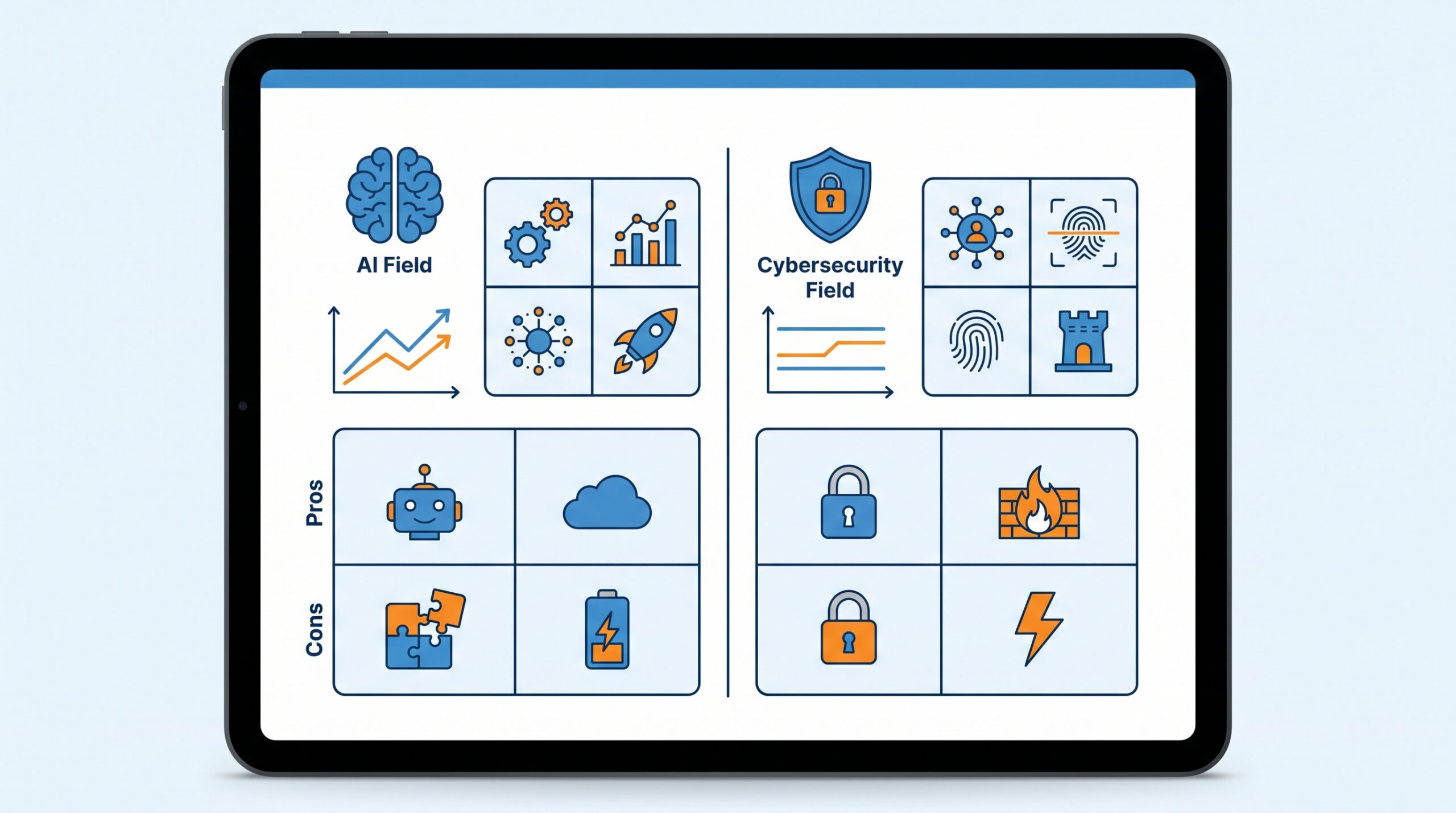
Cybersecurity pay is less about hype and more about relentless, measurable risk reduction.
1. The Compliance & Liability Engine: Regulations like GDPR, CCPA, SEC disclosure rules, and sector-specific mandates (HIPAA, PCI DSS) force companies to invest in security. GRC professionals translate these mandates into policy. Their salaries are driven by the cost of non-compliance: fines, lawsuits, and lost contracts. A CISO’s salary is often a direct function of the company’s regulatory surface area.
2. The Shift to Cloud-Native Security: The mass migration to cloud (AWS, Azure, GCP) has created a massive skills gap. A Cloud Security Architect who can design and implement a secure Zero Trust architecture across hybrid environments is perhaps the most in-demand non-AI tech role. Salaries reflect this scarcity. Certifications like the CCSP (Certified Cloud Security Professional) and cloud provider security specialties have a direct ROI.
3. The "Assume Breach" Mentality: Modern security isn’t just about building walls; it’s about detection and response. Detection Engineers and Threat Hunters who can write advanced correlation rules in Splunk, use threat intelligence platforms (Recorded Future, Mandiant), and automate responses with SOAR platforms (Torq, Swimlane) justify their salaries by reducing "dwell time" (how long a threat actor goes undetected).
Cybersecurity Salary Drivers & Value Proposition
- Compliance & Liability: Driven by regulatory mandates (GDPR, HIPAA, SOC 2), preventing fines, lawsuits, and reputation damage.
- Cloud-Native Security: High demand for experts securing AWS, Azure, GCP environments; Zero Trust architecture implementation.
- "Assume Breach" Mentality: Focus on detection, response, and reducing dwell time through advanced SIEM, EDR, and SOAR platforms.
- Industry-Specific Premiums: Significant bonuses in finance, government contractor premiums for clearance, high stakes (and pay) in healthcare/critical infrastructure (OT/ICS).
- Tool Mastery: Expertise in CSPM (Wiz, Orca), SIEM (Splunk, Sentinel), EDR (CrowdStrike), IAM (Okta, Azure AD), vulnerability management tools.
4. Industry-Specific Premiums: Your industry dramatically impacts pay.
- Finance & FinTech: Highest cash bonuses (20-40%), intense focus on fraud prevention and real-time transaction security.
- Government Contracting: Requires security clearances (Secret, Top Secret). The clearance process itself adds a 10-20% salary premium due to the limited talent pool.
- Healthcare & Critical Infrastructure: High stakes for safety and uptime. Roles in Operational Technology (OT)/ICS security are niche and high-paying.
Tool Ecosystem Dictating Value: Cybersecurity is a tools-and-logs business.
- Cloud Security Posture Management (CSPM): Wiz, Orca Security, Palo Alto Prisma Cloud. Expertise here is gold.
- SIEM & Analytics: Splunk (still dominant, expensive), Microsoft Sentinel, Google Chronicle. Ability to write complex SPL or KQL queries.
- Endpoint Detection & Response (EDR): CrowdStrike Falcon, Microsoft Defender for Endpoint, SentinelOne.
- Identity & Access Management (IAM): Okta, Ping Identity, Azure AD. Zero Trust implementation skills.
AI vs. Cybersecurity: Skill Set & Educational Pathways
This table helps you audit your own aptitudes against the core requirements of each field. It’s not about which is "harder," but which aligns with how you think and work.
| Category | Artificial Intelligence | Cybersecurity |
|---|---|---|
| Core Mindset | Creative, experimental, probabilistic. Focus on building new capabilities and optimizing for accuracy/efficiency. | Defensive, investigative, adversarial. Focus on understanding abuse, closing gaps, and managing risk. "Trust but verify." |
| Key Hard Skills | Advanced mathematics (Linear Algebra, Calculus, Statistics), Programming (Python, R), ML frameworks (PyTorch), data engineering, cloud computing. | Networking & systems architecture, operating systems internals (Windows/Linux), scripting (Python, PowerShell), log analysis, knowledge of attack frameworks (MITRE ATT&CK). |
| Typical Education Path | Common: BS/MS in Computer Science, Data Science, or dedicated AI/ML programs. For Research: PhD in CS, Statistics, or related field is often required for top roles. | Highly Varied. BS in Cybersecurity, CS, IT, or MIS. Many successful professionals come from non-traditional backgrounds (IT admin, networking, military) and bridge via certifications. |
| Learning Resources | Coursera (Andrew Ng), Fast.ai, university CS229/231n notes, Kaggle competitions, research paper reading. | TryHackMe, Hack The Box, RangeForce, SANS courses (expensive but gold standard), Blue Team Labs Online. |
| Portfolio/Certification Value | Portfolio is king: A strong GitHub with well-documented projects, Kaggle competition ranks, contributions to open-source ML projects. Certifications (AWS ML Specialty, Google ML Engineer) are secondary but helpful. | Certifications are critical gatekeepers: Sec+, CySA+, CISSP, OSCP, GIAC certs (GCIH, GCIA) are often job requirements and directly linked to salary bumps. A home lab (Active Directory, SIEM) is the equivalent of a portfolio. |
| Day-to-Day Work | Designing experiments, training/evaluating models, debugging loss curves, writing scalable inference code, meeting with data/product teams. | Reviewing alerts and logs, investigating incidents, writing detection rules, vulnerability scanning/assessment, policy review, security tool configuration, incident response drills. |
Side-by-Side: Growth Trajectory, Risk, and Job Stability
Beyond the raw salary number, you must consider career longevity and market volatility.
Growth Trajectory:
- AI: Exponential growth potential but can be "lumpy." You might work on a breakthrough project that catapults your career (and compensation), or you might be on a team that gets deprioritized after an AI "winter" or pivot. Career progression often moves from Engineer -> Senior Engineer -> Staff/Principal Engineer or into Research Scientist tracks. Management is an option but not the only high-paying path. Our article on Why Senior Developers Fail to Communicate Their Expertise is relevant here, highlighting the need for communication skills for career advancement regardless of the field.
- Cybersecurity: More linear, predictable growth. Analyst -> Engineer -> Senior Engineer -> Architect or Team Lead -> Manager/Director -> CISO. The path is well-trodden, and each step has relatively clear skill and certification requirements. The CISO role has become a standard C-suite position with well-compensated career culmination.
Market Risk Assessment:
- AI Risk: High volatility. Salaries are buoyed by intense investment and competition. A shift in the economic cycle, a regulatory crackdown on AI, or a plateau in perceived AI business value could cool the job market and compress salaries, especially for less-differentiated roles. However, the long-term trend is undeniable. You can learn more about AI’s potential impact in What 5 Industries Will AI Take Over by 2026: Complete Guide.
- Cybersecurity Risk: Very low volatility. The threat landscape only expands (more devices, more cloud, more sophisticated attackers). Compliance requirements only increase. This creates a non-cyclical demand floor. Even in recessions, security teams are often "last to be cut" because they manage critical risk. Job stability is a major, non-monetary benefit.
Geographic Flexibility:
- AI: Extremely concentrated. Over 70% of the highest-paying roles are in major tech hubs: San Francisco Bay Area, Seattle, New York City, Boston, and increasingly, Austin. Remote work is common but top-tier compensation is still often tied to hub locations or "hub-equivalent" pay scales.
- Cybersecurity: Highly distributed. Every bank in Charlotte, every hospital system in Nashville, every manufacturer in the Midwest, and every government agency in Washington D.C. needs a cybersecurity team. This allows for a high salary in a lower cost-of-living area, a significant factor in real purchasing power.
Impact of Certifications on Salary (Select Examples)
Certifications are a direct lever for increasing your income, especially in cybersecurity. This table shows the potential financial impact.
| Certification | Field | Average Salary Increase Potential | Relevant Roles |
|---|---|---|---|
| Certified Information Systems Security Professional (CISSP) | Cybersecurity | 15-25% | Security Manager, Director, CISO, Security Architect. The gold standard for management-focused roles. Often a hard requirement. |
| Offensive Security Certified Professional (OSCP) | Cybersecurity | 10-20% | Penetration Tester, Red Teamer, Vulnerability Assessment Analyst. Proves practical, hands-on attack skills. Highly respected. |
| AWS Certified Security – Specialty | Cybersecurity | 12-22% | Cloud Security Engineer, Architect, DevOps Security. Critical for roles focused on Amazon Web Services environments. |
| Google Cloud Professional ML Engineer | AI | 8-15% | Machine Learning Engineer, MLOps Engineer. Validates ability to operationalize models on GCP. More valuable for consultancies or GCP-centric firms. |
| SANS GIAC Certified Incident Handler (GCIH) | Cybersecurity | 10-18% | SOC Analyst L3, Incident Responder, Threat Hunter. Demonstrates high-end defensive technical skills. SANS certs are expensive but have a strong ROI. |
| Certified Ethical Hacker (CEH) | Cybersecurity | 0-10% | Entry-level security roles, government contractors (where it’s on approved lists). Its value is debated in technical circles but it has name recognition. |
Note: The "increase potential" is based on reported salary changes post-certification and recruiter surveys. It assumes you apply the learned skills, not just pass the exam.
Real-World Case Study 1: The Career Pivot from Software Engineer
Scenario: Jordan, 28, is a backend software engineer with 5 years of experience (Python, AWS, Docker) earning $130,000 at a mid-size tech company. They want higher compensation and more specialized impact.
Pivot Path A: Into AI (Machine Learning Engineer)
- Skill Bridge (6-9 months): Jordan uses their strong Python foundation. They complete the Deep Learning Specialization (Coursera), builds 3 portfolio projects (e.g., a recommendation system, a time-series forecasting model using PyTorch), and contributes to an open-source ML library. They learn MLflow and basic model serving with FastAPI.
- Job Search & Outcome: Jordan targets "Machine Learning Engineer" roles at companies with mature data teams. They land a role at a growing SaaS company. 2026 Starting Salary: $165,000 base + $20,000 stock options.
- Pros: Works on cutting-edge product features, high growth ceiling.
- Cons: Steep learning curve on math/stats, can be isolated from broader product if on a central AI team.
Pivot Path B: Into Cybersecurity (Cloud Security Engineer)
- Skill Bridge (4-6 months): Jordan leverages their deep AWS knowledge. They earn the AWS Security Specialty certification, builds a home lab to practice securing misconfigured S3 buckets, EC2 instances, and IAM roles using Terraform. They studies for and passes the Security+ to get foundational terminology.
- Job Search & Outcome: Jordan applies to "Cloud Security Engineer" roles in fintech and tech. They get an offer from a financial services firm. 2026 Starting Salary: $155,000 base + 15% target bonus ($23,250).
- Pros: Skills are immediately applicable and in desperate demand. Clear impact on company risk. More industry options.
- Cons: Can involve on-call rotations for incidents. Work can be perceived as a "cost center" in some cultures.
Verdict: The AI path offered a slightly higher initial base and equity in a tech growth story. The cybersecurity path offered a comparable total comp with a significant cash bonus component and arguably faster, more certain pivot success due to Jordan’s existing cloud skills.
Real-World Case Study 2: The New Graduate Decision
AI vs. Cybersecurity Salary: Which Field Pays More in 2026? Framework 3
- Signal: What changed and why this matters now.
- Decision framework: Compare options by cost, risk, and implementation effort.
- Execution checklist: Concrete next step and measurable outcome.
Scenario: Taylor is graduating in 2026 with a Bachelor’s in Computer Science from a strong state university. They have a good GPA, an internship in software development, and a choice between two entry-level offers.
Offer A: AI Engineering Associate at a well-known AI infrastructure startup in San Francisco.
- Base Salary: $125,000
- Equity/RSUs: $30,000 per year (4-year vest)
- Total Comp (Year 1): ~$155,000
- Role: Assisting the MLOps team in building model deployment pipelines.
Offer B: Security Engineer (GRC Tech Focus) at a large, established healthcare company in Atlanta.
- Base Salary: $95,000
- Bonus: 8% target ($7,600)
- Total Comp (Year 1): ~$102,600
- Role: Using automated tools to scan for compliance violations against HIPAA and manage the vendor risk assessment platform.
Analysis:
- Nominal Cash: Offer A pays ~50% more in year-one total compensation.
- Cost of Living: San Francisco cost of living is roughly 80-100% higher than Atlanta. That $125k in SF has the purchasing power of roughly $65k-$70k in Atlanta. The real, after-rent comparison becomes much tighter.
- Career Launchpad: The startup AI role offers faster-paced learning with modern tools but higher risk (startup failure). The healthcare security role offers unparalleled stability, exposure to critical compliance frameworks, and a lower-stress environment to earn key certifications (CISSP).
- Long-Term Trajectory: In 5 years, Taylor in the AI role could be a Senior MLOps Engineer making $220k+ in SF (still high COL). Taylor in the cybersecurity role could be a GRC Technology Manager making $160k+ in Atlanta (much higher purchasing power) and have a portable, recession-proof skillset.
Verdict: For pure short-term cash and "hot tech" experience, Offer A wins. For long-term stability, geographic flexibility, and real-world purchasing power, Offer B presents a compelling, lower-risk path to a high income.
The Convergence Role: AI Security – Where the Top Salaries Meet
The most compelling answer to "what pays more, AI or cybersecurity?" might be AI Security. This emerging hybrid discipline addresses the unique vulnerabilities of AI systems.
What is AI Security (Adversarial Machine Learning)? It’s the practice of securing AI models and their supporting infrastructure from manipulation, theft, and misuse. Key tasks include:
- Model Hardening: Defending against evasion attacks (creating "adversarial examples" that fool image classifiers), data poisoning attacks (corrupting training data), and model extraction attacks (stealing a proprietary model via API queries).
- LLM/Prompt Security: Securing generative AI applications from prompt injection, jailbreaking, data leakage, and preventing the generation of harmful content.
- AI Supply Chain Security: Assessing the security of open-source models, training datasets, and ML libraries for vulnerabilities.
Why the Salary Premium? This is a perfect storm of high demand and tiny supply. You need the mathematical intuition of an AI researcher and the adversarial, systems-thinking mindset of a security professional. Very few people have this combination. The insights from OpenAI in 2026: What’s Changed, What’s Real, and How to Use It Now underline the increasing complexity of AI systems, making specialized security expertise even more vital.
AI Security: The Convergence Advantage
- Unique Skill Set: Combines deep AI knowledge (mathematics, model architectures, LLM internals) with adversarial security thinking (threat modeling, vulnerability exploitation).
- High Demand, Low Supply: Exponential growth in AI deployment creates vast attack surfaces, while skilled practitioners capable of securing them are scarce.
- Critical Impact: Directly protects intellectual property (models), ensures data integrity, and prevents reputational damage from AI misuse or failure.
- Top Salary Bands: Often commands higher salaries than standalone AI or cybersecurity roles due to hybrid expertise and critical risk mitigation.
- Bridge Role: Acts as a natural transition point for professionals from either AI or cybersecurity looking for advanced, high-impact careers.
- Key Areas: Model hardening, LLM/Prompt security, AI supply chain security.
2026 Salary Snapshot for AI Security Specialist:
- Mid-Level (3-5 yrs): $180,000 – $260,000
- Senior/Lead (6+ yrs): $250,000 – $400,000+
These roles exist at AI labs (OpenAI, Anthropic), major cloud providers (AWS AI Security, Microsoft), cybersecurity vendors building AI security tools (like Robust Intelligence), and in the cybersecurity teams of any large company deploying generative AI.
Implementation Checklist: How to Choose Your Path
Use this list to move from analysis to action.
- Self-Assessment: Take an online course intro to both (e.g., Andrew Ng’s ML course on Coursera vs. a basic security fundamentals course).
- Hands-On Experiment: Spend a weekend on each. Build a simple image classifier with PyTorch tutorial. Then, complete a "Capture The Flag" challenge on TryHackMe or OverTheWire.
- Network Informational Interviews: Find 2-3 people on LinkedIn in each field (mid-career level). Ask about their day-to-day, biggest frustrations, and how they see the field evolving.
- Run the Financial Model: Use a cost-of-living calculator (NerdWallet, Bankrate) to compare salaries in your target cities. Factor in student debt, certification costs (SANS courses can be $8k+), and typical bonus structures.
- Audit Your Tolerance for Risk & Change: Are you energized by rapid, disruptive technological change (AI)? Or do you prefer a field where core principles evolve more slowly, but the tactical challenges constantly shift (cybersecurity)?
- Plan Your First Credential: For AI, commit to a full project for your GitHub. For cybersecurity, schedule and study for the CompTIA Security+ exam—it’s the universal entry point.
- Engage with the Community: Join relevant subreddits (r/MachineLearning, r/cybersecurity), Discord servers, or local meetups. Listen to the current discussions and pain points, or read our AI News Roundup to stay updated on critical developments.
Risk Mitigation Checklist for Your Chosen Path
Whichever path you choose, these steps will protect your investment and maximize your salary trajectory.
- Avoid Over-Specializing Too Early (AI Risk): If choosing AI, ensure your software engineering fundamentals (data structures, systems design, clean code) are rock solid. This makes you resilient if your niche (e.g., a specific ML framework) falls out of favor.
- Avoid "Checkbox" Certifications (Cyber Risk): If choosing cybersecurity, don’t just collect certs. For each one, build a practical lab project that demonstrates the skill. An OSCP without a GitHub of custom exploit scripts is less valuable.
- Build Your Public Profile: Contribute to open source, write technical blog posts, or speak at meetups. This builds your reputation beyond your resume and opens doors to higher-paying opportunities.
- Monitor the Economic Indicators: For AI, watch tech hiring freezes, AI startup funding rounds, and major tech earnings calls discussing AI investment. For cybersecurity, follow regulatory news (new SEC rules, major breaches) and vendor market reports (Gartner Magic Quadrant).
- Plan for Continuous Reinvestment: Both fields require ~5-10 hours per week of learning to stay relevant. Budget for this time and for course/conference expenses every 1-2 years.
- Develop Adjacent Soft Skills: For high salaries, technical skill is table stakes. Develop communication (explaining complex AI/security concepts to executives), project management, and mentorship abilities. These skills get you into staff, principal, and leadership roles where compensation multiplies.
FAQ
1. Can a cybersecurity professional earn more than an AI professional?
Yes, absolutely. A Chief Information Security Officer (CISO) at a Fortune 500 company or a heavily regulated bank can earn a total compensation package of $500,000 to $1M+, combining high base salary, bonus, and stock. A senior cybersecurity consultant with a rare specialization (e.g., industrial control systems security) billing at high rates can also out-earn many AI engineers. The median AI salary is higher, but cybersecurity has a very high ceiling at the executive and niche expert levels.
2. Which field is easier to get into with no experience?
Cybersecurity has more defined, accessible entry points for career changers. The path of earning a foundational certification (Security+), building a home lab, and landing an entry-level SOC analyst or GRC role is well-established. AI’s entry-level roles (Machine Learning Engineer) typically require a stronger, demonstrated portfolio of projects and often a formal degree in a quantitative field, creating a steeper initial climb.
3. Will AI replace cybersecurity jobs?
No, it will transform them. AI is automating repetitive tasks like alert triage (false positive reduction) and malware analysis, making junior analysts more productive. However, this elevates the demand for higher-order skills: threat hunting, security architecture, and managing the AI security tools themselves. The field isn’t shrinking; it’s becoming more sophisticated. Cybersecurity professionals who learn to use AI tools will be more valuable, not obsolete.
4. Is a degree necessary for a high salary in AI or cybersecurity?
For AI research and top-tier engineering roles at elite firms, an advanced degree (MS, PhD) from a reputable program is often a hard filter and a significant salary accelerator. In cybersecurity, degrees are less of a strict gatekeeper. Demonstrated skills, industry-recognized certifications (CISSP, OSCP), and hands-on experience can propel you to a high salary without an advanced degree, especially in technical and operational roles.
5. Which career has better job security long-term?
Cybersecurity has superior job security. The demand drivers are permanent: cybercrime, regulatory compliance, and digital transformation. It is largely recession-resistant. AI, while transformative, experiences hype cycles and investment waves. Job security in AI is high now, but is more tied to company success and the continued flow of investment capital into AI initiatives, which can be more volatile. For insights into AI’s impact, consider our discussion on What AI Predicted for 2026.
6. Can I transition from cybersecurity to AI, or vice-versa?
Transitioning from cybersecurity to AI is harder, as it requires building deep mathematical and algorithmic foundations from scratch. Moving from AI to cybersecurity is more common, especially into specialized areas like AI Security, application security (AppSec), or security data science, where programming and data analysis skills directly transfer. The convergence field of AI Security is the natural bridge.