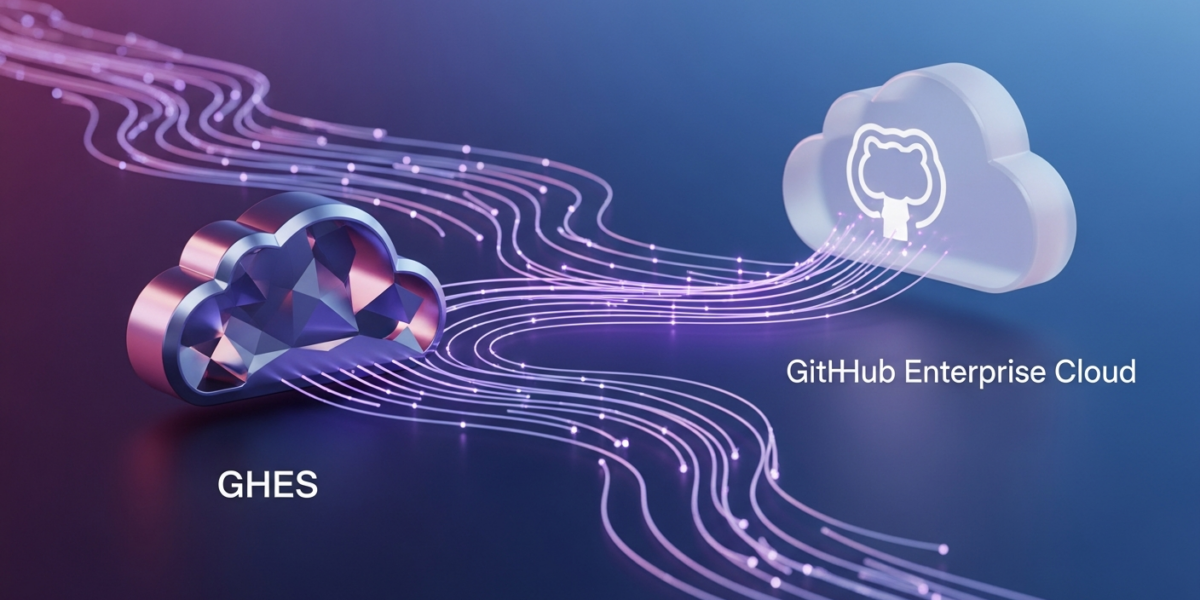
GitHub's Enterprise Live Migrations (ELM) is now in public preview, enabling zero-downtime repository migrations from GitHub Enterprise Server to Enterprise Cloud.
GitHub has launched Enterprise Live Migrations (ELM) into public preview, offering enterprise administrators a new capability to move repositories from GitHub Enterprise Server (GHES) to GitHub Enterprise Cloud with minimal disruption. This feature directly addresses a critical pain point for large organizations seeking to modernize their development infrastructure by enabling what GitHub describes as a zero-downtime transition for core code assets.
On , GitHub announced the public preview of Enterprise Live Migrations (ELM), a new tool designed to streamline the transition of codebases from on-premises GitHub Enterprise Server (GHES) deployments to GitHub Enterprise Cloud. This move is significant for organizations that have historically maintained self-hosted GitHub instances due to compliance, security, or performance requirements, but are now looking to leverage the scalability and managed services of GitHub’s cloud offering. ELM promises to facilitate the migration of not just repositories, but also associated data like issues and pull requests, without requiring extensive downtime, a common challenge in large-scale application migrations.
The introduction of ELM aligns with a broader industry trend towards hybrid cloud models and simplified migration tooling. Research indicates that a substantial portion of enterprises, around 61.8%, operate hybrid deployments, highlighting the ongoing need for robust solutions that bridge on-premises and cloud environments. While application migration often involves moving software from one computing environment to another, the “live” aspect of ELM suggests a more sophisticated approach, aiming to keep development workflows operational during the transition. This contrasts with traditional migration methods that might necessitate significant service interruptions, making ELM a compelling proposition for large enterprises where downtime translates directly to lost productivity and revenue.
For operators, this capability represents a strategic enabler for cloud adoption. Previously, migrating a substantial GHES instance to GitHub Enterprise Cloud could be a complex, multi-stage project involving careful planning to minimize impact on development teams. The “live” migration feature implies that GitHub is tackling the operational overhead directly, potentially allowing organizations to incrementally shift workloads without a hard cutover. This is particularly relevant as enterprises increasingly seek agentic migration tooling, as seen with Google Cloud’s efforts to accelerate workload movement by handling not just data but also application layers, including embedded SQL queries. Such tools aim to compress migration timelines from months to significantly shorter periods, and ELM appears to be GitHub’s answer for its own platform.
What operators should do
Operators currently running GitHub Enterprise Server should immediately evaluate ELM’s public preview. Focus on testing the migration process with non-critical repositories and representative datasets to understand its true impact on developer workflows and data integrity. While the promise of “zero-downtime” is attractive, validate its practical implications for your specific CI/CD pipelines and integration points. Use this preview period to identify potential edge cases or dependencies that might not be fully covered, and provide feedback to GitHub to shape the general availability release. This is an opportunity to de-risk a future strategic move to GitHub Enterprise Cloud, so treat it as a critical operational dry run rather than a mere feature announcement.
Sources
- GitHub Changelog: Enterprise Live Migrations is now in public preview. https://github.blog/changelog/2026-05-07-enterprise-live-migrations-is-now-in-public-preview/
- jls’s blog: Codex CLI v0.130 with remote-control, Genspark 250M ARR, GitHub Enterprise live migrations. https://jls42.org/en/news/ia-actualites-10-may-2026
- Efficiently Connected: Nerdio Manager Enterprise 8.0: Hybrid EUC Modernization. https://www.efficientlyconnected.com/nerdio-manager-enterprise-8-hybrid-euc-modernization/
- VMware: What is Application Migration? https://www.vmware.com/topics/application-migration
- SiliconANGLE: Google Cloud databases power the agentic enterprise. https://siliconangle.com/2026/04/23/google-cloud-databases-power-agentic-enterprise-googlecloudnext/