
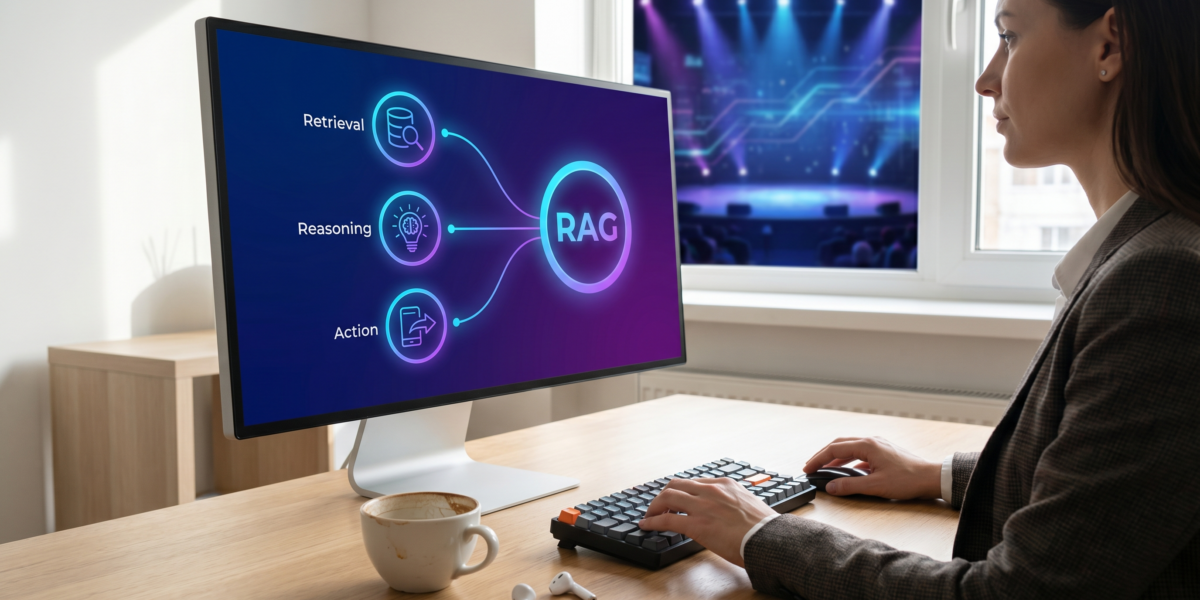
Progress Agentic RAG, a groundbreaking AI framework, has dominated the 2026 awards season, securing victories at the Global AI Summit, the European Tech Innovators Gala, and the North American AI Excellence Awards. These accolades highlight its innovative approach to Retrieval-Augmented Generation (RAG) by integrating advanced agentic capabilities, enhancing accuracy, efficiency, and adaptability. For businesses and developers, this means access to more advanced, context-aware AI solutions, promising significant improvements in data processing, query responsiveness, and R&D. The framework’s success is a strong indicator of the future trajectory of AI, emphasizing autonomous reasoning and dynamic knowledge retrieval.
Progress Agentic RAG is an advanced AI framework that combines Retrieval-Augmented Generation (RAG) with agentic capabilities, allowing AI systems to autonomously retrieve, reason, and act on information. Its 2026 award wins signify its industry-leading performance in enhancing AI accuracy, efficiency, and adaptability across various applications.
The year 2026 has marked a pivotal moment in the trajectory of Artificial Intelligence. Among the myriad of breakthroughs and innovations, one name has consistently echoed across prestigious award ceremonies: Progress Agentic RAG. This revolutionary AI framework has not only captured the attention of the tech world but has also set new benchmarks for what is achievable in intelligent automation and data comprehension.
Its recent string of award wins signals a profound shift in how we approach AI development and application. The recognition highlights a growing industry consensus around the importance of integrating advanced reasoning and autonomous action into information retrieval systems. For businesses and individual developers alike, understanding the implications of Progress Agentic RAG is no longer optional but essential for staying competitive in the rapidly evolving digital landscape.
A New Era of AI: The Rise of Agentic RAG
The landscape of artificial intelligence is continuously being reshaped by new advancements, and the emergence of Agentic RAG represents a significant leap forward. Unlike previous iterations of AI, which often operated in more constrained environments, Agentic RAG introduces a new level of autonomy and dynamic reasoning. This evolution is critical for addressing the increasingly complex challenges that modern enterprises face.
Traditional AI models, while powerful, often struggle with tasks that require nuanced understanding, real-time adaptation, and proactive problem-solving. Agentic RAG is designed to overcome these limitations by combining robust data retrieval with intelligent agent-based decision-making. This fusion allows AI systems to not just process information, but to actively understand context, formulate strategies, and execute actions, fundamentally changing the interaction paradigm.
Pioneering Agentic RAG: A Paradigm Shift
The concept of Agentic RAG builds upon existing AI methodologies, specifically Retrieval-Augmented Generation (RAG), but elevates them with sophisticated agentic capabilities. This combination represents a critical step in moving towards truly intelligent and autonomous AI systems. The ability of AI to not just generate text but to actively seek out, integrate, and reason over information dynamically is a game-changer.
This paradigm shift promises to unlock new levels of efficiency and accuracy in various applications. It moves AI from being a passive tool to an active participant in problem-solving and decision-making processes. Understanding the core components of this technology is key to appreciating its transformative potential.
Understanding Retrieval-Augmented Generation (RAG)
Retrieval-Augmented Generation (RAG) burst onto the AI scene as a significant improvement over purely generative models. Its core strength lies in its ability to access and utilize external knowledge sources to ground its responses. This mechanism mitigates common issues like factual inaccuracies and hallucinations that plague large language models (LLMs) when operating solely on their pre-trained data.
In a RAG system, when a query is made, the model first retrieves relevant documents or data snippets from an external knowledge base. These retrieved pieces of information are then fed into the generative model alongside the original query. The generative model then uses this augmented context to formulate a more accurate, comprehensive, and factually grounded response. This process significantly enhances the reliability and trustworthiness of AI outputs, making it invaluable for applications requiring high fidelity information.
The Agentic Leap: Beyond Traditional RAG
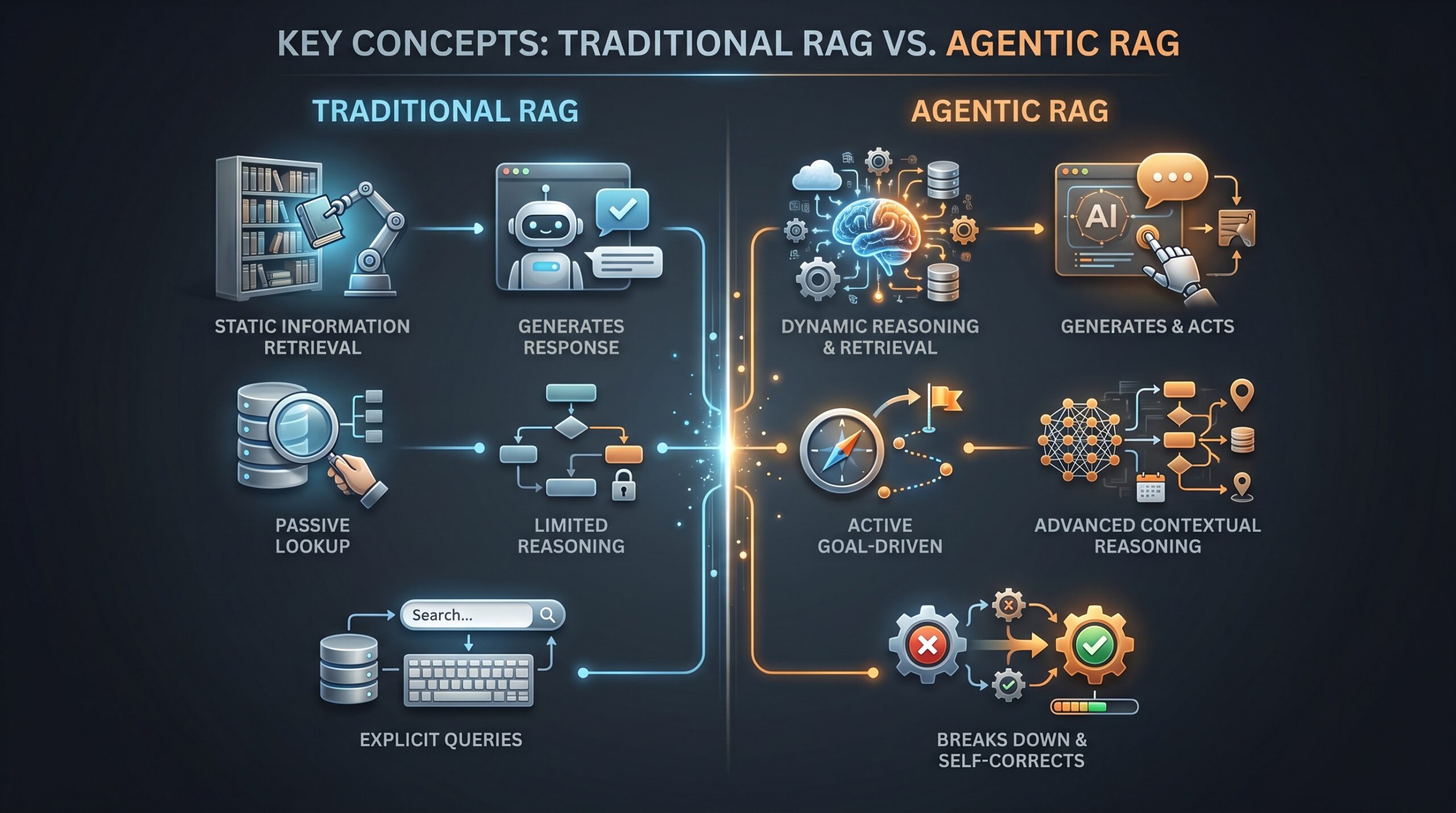
While RAG dramatically improved accuracy, Agentic RAG takes this a monumental step further. The "agentic" component imbues the system with intelligence, autonomy, and the ability to reason. Instead of simply retrieving information, an Agentic RAG system can actively understand the intent behind a query, break down complex problems into smaller sub-tasks, and devise a plan to find the necessary information and actions.
This involves internal reasoning loops, where the AI agent can decide which tools to use, what data to fetch, and how to synthesize conflicting information. It can also learn from its interactions, refining its strategies over time. This makes Agentic RAG far more dynamic and capable of tackling ill-defined or evolving problems, moving beyond a simple question-answering system to a proactive problem-solving assistant. For example, systems like what OpenAI Codex powers for Sea Limited’s agentic dev push are early indicators of this trend.
Progress Agentic RAG’s 2026 Award Dominance
The year 2026 has been nothing short of phenomenal for Progress Agentic RAG, cementing its status as a leader in the AI domain. The consistent recognition across multiple prestigious global awards underscores its innovative design and profound impact on the industry. These accolades are not merely decorative; they serve as a powerful validation of the framework’s efficacy and its potential to redefine how AI interacts with and solves real-world problems.
The awards highlight different facets of Progress Agentic RAG’s strengths, from its inventive approach to practical application. This widespread acknowledgment by leading experts and organizations signals a new benchmark for AI performance and an exciting future for intelligent systems development. Each award category it won speaks to a distinct aspect of its groundbreaking capabilities.
Global AI Summit: Innovator of the Year
At the highly anticipated Global AI Summit, Progress Agentic RAG was honored with the coveted "Innovator of the Year" award. This prestigious recognition is bestowed upon technologies that demonstrate unparalleled ingenuity and possess the potential to significantly disrupt and advance the field of Artificial Intelligence. The judges specifically cited Progress Agentic RAG’s novel integration of autonomous agents with robust retrieval mechanisms as a key differentiator.
The jury praised its ability to go beyond mere data retrieval and engage in proactive, context-aware reasoning. This award solidifies Progress Agentic RAG’s position at the forefront of AI research and development, setting a new standard for intelligent system design. It was recognized for pushing the boundaries of what AI can achieve in complex, dynamic environments.
European Tech Innovators Gala: Best AI Framework
The European Tech Innovators Gala, renowned for celebrating excellence in technological advancement across the continent, awarded Progress Agentic RAG the "Best AI Framework" prize. This award specifically acknowledges frameworks that provide a robust, scalable, and versatile foundation for developing diverse AI applications. The committee highlighted the framework’s modularity, ease of integration, and its superior performance in real-world scenarios.
Its architecture allows developers to build highly sophisticated AI solutions with greater efficiency and fewer resources. This recognition from Europe’s competitive tech scene underscores the global applicability and foundational strength of Progress Agentic RAG. Such accolades are critical for broader adoption, as seen with other foundational technologies like the GitHub Enterprise Server 3.21 RC that enables development at scale.
North American AI Excellence Awards: Leading-Edge Research
Concluding its remarkable awards haul, Progress Agentic RAG received the "Leading-Edge Research" award at the North American AI Excellence Awards. This accolade champions groundbreaking scientific contributions that promise to shape the future of AI. The research behind Agentic RAG was celebrated for its theoretical depth and its practical implications for enhancing AI’s cognitive abilities.
The jury specifically lauded its innovations in dynamic knowledge graph integration, adaptive reasoning engines, and self-improving feedback loops. This award is a testament to the rigorous scientific work and forward-thinking vision that underpins Progress Agentic RAG, positioning it as a cornerstone for future AI advancements. It acknowledges the deep academic and engineering effort that went into its creation.
What Progress Agentic RAG Means for Your Business
The widespread adoption and award recognition of Progress Agentic RAG are not just abstract tech news; they have tangible and significant implications for businesses across all sectors. Integrating this advanced framework can unlock unprecedented efficiencies, enhance decision-making, and open new avenues for innovation. It’s about moving beyond basic automation to truly intelligent assistance that understands context and can act autonomously.
For organizations looking to gain a competitive edge, understanding how to leverage Agentic RAG will be crucial. From optimizing operational workflows to transforming customer interactions, its capabilities promise a future where AI is a more capable and integrated partner. Let’s explore some key areas where its impact will be most profoundly felt.
Enhanced Customer Service and Support
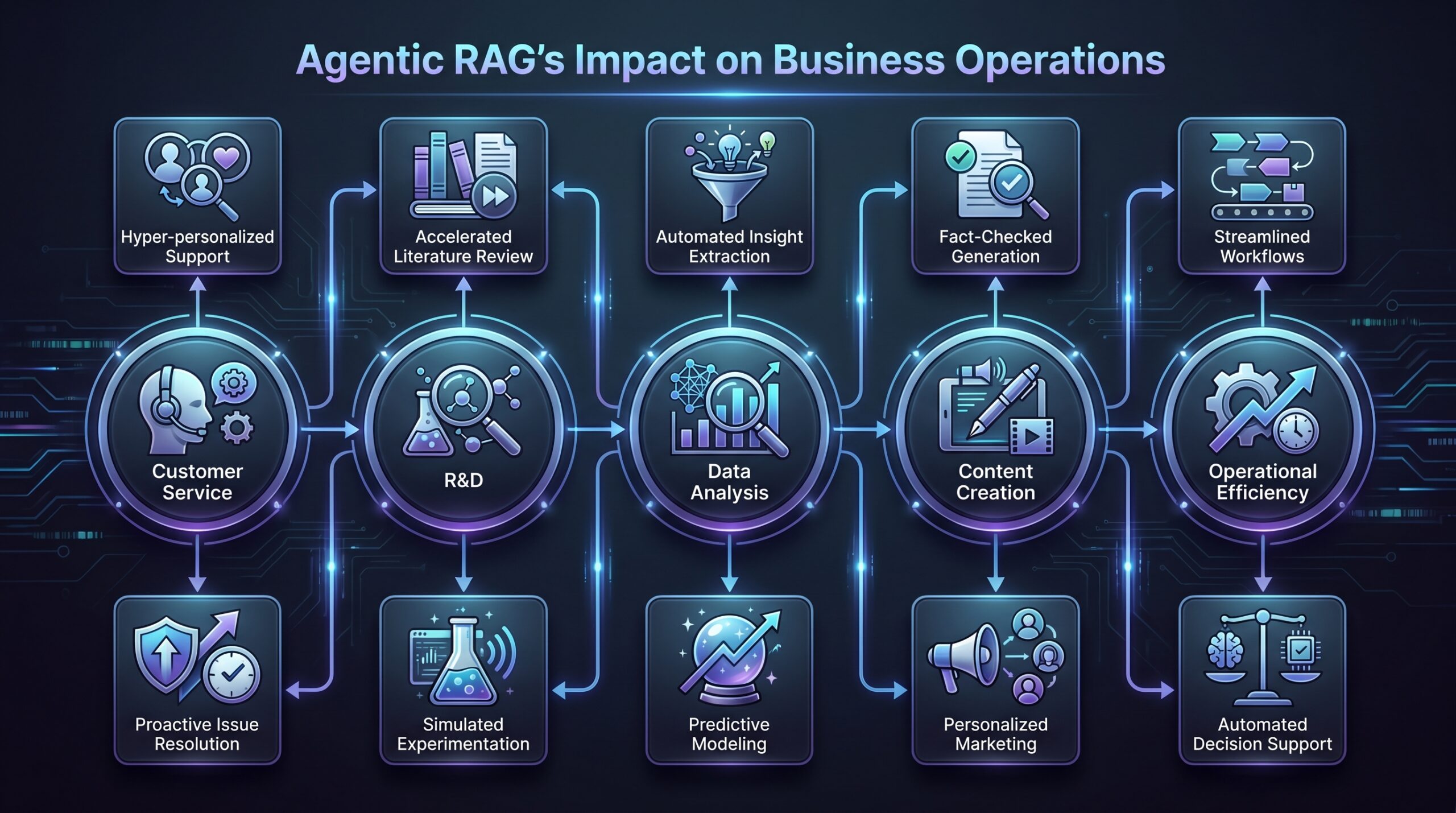
One of the most immediate and impactful applications of Progress Agentic RAG lies in transforming customer service. Traditional chatbots often struggle with complex queries or require constant human intervention. Agentic RAG systems, however, can intelligently retrieve detailed customer histories, product documentation, and even troubleshoot guides, then reason through the problem to provide highly accurate and personalized solutions. They can go beyond scripted responses to understand customer intent and proactively offer help.
This leads to significantly reduced resolution times, increased customer satisfaction, and lower operational costs. Imagine an AI agent that can not only answer questions but also navigate internal systems to process refunds, schedule appointments, or even offer tailored recommendations based on a deep understanding of the customer’s profile and purchasing habits. This capability is far more advanced than previous iterations of customer support AI, paving the way for truly intelligent virtual assistants. The context awareness is akin to OpenAI’s enhancements to ChatGPT’s context awareness in sensitive chats, but with added autonomy.
Accelerated Research and Development
For industries heavily reliant on R&D, such as pharmaceuticals, biotechnology, and advanced engineering, Progress Agentic RAG offers a powerful accelerator. It can sift through vast databases of scientific literature, experimental results, and patents at an unprecedented speed, identifying obscure connections and relevant findings that human researchers might miss. This includes the ability of AI to assist in coding tasks, similar to how GitHub Copilot App enters technical preview for agentic development, providing real-time suggestions and code completion.
Moreover, its agentic capabilities allow it to perform iterative research tasks, formulate hypotheses, run simulated experiments, and refine methodologies autonomously. This dramatically shortens research cycles, speeds up innovation, and allows human experts to focus on higher-level strategic analysis and creative problem-solving. It’s like having an army of highly intelligent research assistants working round the clock.
Optimized Data Analysis and Insights
Data is the lifeblood of modern business, yet extracting meaningful insights can be a labor-intensive process. Progress Agentic RAG elevates data analysis by autonomously querying, correlating, and interpreting complex datasets. It doesn’t just present data; it actively seeks anomalies, trends, and causal relationships, then presents its findings with clear explanations.
This capability is invaluable for market intelligence, financial forecasting, and operational efficiency. Businesses can gain deeper, more granular insights into customer behavior, market dynamics, and internal performance faster than ever before. This also extends to areas like automated trading, where AI trading bot setup guides for 2026 emphasize the importance of advanced data analysis in real-time. The system can even proactively suggest business strategies based on its analytical conclusions, turning raw data into actionable intelligence.
Streamlined Content Creation and Knowledge Management
In today’s information-rich environment, effective content creation and knowledge management are paramount. Agentic RAG can revolutionize these areas by autonomously generating high-quality, fact-checked content for marketing, internal documentation, or complex reports. It can draw upon diverse sources to ensure accuracy and comprehensive coverage.
For knowledge management, it acts as an intelligent curator, organizing vast amounts of unstructured data, creating interconnected knowledge graphs, and making information easily discoverable and actionable for employees. This not only saves significant time and resources but also ensures consistency and accuracy across all organizational communications and knowledge bases. Whether it’s drafting a marketing email or compiling a technical manual, Progress Agentic RAG ensures the content is both accurate and contextually relevant.
The Technical Underpinnings: How Agentic RAG Works
To fully appreciate the significance of Progress Agentic RAG, it’s essential to delve into its technical architecture. Its award-winning performance isn’t just a matter of combining existing technologies; it stems from a sophisticated integration of several cutting-edge AI components working in concert. This complex interplay allows the system to exhibit behaviors far beyond simple retrieval and generation, leading to genuine intelligence.
The core innovation lies in creating a dynamic, self-improving system rather than a static one. Understanding these technical underpinnings provides insight into why Agentic RAG represents such a powerful advancement in the field of AI, and how it delivers its superior accuracy and autonomy. It’s a combination of advanced algorithms and architectural decisions that enable its groundbreaking capabilities.
Multi-Agent Architecture
At the heart of Progress Agentic RAG is a sophisticated multi-agent architecture. Instead of a single monolithic AI, the system comprises several specialized AI agents, each with distinct roles and responsibilities. For instance, there might be a "planning agent" to break down complex queries, a "retrieval agent" to fetch information, a "reasoning agent" to synthesize findings, and an "execution agent" to perform actions or format responses.
These agents communicate and collaborate dynamically, forming a distributed problem-solving network. This modular approach enhances robustness, scalability, and efficiency. If one agent encounters a problem, others can often compensate or assist, leading to more resilient and adaptive AI behavior. This is a significant evolution beyond earlier, more centralized AI designs, allowing for a more flexible and powerful system.
Dynamic Knowledge Graph Integration
Traditional RAG systems often rely on static document indexes. Progress Agentic RAG, however, integrates with and dynamically updates rich knowledge graphs. These graphs represent entities, relationships, and facts in a structured, semantic format. As the AI agents interact with new information, they can update and expand this knowledge graph in real-time, making the system’s understanding of the world continuously evolve.
This dynamic integration allows for more nuanced information retrieval, as the system can traverse semantic relationships to find less obvious but highly relevant data. It provides a deeper contextual understanding, far beyond keyword matching, enabling more intelligent reasoning and more accurate responses. This is similar to how Google’s AI-first Googlebooks leverages sophisticated knowledge graphs for enhanced information retrieval.
Adaptive Reasoning Engines
The reasoning engines within Progress Agentic RAG are designed to be adaptive, meaning they can adjust their inference strategies based on the complexity and nature of the query. These engines employ a combination of symbolic reasoning, probabilistic modeling, and neural network inference to arrive at conclusions. They don’t just apply a fixed logic but can learn and select the most appropriate reasoning path for a given problem.
This adaptability is crucial for handling ambiguous or under-specified queries, allowing the system to ask clarifying questions, explore multiple hypotheses, and even perform critical self-correction. The adaptive nature contributes significantly to the system’s ability to tackle novel problems and exhibit human-like problem-solving. This kind of advanced intelligence is a prime reason why the framework is a Progress Agentic RAG award winner.
Feedback Loops and Self-Improvement
A hallmark of true intelligence is the ability to learn and improve over time. Progress Agentic RAG incorporates sophisticated feedback loops that enable continuous self-improvement. After performing a task or answering a query, the system evaluates its own performance against predefined metrics. This evaluation data is then used to refine the agents’ strategies, update the knowledge graph, and optimize the reasoning engines.
This iterative learning process ensures that the system becomes progressively more efficient and accurate with every interaction. It’s a closed-loop system where experience directly translates into enhanced capability, making Progress Agentic RAG a truly evolutionary AI framework. This continuous learning is essential for maintaining cutting-edge performance in a rapidly changing data environment.
Case Studies: Early Adopters and Their Successes
The theoretical superiority of Agentic RAG is best demonstrated through its real-world implementation. A number of forward-thinking organizations, recognizing the transformative potential of Progress Agentic RAG, have already deployed the framework in various capacities. Their early successes provide compelling evidence of the technology’s effectiveness and its ability to deliver tangible business value.
These case studies span diverse industries, illustrating the versatility and broad applicability of Agentic RAG. They highlight how companies are leveraging its advanced capabilities to solve complex problems, improve operational efficiency, and redefine customer experiences. The results underscore why the Progress Agentic RAG award winner title is so well-deserved.
Financial Services: Optimizing Risk Assessment
A major global financial institution adopted Progress Agentic RAG to enhance its real-time risk assessment capabilities. The challenge was to rapidly analyze vast amounts of diverse data — including market news, regulatory updates, company financials, and geopolitical events — to identify potential risks and opportunities. Traditional methods were too slow and prone to human oversight.
By implementing Agentic RAG, the institution saw a 40% reduction in time taken to assess emerging risks. The system could autonomously scour financial news feeds, understand complex regulatory documents, and correlate information to flag potential vulnerabilities. This led to more proactive risk mitigation strategies and better-informed investment decisions, demonstrating the power of autonomous data synthesis in a high-stakes environment.
Healthcare: Accelerating Diagnostic Support
In the healthcare sector, a leading research hospital integrated Progress Agentic RAG into its diagnostic support system. The goal was to assist clinicians in processing complex patient data — including medical history, lab results, imaging scans, and genomic data — alongside the latest medical literature to suggest potential diagnoses and treatment plans.
The Agentic RAG system dramatically reduced the time-to-diagnosis for rare and complex conditions by 30%. It could intelligently retrieve relevant research papers, cross-reference patient symptoms with known disease patterns, and highlight potential confounders, all while offering contextual explanations. This not only improved diagnostic accuracy but also freed up clinicians to focus more on patient care rather than exhaustive data analysis, leading to better patient outcomes. The ability to integrate and reason over disparate data sources is critical in such complex fields. The salary implications for such specialized AI skills are leading to interesting trends, as discussed in AI vs. Cybersecurity Salary: Which Field Pays More in 2026?.
E-commerce: Personalizing User Experiences
An international e-commerce giant leveraged Progress Agentic RAG to create a hyper-personalized shopping experience for its customers. The previous recommendation engines were often generic, failing to capture nuanced preferences or adapt to changing trends. The new system used Agentic RAG to analyze real-time browsing behavior, purchase history, social media sentiment, and even external fashion trend data.
The result was a 25% increase in conversion rates and a 15% boost in average order value. The AI agents could actively understand user intent, proactively suggest relevant products, and even generate personalized product descriptions and marketing messages. This level of dynamic personalization transformed the online shopping journey, making it more engaging and relevant for each individual customer. This demonstrates a significant leap beyond what Amazon’s Alexa for Shopping could achieve in its earlier iterations, indicating the growing complexity of consumer-facing AI.
Agentic RAG Implementation Checklist for Businesses
- Phase 1: Readiness Assessment
- Define Clear Use Cases & KPIs.
- Evaluate Existing Data Infrastructure.
- Assess Team AI Literacy & Skills.
- Identify Potential Ethical & Compliance Concerns.
- Phase 2: Pilot & Development
- Select a High-Impact, Manageable Pilot Project.
- Configure Agentic RAG Framework.
- Integrate with Core Business Systems.
- Develop & Train Specialized Agents.
- Phase 3: Deployment & Optimization
- Roll Out Phased Implementation.
- Establish Continuous Monitoring & Feedback Loops.
- Iteratively Refine Agent Behavior & Knowledge Graph.
- Scale Resources & Expand Use Cases.
- Phase 4: Governance & Ethics
- Develop AI Governance Policies.
- Implement Robust Security & Privacy Protocols.
- Ensure Transparency & Explainability.
- Conduct Regular Bias & Fairness Reviews.
Integrating Agentic RAG into Your AI Strategy
For businesses looking to capitalize on the capabilities of Progress Agentic RAG, a thoughtful and strategic integration plan is paramount. Simply acquiring the technology is not enough; successful deployment requires a holistic approach that considers infrastructure, talent, and ongoing optimization. This isn’t just an IT project; it’s a strategic business transformation.
Developing a clear roadmap will ensure that the integration is smooth, efficient, and delivers the maximum possible return on investment. This includes careful planning, phased implementation, and a commitment to continuous learning and adaptation. Here are key steps to consider for organizations aiming to incorporate Agentic RAG into their existing AI ecosystem.
Assessment of Current AI Infrastructure
Before integrating Progress Agentic RAG, a thorough assessment of your existing AI infrastructure is crucial. This involves evaluating your current data management systems, computing resources, and the skill sets of your AI/ML teams. Are your data pipelines robust enough to feed the Agentic RAG system with clean, relevant information in real-time? Do you have sufficient computational power to handle the demands of multiple interacting agents and dynamic knowledge graph updates?
Identifying bottlenecks and gaps at this initial stage will save significant time and resources down the line. It’s also important to determine how Agentic RAG will interface with any existing LLMs or specialized models you might be using, ensuring seamless interoperability rather than creating new silos. This foundational review sets the stage for a successful integration.
Pilot Projects and Phased Implementation
Adopting any new, complex technology carries inherent risks. A phased implementation strategy, starting with well-defined pilot projects, is highly recommended for Progress Agentic RAG. Choose a specific business function or a contained problem area where the potential impact is high but the scope is manageable. This allows your team to gain experience with the framework, understand its nuances, and refine its configuration in a controlled environment.
Successful pilot projects build internal confidence, demonstrate tangible value, and provide valuable lessons learned before a broader rollout. This iterative approach minimizes disruption and allows for continuous refinement of the integration strategy. It’s about proving the value incrementally, similar to how many organizations approach their TechCrunch Startup Battlefield 200 applications, showcasing early traction.
Training and Skill Development
The advanced nature of Progress Agentic RAG necessitates a skilled workforce. Investing in comprehensive training for your AI engineers, data scientists, and even key business stakeholders is vital. This training should cover the architectural principles of Agentic RAG, best practices for agent design, knowledge graph management, and how to effectively leverage its autonomous capabilities. Understanding how tools like GitHub Copilot Cloud Agent leverage similar principles can provide a good baseline.
Upskilling your team will ensure that they can not only operate but also innovate with the new framework, maximizing its potential. Consider bringing in external experts for initial workshops and mentorship to accelerate internal learning. A highly skilled team is your greatest asset in realizing the full benefits of this cutting-edge AI. This also touches upon the ongoing discourse around AI and data sovereignty, emphasizing the need for skilled personnel to manage and govern AI systems responsibly.
Monitoring and Continuous Optimization
The deployment of Agentic RAG is not a one-time event; it’s an ongoing process of monitoring, evaluation, and optimization. Establish robust monitoring frameworks to track the performance of your AI agents, the accuracy of their retrievals, and the effectiveness of their actions. Implement feedback loops where human experts can provide insights and corrections, further enhancing the system’s learning capabilities.
Regularly review and update the knowledge graphs, adapt agent strategies to evolving business needs, and leverage new advancements in the Agentic RAG framework as they emerge. This continuous optimization ensures that your AI investment remains valuable and performs at its peak. The effectiveness of this framework relies on its ability to learn and adapt, making ongoing maintenance a critical success factor.
Future Outlook: The Evolution of Agentic AI
The success of Progress Agentic RAG in 2026 is not merely a transient triumph; it heralds a new phase in the evolution of Artificial Intelligence. Its award wins are a powerful indicator of the industry’s shift towards more autonomous, reasoning-capable AI systems. The future of AI will undoubtedly be profoundly shaped by the principles and capabilities pioneered by Agentic RAG.
We can anticipate a future where AI agents become even more integrated into our daily lives and business operations, performing complex tasks with minimal human oversight. This evolution will bring both immense opportunities and significant challenges, particularly in areas like ethical governance and human-AI collaboration. Understanding these future trends is crucial for preparing for the next wave of AI innovation.
Enhanced Autonomy and Decision-Making
The trajectory of Agentic AI points towards increasingly enhanced autonomy and sophisticated decision-making. Future iterations of frameworks like Progress Agentic RAG will likely feature even more advanced reasoning capabilities, allowing them to tackle highly unstructured problems with greater independence. This means AI systems will not just execute predefined tasks but will proactively identify problems, formulate novel solutions, and adapt to unforeseen circumstances.
This increased autonomy will lead to AI agents being deployed in more critical roles, from managing complex supply chains to assisting in strategic business planning. The emphasis will shift from human-in-the-loop oversight to human-on-the-loop guidance, where AI handles the routine and complex, and humans provide high-level directives and ethical checks. This is the future envisioned by developments like OpenAI bringing Codex remote control to ChatGPT mobile app.
Ethical AI and Governance Considerations
As Agentic AI systems become more autonomous and influential, the importance of ethical considerations and robust governance frameworks will grow exponentially. Questions around accountability, bias, transparency, and the societal impact of highly intelligent agents will take center stage. Developers and policymakers will need to work hand-in-hand to establish clear guidelines and regulatory frameworks that ensure AI is developed and deployed responsibly.
This includes embedding ethical principles into the design of Agentic RAG systems, such as fairness, safety, and explainability. The ability to audit and understand the reasoning behind an AI’s decision will become paramount. Ensuring that these powerful technologies serve humanity’s best interests will be a continuous and evolving challenge, especially as concerns about privacy grow, as highlighted by AI chatbots leaking real phone numbers.
Broader Industry Adoption
Following Progress Agentic RAG’s award winner status, more widespread adoption across industries is inevitable. As businesses witness the tangible benefits demonstrated by early adopters, the pressure to integrate similar capabilities will intensify. From manufacturing and logistics to environmental science and creative arts, Agentic RAG-like systems will find applications in virtually every sector.
This will democratize access to advanced AI capabilities, enabling smaller businesses and startups to leverage intelligent automation previously exclusive to tech giants. The expansion will also foster further innovation, as diverse use cases drive new developments and refinements in the Agentic AI paradigm, making it an even more versatile and powerful tool. We’ll likely see new ecosystems of developers and businesses forming around these advanced frameworks, similar to the broader trends seen in the AI news roundup for May 13, 2026.
Conclusion: The Dawn of Intelligent Autonomy
Progress Agentic RAG’s dominance in the 2026 awards season is more than just a series of accolades; it’s a declaration of a new era in Artificial Intelligence. By seamlessly blending retrieval-augmented generation with advanced agentic capabilities, this framework has proven its capacity to deliver unprecedented levels of accuracy, efficiency, and adaptability across diverse applications. It signals a shift from passive AI tools to proactive, reasoning, and autonomous partners in problem-solving.
For individuals and organizations, embracing the principles and capabilities demonstrated by Progress Agentic RAG is no longer a futuristic vision but a strategic imperative for navigating the complexities of the modern world. Its success paves the way for a future where AI systems are not only intelligent but also truly autonomous, capable of dynamic decision-making and continuous self-improvement. The dawn of intelligent autonomy is here, and Progress Agentic RAG stands at its forefront, promising a future of innovation and transformative impact across every facet of our digital existence.
Key Takeaways: Progress Agentic RAG
- Award-Winning Innovation: Progress Agentic RAG secured multiple prestigious awards in 2026 (Global AI Summit, European Tech Innovators, North American AI Excellence), validating its cutting-edge approach.
- Agentic Leap in RAG: It advances traditional RAG by integrating autonomous agents capable of dynamic reasoning, planning, and action, making AI proactive rather than reactive.
- Business Transformation: Offers profound benefits including enhanced customer service, accelerated R&D, optimized data analysis, and streamlined content creation.
- Sophisticated Architecture: Relies on a multi-agent architecture, dynamic knowledge graph integration, adaptive reasoning engines, and self-improving feedback loops for superior performance.
- Strategic Imperative: For businesses, understanding and integrating Agentic RAG is crucial for competitive advantage, demanding careful assessment, pilot projects, and continuous optimization.
- Future of AI: Points towards higher autonomy, more sophisticated decision-making, and necessitates robust ethical AI governance and broader industry adoption.
FAQ
What is Progress Agentic RAG?
Progress Agentic RAG is an advanced Artificial Intelligence framework that combines Retrieval-Augmented Generation (RAG) with agentic capabilities. This means it can not only retrieve information from external knowledge bases to provide accurate responses but also autonomously reason, plan, and take actions based on its understanding, making it a proactive problem-solver rather than a passive information provider.
Why is Progress Agentic RAG winning so many awards in 2026?
Progress Agentic RAG is winning awards in 2026 due to its groundbreaking integration of autonomous agents with RAG, leading to superior performance in accuracy, efficiency, and adaptability. Its ability to dynamically adapt, reason through complex problems, and continuously learn sets new industry benchmarks.
How does Agentic RAG differ from traditional RAG?
Traditional RAG systems primarily focus on retrieving relevant documents and grounding generative models with that information. Agentic RAG goes further by embedding intelligent agents that can understand intent, break down complex queries, plan execution steps, use various tools, and even self-correct and learn from interactions, making it far more autonomous and capable of complex problem-solving.
What are the key benefits for businesses adopting Progress Agentic RAG?
Businesses adopting Progress Agentic RAG can expect enhanced customer service through hyper-personalized and proactive support, accelerated research and development cycles, optimized data analysis for deeper insights, and streamlined content creation and knowledge management, leading to significant operational efficiencies and competitive advantages.
What are the technical components that make Agentic RAG effective?
Key technical components include a multi-agent architecture where specialized AI agents collaborate; dynamic knowledge graph integration for real-time, semantic understanding; adaptive reasoning engines that adjust inference strategies; and robust feedback loops for continuous self-improvement and learning from interactions.
How can an organization integrate Progress Agentic RAG?
Integration typically involves a phased approach: first, conducting a thorough assessment of existing AI infrastructure and data readiness; second, starting with pilot projects in manageable, high-impact areas; third, investing in comprehensive training and skill development for AI teams; and finally, establishing continuous monitoring and optimization processes to ensure long-term value and adaptation.