

What are the best new tech boom investment opportunities in 2026?
The best new tech boom investment opportunities in 2026 are primarily found in advanced artificial intelligence (AI), particularly generative AI and AI agents, alongside specialized sectors of Web3 centered on decentralized AI, DePIN (Decentralized Physical Infrastructure Networks), and Quantum Computing. Cybersecurity, especially self-securing AI systems, and biotechnology innovations like gene editing and personalized medicine, also present significant growth potential. Investors should focus on companies driving fundamental shifts in these areas rather than speculative trends.
TL;DR: The 2026 tech investment landscape is dominated by AI, particularly generative AI, AI agents, and decentralized AI within Web3. Other key areas include Quantum Computing, advanced cybersecurity solutions, and transformative biotechnologies. Focus on foundational innovators and strategic deployment rather than fleeting fads for sustainable growth.
The technological landscape is constantly evolving, presenting new investment frontiers with each passing year. As we look towards 2026, a new wave of innovation is gathering momentum, promising to redefine industries, create entirely new markets, and generate unprecedented wealth for discerning investors. This definitive guide explores the most promising new tech boom investment opportunities for 2026, offering insights into the driving forces behind these shifts and strategic considerations for capitalizing on them.
The current global economic climate, characterized by rapid technological advancement and geopolitical shifts, sets the stage for a period of dynamic growth in specific tech sectors. Identifying these emergent opportunities requires a deep understanding of underlying technological trends, market adoption rates, and the potential for disruptive impact. We will delve into the core technologies poised for explosive growth and discuss how to position your portfolio strategically.
Understanding the macro-economic context is crucial. Interest rates, global supply chains, and evolving regulatory environments all play a role in shaping investment viability. Despite potential headwinds, the sheer scale of innovation in areas like artificial intelligence, quantum computing, and advanced biotechnologies ensures substantial opportunities for those who can differentiate signal from noise. This guide provides actionable intelligence to navigate these complexities.
Key Takeaways for Investors
- AI Dominance: Generative AI, AI agents, and decentralized AI are expected to be the primary drivers of the next tech boom.
- Web3 Evolution: DePIN and the convergence of AI with blockchain offer novel infrastructure and operational models.
- Quantum Leap: Quantum computing, while nascent, holds transformational long-term potential in hardware, software, and cybersecurity.
- Essential Security: Advanced cybersecurity, especially AI-driven and post-quantum solutions, is a critical and growing market.
- Bio-Revolution: Biotechnology, particularly precision medicine and AI-driven drug discovery, promises significant health and economic impact.
- Sustainable Future: Greentech, focusing on energy storage and carbon solutions, aligns with global mandates and offers robust growth.
- Strategic Investment: Balance early-stage ventures with established tech giants, diversify broadly, and understand market cycles to manage risk effectively.
The Macro Landscape for Tech Investing in 2026
The year 2026 is set against a backdrop of significant technological acceleration, coupled with complex economic and geopolitical dynamics. Understanding this broader landscape is fundamental to identifying lucrative new tech boom investment opportunities. Global venture capital flows, interest rate policies by central banks, and evolving regulatory frameworks will heavily influence which sectors thrive.
Technological advancement continues its exponential trajectory, but market adoption is increasingly driven by practical applications and return on investment. The hype cycles of previous years are giving way to a more pragmatic assessment of scalability, profitability, and societal impact. This maturation means that foundational technologies with clear use cases will likely outperform. Investors should look beyond superficial trends to underlying infrastructure and platforms.
Geopolitical tensions and the push for technological sovereignty are also reshaping investment patterns. Countries are increasingly investing in critical technologies like AI, semiconductors, and quantum computing to ensure national security and economic competitiveness. This can create both opportunities and risks, depending on supply chain dependencies and trade policies. Localization and regional specialization may become more pronounced.
Furthermore, ESG (Environmental, Social, and Governance) factors are no longer just an afterthought but a central consideration for many investors. Technologies that offer solutions to climate change, promote social equity, or enhance governance will attract significant capital. This focus on sustainability aligns well with innovations in greentech and clean energy, creating a synergistic effect for growth.
Artificial Intelligence: The Unfolding Revolution
Artificial Intelligence remains at the forefront of technological innovation and investment. In 2026, AI is no longer a nascent field but a mature transformative force permeating nearly every industry. The focus has shifted from theoretical possibilities to practical, scalable deployments that deliver tangible value. This maturity presents a wealth of new tech boom investment opportunities.
The sheer breadth of AI applications, from healthcare to finance to manufacturing, ensures its continued relevance. Investing in AI in 2026 means looking beyond the headlines to the underlying technologies, infrastructure, and specialized applications that are driving efficiency, insights, and automation. Companies that can effectively integrate AI into their core operations will lead their respective markets.
Generative AI and Large Language Models (LLMs)
Generative AI, especially Large Language Models (LLMs), continues to be a cornerstone of the AI revolution. In 2026, the focus has shifted from foundational model development to specialized models and applications that cater to specific industry needs. This includes enterprise-grade LLMs trained on proprietary data, enabling unprecedented levels of automation in content creation, data analysis, and customer service.
Investment opportunities abound in companies developing specialized LLMs for sectors like legal tech, medical diagnostics, creative industries, and scientific research. Furthermore, platforms enabling fine-tuning, deployment, and management of these models at scale are also highly attractive. The demand for customizable AI solutions is growing exponentially, creating a robust market for tailored generative AI.
The ecosystem around LLMs, including tools for prompt engineering, model evaluation, and ethical AI governance, is also expanding rapidly. Companies offering solutions that enhance the safety, reliability, and explainability of generative AI will gain significant market share. The ethical deployment of AI is becoming as critical as its technical capabilities.
AI Agents and Autonomous Systems
AI agents represent the next evolution of AI, moving beyond prescriptive tasks to truly autonomous decision-making and action. These intelligent entities can perceive their environment, act independently, and learn from their experiences to achieve predefined goals. They are poised to revolutionize a multitude of industries, making them prime new tech boom investment opportunities in 2026.
Key investment areas include companies developing foundational AI agent architectures, tools for creating and deploying AI agents for developers, and specialized agents for specific tasks. Examples include autonomous trading bots, personalized educational agents, advanced manufacturing robotics, and sophisticated cybersecurity response systems. The market for AI agents is expected to grow dramatically as businesses seek to automate complex, multi-step processes.
The convergence of AI agents with Web3 technologies, particularly in decentralized finance (DeFi) and autonomous organizations (DAOs), is also creating exciting new verticals. AI agents crypto investment opportunities are thriving as these agents can manage assets, execute complex trading strategies, and even participate in governance on decentralized networks. Understanding these interconnections is crucial for comprehensive investment planning.
Spotlight: The Rise of Autonomous Trading Bots
Autonomous trading bots, often powered by AI agents, represent a significant paradigm shift in financial markets. These systems can analyze vast datasets, identify arbitrage opportunities, and execute trades in milliseconds, far surpassing human capabilities. Investors should look into platforms specializing in algorithmic trading infrastructure and AI-driven market intelligence. FrontierWisdom has extensively covered topics like trading bot platform comparison 2026 and whether trading bots are actually profitable in 2026, providing valuable insights for potential investors.
Edge AI and Distributed Intelligence
As AI applications become more pervasive, the need for processing power closer to the data source—at the "edge" of the network—becomes critical. Edge AI reduces latency, enhances privacy, and allows for real-time decision-making without relying on centralized cloud infrastructure. This distributed intelligence paradigm is attracting substantial investment as it underpins smart cities, IoT devices, and autonomous vehicles.
Investment opportunities exist in hardware manufacturers producing specialized AI chips for edge devices, software platforms for deploying and managing AI models on edge infrastructure, and companies developing applications that leverage real-time edge processing. Think of smart cameras performing instant facial recognition, industrial sensors predicting equipment failures, or smart home devices responding without cloud dependence.
The growth of edge AI is also closely tied to advancements in 5G and future 6G networks, which provide the necessary bandwidth and low latency for distributed intelligence to operate effectively. Companies positioned at the intersection of edge computing, advanced connectivity, and AI model deployment are exceptionally well-placed for growth in 2026. This trend aligns with the broader movement towards decentralized AI architectures.
Web3: Next-Generation Internet Opportunities
Web3 continues its evolution, moving beyond speculative cryptocurrencies to focus on building decentralized infrastructure and applications with real-world utility. In 2026, the emphasis is on tangible value creation through blockchain technology, decentralized identities, and the tokenization of assets. These advancements represent compelling new tech boom investment opportunities for those who understand the underlying paradigm shift.
The vision of a decentralized internet, where users have greater control over their data and digital assets, is slowly but surely materializing. While volatility remains a factor, the fundamental shift towards transparency, immutability, and censorship resistance offered by Web3 technologies is undeniable. Prudent investors will seek projects with strong technical foundations, clear economic models, and legitimate use cases that solve existing problems.
Decentralized Physical Infrastructure Networks (DePIN)
DePINs are a particularly exciting subset of Web3, combining blockchain technology with physical world infrastructure. These networks leverage token incentives to encourage individuals and organizations to deploy and maintain hardware that provides essential services, such as wireless connectivity, energy grids, or data storage. This creates a decentralized, community-owned infrastructure layer.
Investment opportunities in DePINs include projects building out these physical networks, protocols that orchestrate them, and companies developing applications that run on top of DePIN infrastructure. Examples range from decentralized cellular networks like Helium, which incentivizes individuals to host 5G hotspots, to decentralized GPU networks enabling distributed AI computation. These initiatives address critical infrastructure needs in a democratized and resilient manner.
The potential for DePINs to disrupt traditional infrastructure providers is immense, offering greater efficiency, resilience, and accessibility. Investors should look for DePIN projects with strong tokenomics, a vibrant community, and a clear path to widespread adoption. Understanding the mechanics of decentralization is key to assessing their long-term viability.
AI and Blockchain Convergence: Decentralized AI
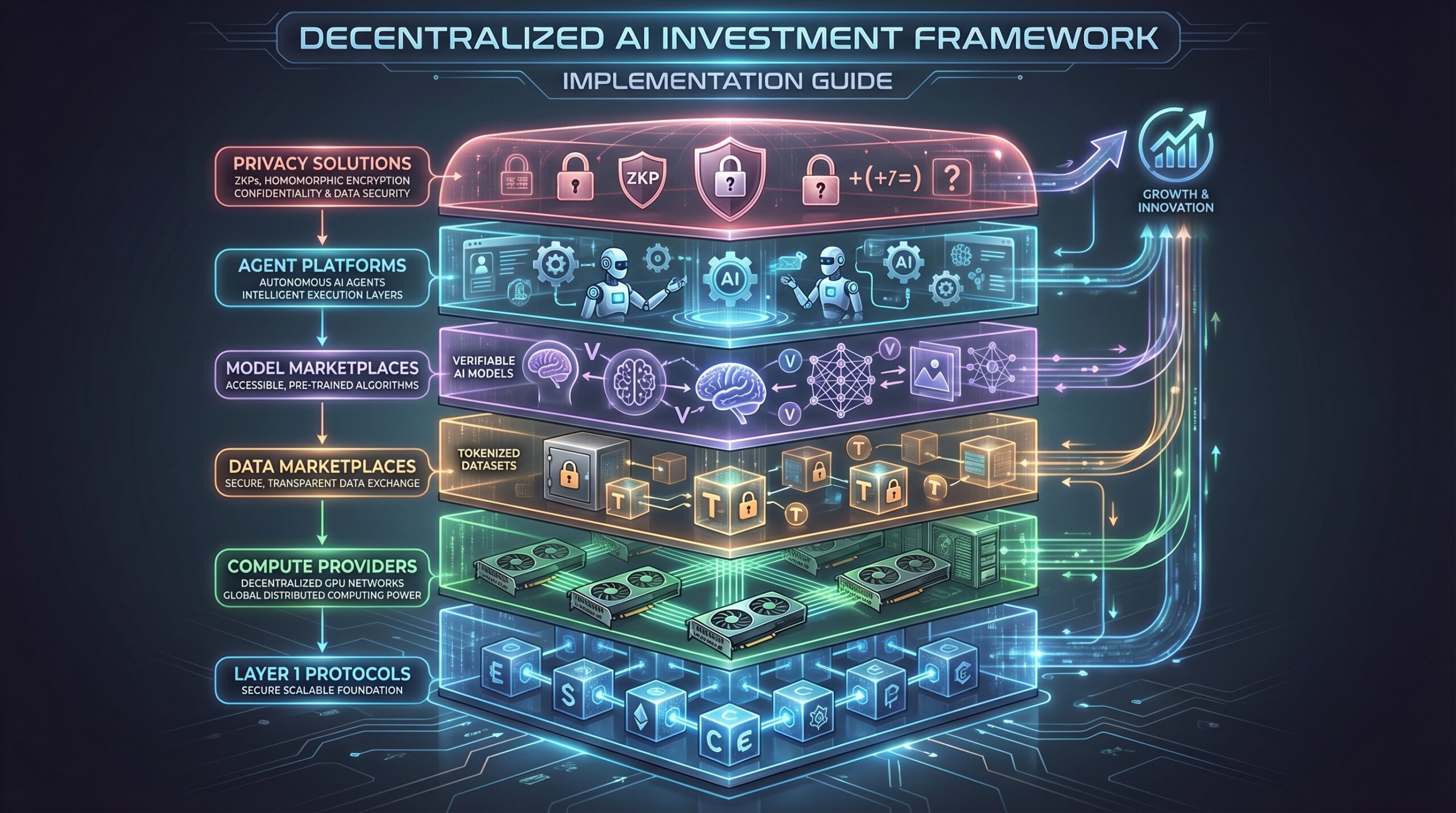
The convergence of AI and blockchain technology is creating a powerful new frontier: Decentralized AI. This synergy addresses some of the critical limitations of centralized AI, such as data privacy concerns, algorithmic bias, and the monopolization of AI power by a few large entities. Decentralized AI seeks to distribute control, enhance transparency, and foster collaborative AI development.
Investment opportunities lie in platforms facilitating decentralized machine learning, marketplaces for AI models and datasets on the blockchain, and protocols enabling privacy-preserving AI computation. Imagine a future where AI models are collectively trained using encrypted data from disparate sources, with clear ownership and remuneration for data providers. This paradigm shift could unlock vast amounts of previously inaccessible data for AI training.
Companies building the infrastructure for centralized vs. decentralized AI solutions, particularly those focused on verifiable AI model performance and auditable AI decision-making, are attractive. The demand for transparent and ethical AI systems will only grow, making decentralized AI a crucial component of future technological ecosystems. Projects integrating AI agents with decentralized trading platforms are also gaining traction.
Tokenized Real-World Assets (RWA)
Tokenization of Real-World Assets (RWA) is bridging the gap between traditional finance and the blockchain world. This involves representing tangible and intangible assets—such as real estate, fine art, commodities, or intellectual property—as digital tokens on a blockchain. This process enhances liquidity, fractionalizes ownership, and streamlines transactions, creating significant investment opportunities.
In 2026, RWA tokenization is moving towards mainstream adoption, with institutional interest growing rapidly. Investment areas include platforms specializing in the legal and technical frameworks for RWA tokenization, decentralized exchanges facilitating RWA trading, and projects focused on specific asset classes. This could include tokenized carbon credits, fractionalized ownership of luxury goods, or even digitized private equity stakes.
The potential for RWAs to unlock trillions of dollars in illiquid assets is immense. Investors should look for projects with robust compliance mechanisms, strong partnerships with traditional financial institutions, and innovative approaches to asset management and transfer. This sector is poised to significantly expand the scope and impact of Web3 beyond its current boundaries.
Quantum Computing: The Next Computational Frontier
Quantum computing, once the domain of theoretical physics, is steadily progressing towards practical applications. While still in its early stages, 2026 is expected to see significant advancements in quantum hardware, software, and the development of algorithms that can solve problems intractable for classical computers. This marks it as a long-term, high-potential new tech boom investment opportunity.
The transformative power of quantum computing lies in its ability to process information in fundamentally new ways, enabling breakthroughs in drug discovery, materials science, cryptography, and complex optimization problems. Investing in quantum computing requires a patient approach, as commercialization cycles are typically longer, but the eventual rewards could be substantial.
Quantum Hardware and Software Development
The race to build stable and scalable quantum computers is intensifying. Investment opportunities exist in companies developing quantum processors (qubits based on superconducting circuits, trapped ions, photonic systems, etc.), cryogenic cooling systems, and specialized control electronics. Hardware advancements are critical for pushing the boundaries of quantum capabilities.
Equally important is the development of quantum software and algorithms. This includes quantum programming languages, compilers, and tools that enable developers to harness quantum hardware effectively. Companies creating user-friendly interfaces, simulators, and libraries of quantum algorithms are crucial for bridging the gap between quantum physics and practical applications. The need for Quantum AI trading bots, for instance, highlights the practical demand for quantum software.
The ecosystem also includes hybrid quantum-classical computing solutions, which leverage the strengths of both paradigms. These solutions, often delivered via cloud services, allow researchers and enterprises to experiment with quantum algorithms today, paving the way for wider adoption. Investing in both pure quantum plays and hybrid solutions offers diversified exposure.
Quantum-Safe Cryptography
A significant implication of quantum computing is its potential to break many of today’s widely used encryption standards. This looming threat has spurred intense research and development in quantum-safe (or post-quantum) cryptography. In 2026, the transition to quantum-safe algorithms is becoming a critical priority for governments, financial institutions, and any organization handling sensitive data.
Investment opportunities are emerging in companies specializing in the research, development, and implementation of post-quantum cryptographic solutions. This includes algorithms resistant to quantum attacks, hardware security modules (HSMs) designed for quantum resistance, and consulting services to help organizations navigate the complex migration process. This is a cybersecurity imperative, not just a technological luxury.
The market for quantum-safe cybersecurity solutions is expected to grow rapidly as organizations proactively upgrade their infrastructure to withstand future quantum threats. Companies that become leaders in this specialized field will secure a significant competitive advantage. This intertwines with broader self-securing AI telecom security initiatives.
Advanced Cybersecurity in an AI-Powered World
As digital transformation accelerates and AI becomes more prevalent, the sophistication of cyber threats continues to escalate. Cybersecurity is no longer just a technical necessity but a fundamental business imperative. In 2026, the demand for advanced cybersecurity solutions that can intelligently detect, prevent, and respond to evolving threats presents robust new tech boom investment opportunities.
The sheer volume and complexity of cyberattacks, coupled with the increasing value of digital assets, means that organizations are pouring resources into protective measures. This sector benefits from a non-discretionary spending trend, as security breaches can lead to massive financial losses, reputational damage, and regulatory penalties. The shift towards proactive and predictive security postures is key.
AI-Driven Threat Detection and Response
Traditional signature-based security systems are increasingly insufficient against polymorphic and zero-day threats. AI and machine learning are revolutionizing threat detection and response by identifying anomalous behaviors, predicting potential attacks, and automating incident response. Companies excelling in this domain are highly attractive investments.
Investment opportunities include firms developing advanced Security Information and Event Management (SIEM) and Security Orchestration, Automation, and Response (SOAR) platforms powered by AI. Solutions that can analyze vast amounts of data from various sources, identify subtle patterns indicative of an attack, and autonomously initiate countermeasures are in high demand. This capability significantly reduces the time from detection to remediation, a critical metric in cybersecurity.
Furthermore, AI-driven solutions for endpoint detection and response (EDR), cloud security posture management (CSPM), and identity and access management (IAM) are experiencing rapid growth. Security vendors that can leverage AI to provide comprehensive, integrated, and predictive security postures will lead the market. The concept of self-securing AI telecom security exemplifies this trend.
Post-Quantum Cryptography Solutions
As discussed earlier, the threat posed by future quantum computers to current encryption standards creates an urgent need for post-quantum cryptography (PQC). This area of cybersecurity specifically focuses on developing and implementing cryptographic algorithms that are resistant to attacks from both classical and quantum computers.
Investment in PQC solutions is becoming critical as organizations begin the lengthy process of migrating their systems. Companies offering PQC-compliant hardware, software libraries, and integration services are poised for significant growth. This isn’t just about protecting data today but safeguarding it against future decryption by quantum adversaries.
The development of industry standards and certifications for PQC will also drive adoption. Investors should look for companies actively involved in these standardization efforts and those demonstrating practical deployments. The synergy between classic cybersecurity and PQC creates a fortified defense against evolving digital threats.
Biotechnology and Health Tech Breakthroughs
Biotechnology and health tech continue to be areas of profound scientific advancement and significant investment returns. In 2026, innovations are accelerating in gene editing, personalized medicine, and AI-driven drug discovery, promising to reshape healthcare and improve human well-being. These sectors offer compelling new tech boom investment opportunities with long-term growth potential.
The convergence of biology with computational power is unlocking previously unimaginable possibilities. Data-driven approaches are speeding up research, clinical trials, and diagnostics. Regulatory pathways are also adapting to these new technologies, paving the way for faster market entry for groundbreaking treatments. Patient-centric care models are at the heart of many of these innovations.
Precision Medicine and Genomic Editing
Precision medicine, which tailors medical treatment to the individual characteristics of each patient, is moving from niche applications to broader clinical practice. This approach leverages genetic, environmental, and lifestyle factors to optimize therapeutic strategies. Genomic editing technologies, such as CRISPR-Cas9, are at the forefront of this revolution, offering the ability to directly correct genetic defects.
Investment opportunities exist in companies developing advanced diagnostic tools for genomic sequencing, therapeutic platforms utilizing gene-editing technologies, and personalized drug delivery systems. Firms focused on specific genetic diseases, oncology, and rare conditions are particularly attractive. The ability to customize treatments promises higher efficacy and fewer side effects, leading to better patient outcomes.
Ethical considerations and regulatory oversight remain key factors, but the scientific progress in this field is undeniable. Companies that can navigate these complexities while delivering innovative, safe, and effective treatments will be market leaders. The long-term societal impact of precision medicine is immense.
Bioinformatics and AI-Driven Drug Discovery
The pharmaceutical industry is notoriously slow and expensive in drug development. Bioinformatics, coupled with AI and machine learning, is drastically accelerating this process. AI can analyze vast datasets of biological information, predict molecular interactions, identify potential drug candidates, and even optimize clinical trial design. This speed and efficiency generate significant economic value.
Investment opportunities include companies developing AI platforms for drug discovery, bioinformatics tools for genomic data analysis, and advanced simulation software for molecular modeling. Firms specializing in areas like protein folding prediction, novel compound identification, and personalized therapeutics are particularly promising. The ability to reduce the time and cost of bringing new drugs to market is a game-changer.
The collaboration between traditional pharmaceutical companies and AI-driven biotech startups is also a growing trend, leading to strategic partnerships and acquisitions. Investors should look for companies with strong scientific teams, proprietary AI algorithms, and a pipeline of promising drug candidates. The synergy of computing power and biological insight is creating a new era of medical innovation.
Sustainable Tech: Greentech and Climate Innovation
The urgency of addressing climate change and environmental degradation continues to drive massive investment into sustainable technologies, often referred to as greentech or clean tech. In 2026, this sector is characterized by rapid innovation in renewable energy, energy storage, carbon capture, and sustainable resource management, offering robust new tech boom investment opportunities.
Government policies, corporate ESG mandates, and growing consumer demand for sustainable products and services are fueling this growth. The transition to a green economy requires transformative technologies that can decarbonize industries, enhance energy efficiency, and protect natural ecosystems. This investment theme is both economically compelling and environmentally responsible.
Renewable Energy Storage and Management
While renewable energy generation (solar, wind) has achieved significant penetration, the intermittency of these sources necessitates advanced energy storage and smart grid management solutions. In 2026, innovation in battery technology, grid-scale storage, and AI-driven energy management systems is critical for stabilizing grids and maximizing renewable energy utilization.
Investment opportunities include companies developing next-generation battery technologies (e.g., solid-state, flow batteries), long-duration energy storage solutions, and smart grid optimization platforms using AI and IoT. Firms focused on distributed energy resources, virtual power plants (VPPs), and microgrids are also attractive, as they enhance grid resilience and efficiency.
The electrification of transportation and industrial processes further amplifies the need for efficient and scalable energy storage. Companies providing the foundational technologies for a fully renewable energy infrastructure will see sustained demand and growth. This is a sector with both immediate and long-term societal benefits.
Carbon Capture and Sequestration Technologies
Achieving net-zero emissions requires not only reducing new carbon emissions but also actively removing existing carbon dioxide from the atmosphere. Carbon Capture, Utilization, and Storage (CCUS) technologies are becoming increasingly viable and essential. In 2026, significant investment is flowing into direct air capture (DAC), industrial carbon capture, and carbon utilization pathways.
Investment opportunities encompass companies developing advanced materials for CO2 absorption, engineering solutions for large-scale capture and sequestration, and technologies that convert captured carbon into valuable products (e.g., fuels, building materials). The policy landscape, including carbon taxes and incentives, is driving commercial adoption of these technologies, creating a growing market.
While still capital-intensive, the scalability potential and environmental necessity of CCUS make it a critical area for investment. Early movers in this space who can demonstrate cost-effectiveness and scalability will be instrumental in the global decarbonization effort. This aligns with broader initiatives for a sustainable future.
Investment Strategies for the 2026 Tech Boom
To successfully navigate the new tech boom investment opportunities in 2026, investors need a well-defined strategy. The dynamic nature of technology markets requires diligence, diversification, and a long-term perspective. Hasty decisions based on hype can lead to significant losses, while informed choices can unlock substantial returns.
A balanced approach involves diligent research into specific companies and technologies, understanding their competitive advantages, and assessing their market potential. It is also crucial to stay abreast of regulatory changes and geopolitical events that could impact tech sectors. Adaptability is a key trait for investors in this rapidly changing environment.
Early-Stage vs. Established Players
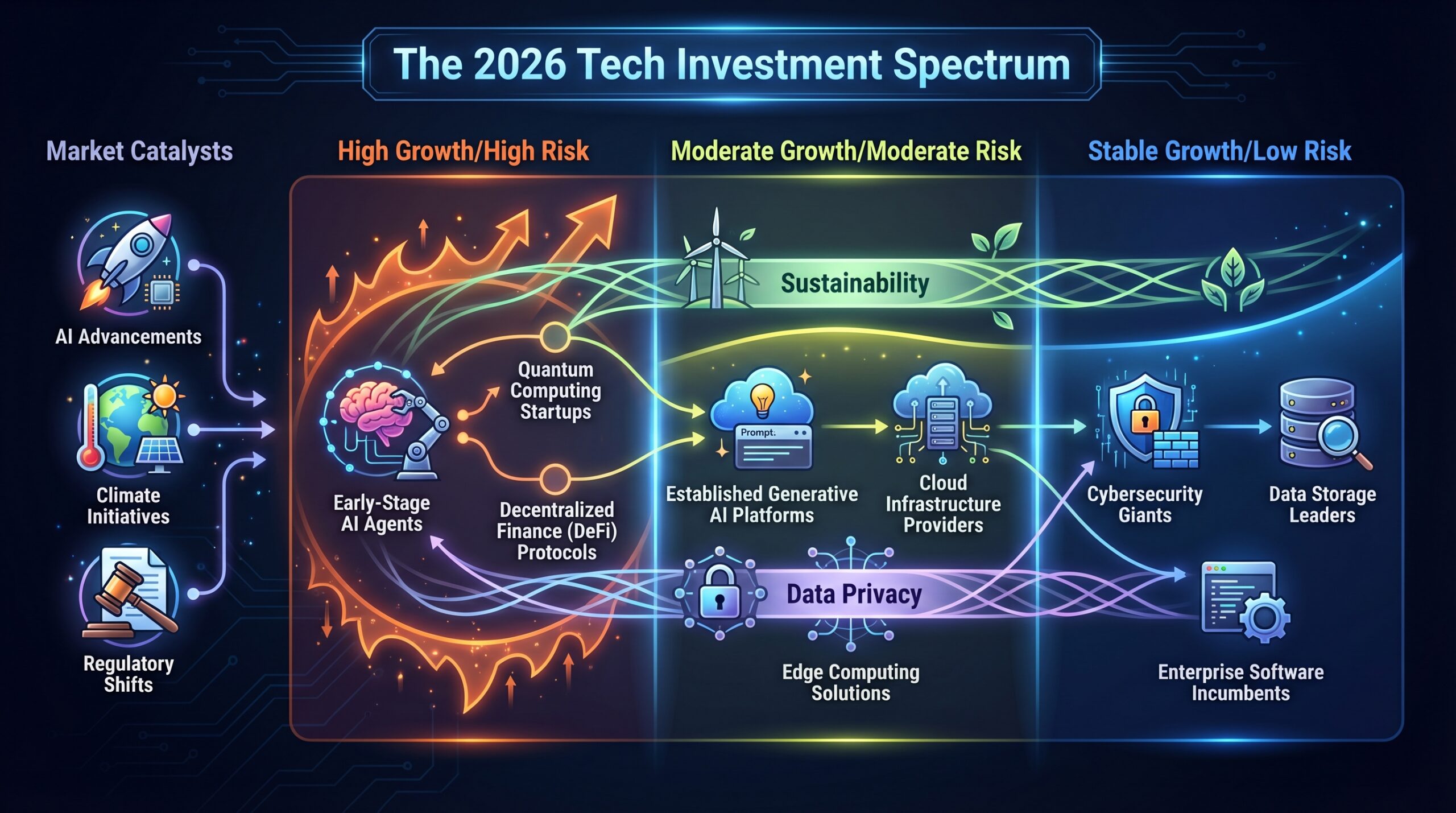
Should you invest in groundbreaking startups or established tech giants? Both offer unique advantages and risks. Early-stage companies in nascent but promising fields (like pure quantum computing or cutting-edge AI agents) offer the potential for exponential growth but come with higher risk due to unproven business models and market adoption hurdles.
Established tech giants, on the other hand, often have significant R&D budgets, strong market positions, and the ability to acquire innovative startups. They may offer more stable growth, but their returns might not match the explosive potential of a successful early-stage venture. Many are actively investing in, or acquiring, the very technologies discussed, like composable AI coding stack or AI model deployment tools, to maintain their competitive edge.
A prudent strategy often involves a mix: allocating a portion of your portfolio to high-growth, high-risk emerging tech startups (perhaps through venture capital funds or angel investing) and another portion to established companies that are aggressively innovating within these new tech sectors. This balances risk with growth potential.
Diversification and Risk Management
Diversification is paramount when investing in rapidly evolving tech sectors. Instead of putting all your capital into a single hot area, spread your investments across multiple promising technologies and geographical regions. This helps mitigate the impact of any single sector performing poorly or a specific company failing. For instance, consider diversifying across different types of AI agents or various Web3 protocols.
Risk management also involves understanding your personal risk tolerance and investment horizon. Tech investments, particularly in new and unproven technologies, can be highly volatile. Only invest capital you can afford to lose and maintain a long-term perspective, as some of these innovations may take years to fully materialize their potential. Regularly rebalance your portfolio to align with your risk profile and market conditions.
Tech Investment Due Diligence Checklist (2026)
- Market Opportunity: Is the target market large and growing? Is there a clear problem being solved?
- Technology & Innovation: Is the technology truly differentiated? Is there a strong intellectual property?
- Team & Leadership: Does the team have relevant experience and a proven track record?
- Business Model: Is the revenue model clear and scalable? What are the unit economics?
- Competitive Landscape: Who are the main competitors? What is the company’s sustainable competitive advantage?
- Regulatory Environment: Are there favorable or unfavorable regulations? What is the geopolitical risk?
- Financial Health: Is the company well-capitalized? What are the valuation metrics like?
- Adoption & Partnerships: Is there evidence of market adoption or strategic partnerships?
Understanding Valuation and Adoption Cycles
The valuation of tech companies, especially those in high-growth areas, can often be driven by future potential rather than current profits. It’s essential to understand various valuation methodologies (e.g., discounted cash flow, multiples) and to be wary of excessive valuations driven purely by speculation. The dot-com bust serves as a stark reminder of the dangers of unsustainable valuations.
Technology adoption typically follows an S-curve, starting with early adopters, then accelerating through the early and late majority, and finally reaching laggards. Identifying where a particular technology lies on this curve can inform your investment timing. Investing too early can mean a long wait for returns, while investing too late can mean missing out on significant gains. Understanding the nuances of model deployment examples can help gauge market readiness and adoption rates for AI solutions.
Look for indicators of increasing market penetration, growing user bases, and strong revenue growth as signs of a technology moving into the accelerated growth phase of its adoption cycle. Patience combined with informed timing is a powerful asset in tech investing.
Key Takeaways for Investors
The 2026 tech boom promises transformative opportunities for those willing to do their homework and adopt a strategic approach. Artificial intelligence, particularly in its generative and agentic forms, alongside the build-out of Web3 infrastructure like DePIN, stands out as a primary driver. These areas are poised to reshape industries and create unprecedented efficiencies.
Beyond these, the foundational breakthroughs in Quantum Computing, the non-negotiable demand for Advanced Cybersecurity solutions, and the life-altering potential of Biotechnology will define the next decade. Each of these sectors, while presenting unique risk profiles, offers compelling growth narratives rooted in profound technological shifts.
Strategic investing involves a blend of early-stage exploration and leveraging the stability of established innovators. Diversification across these high-growth sectors, combined with a robust risk management framework, will be crucial. Understanding valuation metrics and the lifecycle of technology adoption empowers investors to make timely and impactful decisions, positioning them to capitalize on the new tech boom.
Frequently Asked Questions (FAQ)
Which AI sectors are most promising for investment in 2026?
In 2026, the most promising AI sectors for investment include Generative AI (especially specialized LLMs for enterprise applications), AI Agents and autonomous systems (for task automation and complex decision-making), and Edge AI (for real-time, low-latency processing at the source of data). The convergence of AI with blockchain for Decentralized AI is also a significant emerging opportunity.
How can I invest in decentralized physical infrastructure networks (DePINs)?
Investing in DePINs typically involves purchasing the native tokens of promising DePIN projects, which incentivize network participation and secure the ecosystem. Alternatively, you might find investment opportunities in venture capital funds specializing in Web3 infrastructure or through equity stakes in companies building hardware or software for DePINs. Thorough research into the project’s utility, tokenomics, and community is essential.
Is quantum computing a viable short-term investment for 2026?
Quantum computing is generally considered a long-term investment rather than a short-term one for 2026. While significant advancements are expected, widespread commercialization and mainstream adoption of quantum computers are likely still several years away. Short-term investors may find volatility, but long-term investors with patience could see substantial returns from companies focused on quantum hardware, software, and quantum-safe cryptography.
What role does cybersecurity play in the new tech boom investment landscape?
Cybersecurity plays a critical and increasingly vital role. As technology advances and digitalization expands, the threat landscape grows. Investment opportunities are strong in AI-driven threat detection and response platforms, solutions for cloud security, and especially in post-quantum cryptography, which protects against future quantum attacks. Cybersecurity is a fundamental defensive investment in an increasingly digital and AI-powered world.
Are there sustainable investment opportunities within the 2026 tech boom?
Absolutely. Sustainable tech, or greentech, is a major investment theme. Key opportunities exist in advanced renewable energy storage and management systems (e.g., next-gen batteries, smart grids), and carbon capture, utilization, and sequestration (CCUS) technologies. These areas are driven by global environmental mandates, consumer demand, and government incentives, offering both financial returns and positive environmental impact.