Quantum AI trading bots leverage quantum-inspired algorithms and artificial intelligence to automate trading, allowing individuals to generate passive income from financial markets. These advanced systems process vast data faster than traditional bots, optimize strategies 24/7, and can adapt to changing market conditions. While offering significant potential, they require careful risk management, continuous monitoring, and understanding of the evolving regulatory landscape to avoid common pitfalls.
Quantum AI trading bots integrate quantum computing and artificial intelligence to process vast datasets in real-time, enabling highly accurate and automated trade execution. These bots optimize trading strategies around the clock, empowering individuals to generate passive income from cryptocurrency and stock markets with minimal manual intervention.
What Are Quantum AI Trading Bots?
Quantum AI trading bots are automated software systems that combine quantum computing principles with artificial intelligence to execute trades. They analyze market data, identify patterns, and make decisions faster than human traders or traditional algorithmic systems. Unlike standard trading bots, they leverage quantum-inspired algorithms to handle complex calculations and massive datasets more efficiently.
These bots typically operate 24/7, monitoring multiple markets simultaneously. They can adjust strategies in real-time based on changing market conditions, news events, and technical indicators. Most platforms offer user-friendly interfaces where you can set risk parameters, investment amounts, and preferred trading pairs.
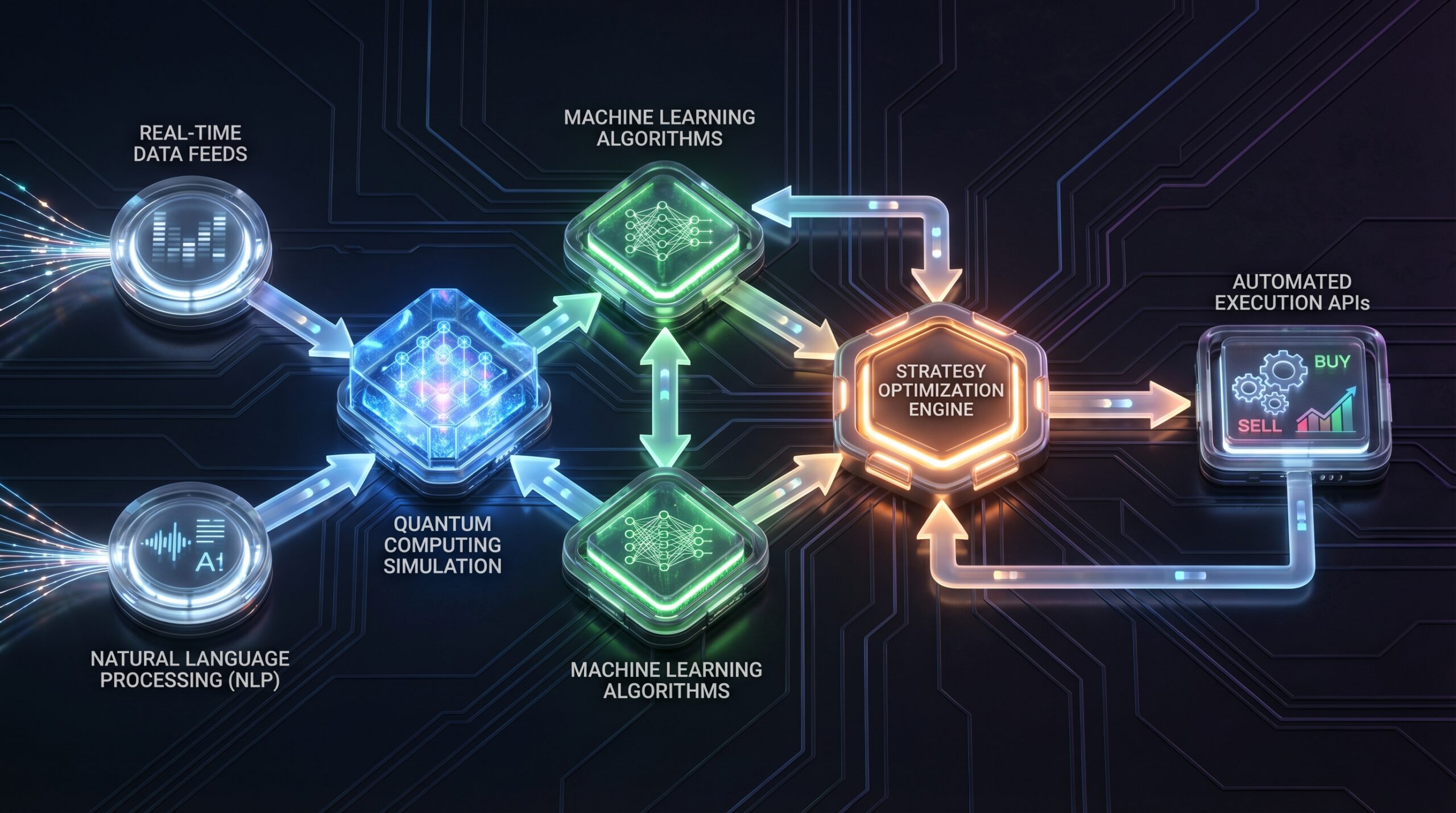
Key components include quantum computing simulation for complex calculations, machine learning for pattern recognition, natural language processing for news analysis, and automated execution APIs connecting to exchanges. The combination allows these systems to identify opportunities that might be invisible to traditional analysis methods.
How Quantum AI Trading Bots Generate Passive Income
Quantum AI trading bots generate passive income through automated profit-taking across multiple market conditions. They work by continuously scanning markets for opportunities, executing trades based on predefined strategies, and optimizing positions without emotional interference.
The income generation process typically involves three phases: market analysis where the bot processes real-time data from exchanges, news sources, and social media; trade execution where it automatically buys or sells assets based on its analysis; and portfolio rebalancing where it adjusts holdings to maximize returns and minimize risk.
These bots can profit in both rising and falling markets through various strategies. Arbitrage trading exploits price differences across exchanges. Market making provides liquidity and collects spread profits. Trend following identifies and rides market momentum. Mean reversion profits from price corrections to historical averages.
How Quantum AI Trading Bots Generate Passive Income
Quantum AI trading bots achieve passive income by automating the entire trading process: continuously analyzing vast market data, identifying profitable opportunities, and executing trades based on programmed strategies. They leverage quantum-inspired algorithms to process information with unparalleled speed and accuracy, adapting to market shifts without human intervention. This 24/7, emotion-free operation allows them to consistently capitalize on various market conditions, such as arbitrage, trend following, or mean reversion, thereby generating returns for users with minimal oversight after initial setup. They are designed to optimize positions and manage risk automatically, contributing to a hands-off income stream.
The passive aspect comes from minimal required intervention after initial setup. Most platforms allow you to define risk tolerance, investment amount, and strategy preferences, then handle everything automatically. However, periodic monitoring remains recommended to ensure optimal performance. For a broader understanding of how trading bots can be profitable, consider Are Trading Bots Actually Profitable in 2026? The Definitive Guide.
Quantum AI vs. Traditional Algorithmic Trading
Quantum AI trading represents a significant evolution from traditional algorithmic approaches. While both automate trading processes, quantum AI systems can analyze more variables simultaneously and adapt to changing conditions more effectively. This doesn’t make traditional algorithms obsolete, but rather provides a more powerful tool for certain applications.
| Feature/Metric | Quantum AI Trading | Traditional Algorithmic Trading |
|---|---|---|
| Data Processing | Utilizes quantum computing to process vast amounts of data in real-time, enabling higher accuracy | Relies on classical computing, which has limitations in real-time processing of extremely large and complex datasets |
| Decision Making | Enhanced accuracy in trading decisions by integrating quantum computing and AI | Based on predefined rules and mathematical models, effective but less adaptive to unforeseen market changes |
| Efficiency | Optimizes trading strategies efficiently, allowing for 24/7 operation without constant monitoring | Automates trades, but optimization relies on periodic human updates or less sophisticated AI/ML |
| Market Scope | Applicable across cryptocurrencies, stocks, and potentially other derivatives | Widely used across various financial markets |
| Accessibility (2026) | Becoming more accessible for beginners with simplified setups and automated strategies | Requires more technical knowledge for setup and optimization, often targets experienced traders or institutions |
The key difference lies in processing capability. Quantum-inspired algorithms can evaluate multiple potential outcomes simultaneously, while traditional systems typically process sequentially. This allows quantum AI bots to identify complex patterns and correlations that might be missed by conventional systems.
Leading Quantum AI Trading Bots Comparison (2026)
This comparison represents available information as of April 2026. Actual performance varies based on market conditions, user configuration, and other factors. Always conduct independent research before investing. For a broader look at platform comparisons, see our Trading Bot Platform Comparison 2026: The Complete Guide to AI-Powered Automation.
| Bot/Platform Name | Key Features | Supported Assets | Pricing Model | Minimum Deposit | Claimed ROI (Disclaimer) | Pros | Cons |
|---|---|---|---|---|---|---|---|
| ConfluxCapital | One-click setup, real-time AI optimization, beginner-friendly interface | Cryptocurrencies, stocks | Percentage of profits | $250 | 8-15% monthly (Past performance not indicative) | Easy for beginners, strong risk management | Limited advanced customization |
| AccuQuant | 24/7 automated trading, multi-exchange support, advanced analytics | Major cryptocurrencies | Subscription-based | $500 | 10-20% monthly (Results vary by market conditions) | Comprehensive reporting, good customer support | Higher minimum deposit |
| MoneyFlare | Free basic version, educational resources, social trading features | Cryptocurrencies only | Freemium model | $100 | 5-12% monthly (Performance not guaranteed) | Low entry barrier, community features | Limited assets, basic free version |
| QuantumEdge Pro | Quantum simulation engine, institutional-grade tools, API access | Cryptocurrencies, forex, commodities | Management fee + performance fee | $5,000 | 15-30% annually (Highly variable returns) | Professional tools, high customization | Not suitable for beginners |
| AlgosOne | Regulatory compliance focus, insurance fund, balanced strategies | Stocks, ETFs, indices | Fixed monthly fee | $1,000 | 7-12% annually (Subject to market conditions) | Lower risk approach, transparent operations | Slower growth potential |
Choosing Your Quantum AI Trading Bot
Selecting the right bot is paramount. Consider factors like your experience level, budget, and desired level of control. Platforms like ConfluxCapital and MoneyFlare cater to beginners with lower entry barriers, while QuantumEdge Pro targets advanced users seeking high customization. Always prioritize platforms with strong security, clear fee structures, and transparent reporting. Never solely rely on claimed ROI figures; past performance does not guarantee future results.
How to Get Started with Quantum AI Trading Bots
Starting with quantum AI trading bots involves several key steps. First, educate yourself about how these systems work and the risks involved. Understand that while automation can enhance trading, it doesn’t eliminate market risks or guarantee profits.
Next, choose a reputable platform based on your experience level and investment goals. Beginners should look for user-friendly interfaces with educational resources and strong customer support. More experienced traders might prefer platforms offering advanced customization and detailed analytics.
The setup process typically involves: creating an account on your chosen platform, completing any required verification procedures, connecting your exchange accounts via API keys (with appropriate permissions), funding your trading account with the minimum required amount, configuring your trading strategy and risk parameters, and starting with a demo or small amount before committing significant capital.
Most platforms offer preset strategies that you can customize. Common configuration options include: investment amount per trade, maximum number of simultaneous trades, stop-loss and take-profit levels, preferred trading pairs or assets, trading time windows, and risk tolerance settings.
Risk Management Strategies for Quantum AI Trading
Effective risk management is crucial when using quantum AI trading bots. These systems can amplify losses if not properly configured or monitored. Implement multiple layers of protection to safeguard your capital.
Key risk management techniques include: diversification across multiple strategies and assets, using appropriate position sizing (never risk more than 1-2% of capital per trade), setting strict stop-loss orders on all positions, regularly withdrawing profits rather than reinvesting everything, maintaining separate exchange accounts for bot trading versus long-term holdings, and implementing circuit breakers that pause trading during extreme volatility. These principles are further explored in Bankroll Management for Trading Bots: Protecting Capital While Scaling Gains.
Monitor these metrics regularly: drawdown (maximum loss from peak), Sharpe ratio (risk-adjusted returns), win rate (percentage of profitable trades), profit factor (gross profit/gross loss), and correlation with market movements.
Even the most advanced bots cannot predict black swan events or sudden regulatory changes. Maintain manual oversight and be prepared to intervene if market conditions become abnormal. Never invest money you cannot afford to lose.
Common Mistakes to Avoid with Quantum AI Trading Bots
Many users make avoidable mistakes when starting with quantum AI trading. Understanding these pitfalls can significantly improve your experience and results.
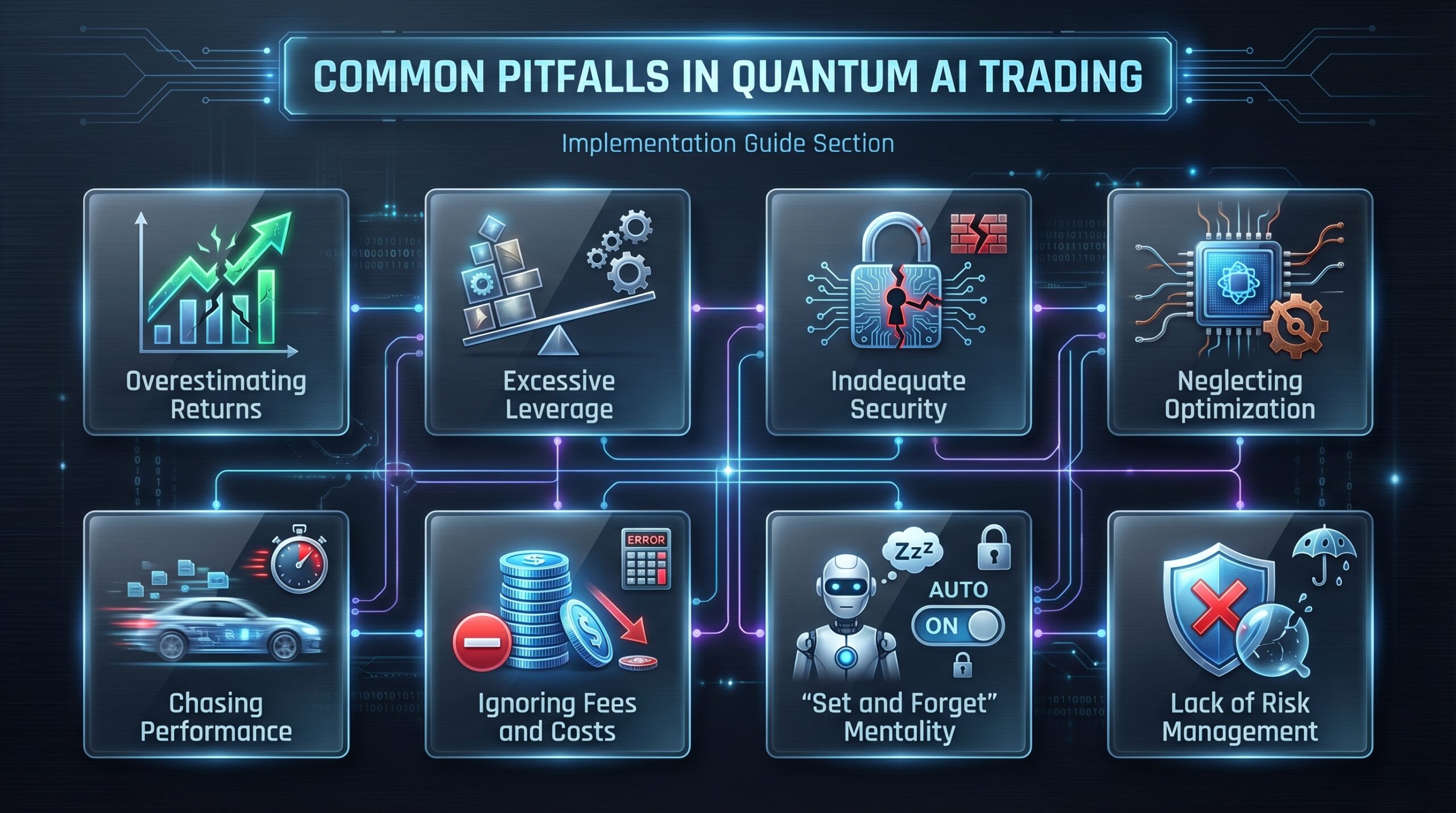
The most common errors include: overestimating expected returns based on marketing materials, using excessive leverage that amplifies losses, failing to properly secure API keys and exchange accounts, neglecting to regularly update and optimize trading strategies, chasing performance by frequently switching between bots or strategies, ignoring fees and costs that eat into profits, and assuming bots work perfectly in all market conditions.
Particularly dangerous is the “set and forget” mentality. While these bots automate execution, they still require monitoring and occasional adjustments. Market conditions change, and strategies that worked yesterday may underperform tomorrow.
Another critical mistake is investing based on FOMO (fear of missing out). Just because others report success with a particular bot doesn’t guarantee similar results. Your experience will depend on your specific configuration, market conditions, and risk management approach. Always remember to check articles like Day Trading Crypto: Do You Need $25,000? The Definitive 2026 Guide for realistic expectations.
Regulatory Landscape for Quantum AI Trading in 2026
The regulatory environment for quantum AI trading continues evolving in 2026. As of April 2026, no specific regulations target quantum AI trading specifically, but existing financial regulations still apply.
In the United States, the SEC applies existing rules to algorithmic trading systems. Platforms typically operate as introducing brokers or investment advisors, requiring appropriate licensing. The CFTC oversees cryptocurrency derivatives trading involving these systems.
In the UK, the Financial Conduct Authority (FCA) has not issued specific quantum AI trading guidelines as of April 2026. However, industry insiders suggest frameworks could emerge by late 2026. Current regulations require platforms to be transparent about their strategies and risks.
The European Union’s MiCA (Markets in Crypto-Assets) regulation provides some framework for crypto trading bots, though quantum-specific aspects remain undefined. Platforms operating in EU countries must comply with these regulations.
Regulatory uncertainty represents a significant risk. Future regulations could restrict certain strategies or require additional compliance measures. Choose platforms that prioritize regulatory compliance and transparent operations.
Case Study: Successful Quantum AI Trading Implementation
Consider Alex, a 35-year-old software developer who started using quantum AI trading bots in early 2025. After researching various platforms, Alex chose ConfluxCapital for its beginner-friendly interface and strong risk management features.
Alex started with a $2,000 initial deposit, allocating funds across three different strategies: 40% to a conservative arbitrage strategy, 40% to a moderate trend-following approach, and 20% to a more aggressive momentum strategy. Each strategy had strict stop-loss limits set at 15% of allocated capital.
The first month saw moderate returns of 3.5% after fees. Alex withdrew half the profits and let the remainder compound. Over the next six months, the bot adapted to changing market conditions, maintaining an average monthly return of 4.2% with maximum drawdown of 8%.
Key to Alex’s success was consistent monitoring without micromanaging. Weekly reviews of performance metrics helped identify when strategies needed adjustment. During high-volatility periods in late 2025, Alex temporarily reduced position sizes and increased stop-loss limits.
After one year, the initial $2,000 grew to approximately $2,800 despite market fluctuations. More importantly, Alex developed an understanding of how the bot worked and how to optimize its performance for different market conditions.
Future Developments in Quantum AI Trading
The quantum AI trading landscape continues evolving rapidly. Several developments expected beyond 2026 could further transform this space.
True quantum computing integration remains the holy grail. While current systems use quantum-inspired algorithms, actual quantum computers could provide exponential improvements in processing power. Major financial institutions and tech companies are investing heavily in this area.
Improved AI capabilities will likely enable more sophisticated strategy development. We may see bots that can explain their reasoning in plain language, adapt to individual risk preferences more effectively, and incorporate broader economic data into decision-making. Insights into this can be found in discussions around AI Agents Decentralized Trading Platform Presales 2026: Complete Guide.
Regulatory frameworks will probably become more defined as these technologies gain adoption. This could bring both increased oversight and greater legitimacy to the industry. Clearer rules might make these tools accessible to more conservative investors.
Integration with traditional finance will likely increase. We may see quantum AI trading features incorporated into mainstream investment platforms, retirement accounts, and institutional trading systems.
Quantum AI Trading Bot Implementation Checklist
Before starting with any quantum AI trading bot, complete this checklist:
Quantum AI Trading Bot Setup Checklist
- Research and Understand: Fully grasp quantum AI trading concepts and inherent risks.
- Define Goals & Tolerance: Clearly identify your investment objectives and personal risk tolerance.
- Platform Selection: Choose a reputable platform with positive reviews and features matching your needs.
- Regulatory Verification: Confirm the platform’s compliance with relevant financial regulations.
- Start Small/Demo: Begin with a demo account or a minimal test amount to gain experience.
- Secure API Keys: Configure API keys with strict permissions, avoiding withdrawal capabilities.
- Risk Parameter Configuration: Set appropriate stop-loss, take-profit, and position sizing rules.
- Diversify: Spread investments across multiple strategies or assets to mitigate risk.
- Monitoring & Alerts: Establish systems for regular performance review and immediate alerts for significant events.
- Profit & Loss Rules: Define clear rules for profit-taking and loss-limiting.
- Document Strategy: Keep a record of your chosen strategy and review its effectiveness regularly.
- Exit Strategy: Prepare a plan for how to adjust or exit positions during unforeseen market changes.
- Research and understand how quantum AI trading works
- Identify your investment goals and risk tolerance
- Choose a reputable platform with positive user reviews
- Verify regulatory compliance of your chosen platform
- Start with a demo account or small test amount
- Secure your exchange accounts with appropriate API permissions
- Configure risk parameters appropriate for your tolerance
- Diversify across multiple strategies and assets
- Set up monitoring and alert systems
- Establish profit-taking and loss-limiting rules
- Document your strategy and review regularly
- Prepare an exit plan for changing market conditions
Risk Mitigation Checklist for Quantum AI Trading
Protect your investment with these risk mitigation steps:
- Never invest more than you can afford to lose
- Use exchange accounts with strong security features
- Enable two-factor authentication on all accounts
- Restrict API keys to necessary permissions only
- Regularly withdraw profits rather than always reinvesting
- Maintain separate accounts for bot trading and long-term holdings
- Set maximum daily/weekly loss limits
- Monitor correlation with overall market movements
- Have a plan for platform failure or exchange issues
- Keep updated on regulatory changes
- Maintain manual override capability
- Document all trades and decisions for review
Frequently Asked Questions About Quantum AI Trading Bots
What is the minimum investment for quantum AI trading bots?
Most platforms require between $250 and $5,000 to start effectively. The amount varies based on the platform’s features, supported strategies, and risk management requirements. Some platforms offer lower minimums but may limit strategy options or charge higher fees.
Can quantum AI trading bots guarantee profits?
No trading system can guarantee profits. While quantum AI bots can optimize strategies and execute efficiently, all trading involves risk. Market conditions, unexpected events, and system errors can all lead to losses. Past performance never guarantees future results.
How much time does quantum AI trading require?
Initial setup might take several hours including research, account creation, and configuration. After setup, most users spend 1-2 hours weekly monitoring performance and making adjustments. The systems are designed for minimal intervention but aren’t completely hands-off.
Are quantum AI trading bots legal?
Yes, when offered by properly licensed platforms. Regulations vary by jurisdiction, so verify that any platform you consider complies with local financial regulations. Avoid platforms that make unrealistic promises or operate in regulatory gray areas.
What returns can I expect from quantum AI trading?
Realistic returns range from 5% to 20% annually depending on strategy, risk tolerance, and market conditions. Claims of higher returns often involve excessive risk or may be misleading. Conservative strategies typically yield lower but more consistent returns.
How do I choose the right quantum AI trading platform?
Consider your experience level, investment amount, risk tolerance, and desired assets. Look for platforms with transparent fee structures, strong security measures, positive user reviews, and responsive customer support. Always start with a small test before committing significant capital.
Can I use multiple quantum AI trading bots simultaneously?
Yes, many experienced users diversify across multiple platforms and strategies. This approach can reduce risk by spreading exposure across different systems and market approaches. However, it requires more monitoring and coordination to avoid overexposure.
What happens during market crashes or extreme volatility?
Most quality bots have volatility protection features that may reduce position sizes, increase stop-loss limits, or temporarily pause trading. However, extreme market conditions can still lead to significant losses. Manual intervention may be necessary during such periods.