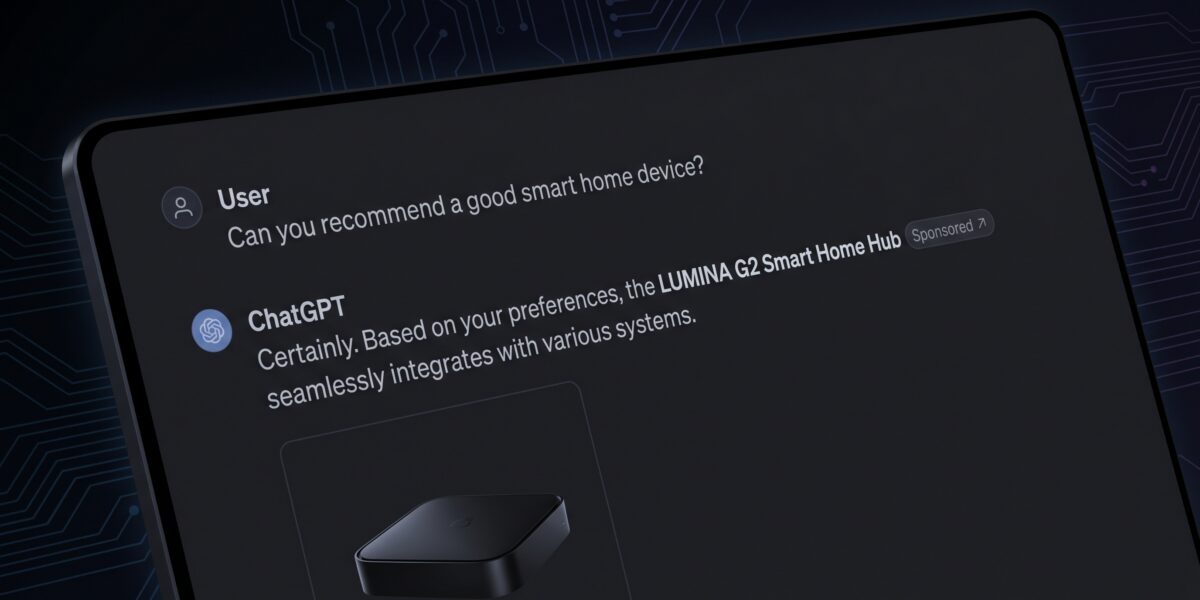
OpenAI is aggressively expanding its advertising capabilities within ChatGPT. As of April 2026, ad placements are live for users on the free and ‘Go’ tiers in the United States, with a global rollout underway. These context-aware, conversational ads represent a fundamental shift in how AI monetizes its massive, engaged user base. For brands and marketers, this opens a new performance channel; for all businesses, understanding how ChatGPT handles both paid and organic recommendations is now essential.
Current as of: 2026-04-21. FrontierWisdom checked recent web sources and official vendor pages for recency-sensitive claims in this article.
TL;DR
- Ads are now appearing in ChatGPT for U.S. free and Go users, with international expansion imminent.
- Early pilot programs require minimum commitments around $200,000, targeting enterprise brands.
- Organic product recommendations, powered by OpenAI’s search crawler, are distinct from paid placements.
- You can optimize your site for free organic discovery via schema markup and crawlability.
- For those with budget, ad-tech partners like Smartly, Criteo, and StackAdapt are managing initial campaigns.
Key takeaways
- ChatGPT ads are live and native. They are conversational, context-aware insertions, not traditional banner ads, labeled as “Sponsored.”
- OpenAI’s financial reality is a primary driver. With a projected burn rate of $111 billion by 2030, advertising provides a critical, predictable revenue stream.
- The barrier to entry is currently high. Early commitments start around $200k, primarily targeting large brands and e-commerce leaders.
- Organic visibility is still free and available. You can appear in ChatGPT’s product discovery results by using proper schema markup and ensuring crawlability.
- A dual strategy is prudent. Optimize for organic discovery now and prepare to explore paid placements when they become more accessible.
What Are ChatGPT Ad Placements?
OpenAI is embedding sponsored messages and product placements directly into ChatGPT’s conversational flow. These are not disruptive banner or sidebar ads. Instead, they are native, context-aware insertions designed to match the user’s query intent. For example, during a conversation about finding running shoes, ChatGPT might respond with a helpful answer and append: “Here are some options from our partners,” followed by sponsored product listings.
Why this matters: This represents a new kind of ad channel. The interface is native and interactive, meeting users during a task-oriented, discovery-driven conversation. For marketers, it’s prime real estate. For users, it introduces a commercial layer that must balance utility with transparency.
Why This Matters Right Now
OpenAI’s move into advertising is driven by both strategic ambition and financial necessity. With operating costs for advanced AI models soaring, the company projects burning through $111 billion by 2030. Advertising offers a scalable, predictable revenue stream to offset these immense infrastructure costs.
ChatGPT’s massive, engaged user base presents a unique opportunity for performance and brand advertisers to capture attention in a relatively uncluttered, high-intent environment.
Who should care most:
- Brand marketers with significant budgets looking for innovative channels.
- E-commerce leaders exploring new product discovery funnels beyond traditional search.
- Webmasters and SEO professionals who need to understand the evolving landscape of AI search visibility.
- Agency strategists planning for the future of conversational ad formats.
How ChatGPT Ad Placements Work
OpenAI is building a full-stack advertising ecosystem around ChatGPT with the following mechanics:
- Placement: Ads appear in-line within ChatGPT’s text responses and are clearly tagged as “Sponsored.”
- Targeting: Leverages query intent, anonymized conversation context, and user segmentation.
- Bidding & Pricing: Early tests utilize CPM (cost-per-thousand impressions) and CPC (cost-per-click) models. OpenAI is piloting a self-serve “Ads Manager” platform for direct bookings.
- Partnerships: OpenAI is working with established ad-tech firms like Smartly, Criteo, and StackAdapt to handle campaign execution, optimization, and advertiser onboarding.
Organic vs. Paid Product Discovery
A critical distinction exists within ChatGPT: organic product discovery and paid ad placements are two separate, parallel systems.
| Feature | Organic Product Discovery | Paid Ad Placements |
|---|---|---|
| How it Works | OAI-SearchBot crawls public structured data (Schema.org). | Advertisers bid for placement via OpenAI or its ad-tech partners. |
| Cost | Free | Minimum commitments start around $200k |
| Control | Optimize via SEO techniques and data markup. | Control via ad platform targeting, bidding, and creative. |
| Appearance | Blended naturally into the AI’s response. | Labeled as “Sponsored.” |
Tools, Vendors, and Implementation
OpenAI’s initial go-to-market strategy relies on partnerships with leading ad-tech platforms:
- Smartly.io
- Criteo
- StackAdapt
These partners manage campaign setup, targeting, creative optimization, and performance reporting. Advertisers interested in early access should contact these partners directly and express interest in ChatGPT inventory. Be prepared for enterprise-level conversations and minimum spend requirements.
Costs and Expected ROI
The current pricing structure reflects a focus on large-scale brand advertisers:
- Minimum Commitments: Approximately $200,000 for early pilot programs.
- Pricing Models: Primarily CPM and CPC.
- Accessibility: No public, self-serve pricing tier for small businesses exists as of April 2026.
ROI Considerations: Early movers may benefit from lower competition, but the true performance and user tolerance for ads in a conversational AI interface are still being measured. Rigorous tracking is essential.
Risks and Conflicts
The integration of ads into ChatGPT is not without potential pitfalls:
- User Experience: Overly frequent or irrelevant ads could degrade the trust and utility that made ChatGPT popular.
- Blurred Lines: Users may struggle to distinguish between genuinely helpful organic recommendations and paid placements, even with labels.
- Data Privacy: The use of conversational data for targeting must adhere to strict anonymity and security standards to maintain user trust.
OpenAI has stated it will prioritize relevance and transparency, but the long-term balance between monetization and user experience remains a key area to watch, especially within the broader context of AI security and ethical deployment.
Myths vs. Facts
- Myth: “All product recommendations in ChatGPT are ads.”
Fact: Organic results are sourced from crawling public structured data. Only clearly labeled placements are paid. - Myth: “Any business can easily advertise on ChatGPT.”
Fact: Current programs are built for enterprise advertisers with substantial budgets. Small business access is not yet available. - Myth: “ChatGPT ads work exactly like Google Search ads.”
Fact: They are more conversational, native to the chat interface, and context-aware, representing a different user interaction model.
How to Optimize for Organic ChatGPT Visibility
You can improve your chances of appearing in ChatGPT’s organic responses without a paid budget:
- Implement Schema.org Markup: Use structured data (like Product, Article, FAQPage) on your relevant pages.
- Ensure Crawlability: Do not block `OAI-SearchBot` in your `robots.txt` file.
- Use Natural, Helpful Language: Craft product descriptions and content that are conversational and informative, as ChatGPT favors this style.
- Monitor Your Visibility: Use analytics tools to track traffic. Set up UTM parameters like `utm_source=chatgpt` and `utm_medium=organic` to identify ChatGPT-originating visits.
How to Participate in Ad Pilot Programs
If you have the requisite budget and want to explore paid placements:
- Contact the Ad Partners: Reach out to Smartly, Criteo, or StackAdapt to inquire about ChatGPT ad inventory availability.
- Develop a Conversational Strategy: Ad creative and messaging should feel helpful and native to a chat dialog, not intrusive or overly salesy.
- Test and Track Rigorously: Use dedicated UTM parameters and conversion tracking to measure performance from day one.
FAQ
Q: Can I opt out of having my products appear in organic discovery?
A: Yes. You can block OpenAI’s web crawler, OAI-SearchBot, via your `robots.txt` file. However, unless you have specific data-scraping concerns, this organic visibility is generally beneficial for discovery.
Q: Will ads come to paid tiers of ChatGPT like Plus or Enterprise?
A: As of April 2026, ads are only shown to users on the free and ‘Go’ subscription tiers. Paid tiers remain ad-free.
Q: How can I report a misleading or inappropriate ad in ChatGPT?
A: Use the “Report” option provided within the ChatGPT interface. OpenAI has stated it is actively moderating ad placements.
Glossary
- OAI-SearchBot: OpenAI’s proprietary web crawler that indexes websites to power organic product discovery and search features within ChatGPT.
- Agentic Commerce Protocol (ACP): A protocol developed by OpenAI and Stripe to enable richer, more interactive shopping and transaction experiences directly within ChatGPT and other AI agents.
- ChatGPT Ads Manager: OpenAI’s in-development self-serve platform for booking and managing ad campaigns directly, currently in pilot phase.
References
- OpenAI Official Communications & Announcements
- Smartly.io Ad Platform
- Criteo Ad Platform
- StackAdapt Ad Platform
- Schema.org Structured Data Standards
- Industry Analysis: AI Monetization & Market Trends (Q1 2026)
This analysis reflects the market and product reality as of April 21, 2026.