

USDC AI agent payments automation is the process of connecting autonomous AI software agents to a financial system, enabling them to programmatically send, receive, and manage USDC stablecoin payments without human intervention. These payments can cover tasks like API usage fees, data purchases, or service compensation. It creates self-sustaining economic units by integrating AI agent logic, blockchain wallets, USDC liquidity, payment protocols, and settlement layers, allowing agents to operate 24/7 with predictable costs and regulatory clarity.
USDC AI agent payments automation integrates autonomous AI agents with blockchain finance, enabling them to make programmatic USDC stablecoin transactions autonomously. It provides price stability, fast transactions, and regulatory clarity. Key components include advanced AI agents, secure wallets (MPC or smart contract), specialized payment protocols (x402, Nanopayments), and oracle services. Implementation involves careful setup, agent integration, security hardening, and production deployment with continuous monitoring and optimization to manage risks effectively.
USDC AI Agent Payments Automation: The Definitive Guide
USDC AI agent payments automation is the process of connecting autonomous AI software agents to a financial system, enabling them to programmatically send, receive, and manage USDC stablecoin payments without human intervention for tasks like API usage fees, data purchases, or service compensation. This innovative approach heralds a new era for decentralized and automated economic interactions, where AI agents can act as self-sufficient economic entities. Understanding its intricacies is crucial for developers and businesses looking to leverage the full potential of AI.
This guide will delve into the core concepts, benefits, implementation steps, and future trends of USDC AI agent payments automation. We aim to provide a comprehensive resource for anyone looking to build or integrate these advanced systems. From the foundational components to risk mitigation strategies, every aspect will be covered in detail to ensure a robust and secure deployment.
What is USDC AI Agent Payments Automation?
AI agents are software programs that perceive their environment, make decisions, and take actions to achieve specific goals. These agents are designed to operate autonomously, often without direct human oversight, by utilizing sophisticated algorithms and data processing capabilities. USDC (USD Coin) is a fully-regulated, dollar-denominated stablecoin issued by Circle, built on various blockchains.
Payments automation, in this context, is the integration of these AI agents with blockchain infrastructure, specifically for allowing them to autonomously transact value using USDC. This capability transforms AI agents from purely computational entities into financial participants, capable of managing their own economic interactions. This convergence of AI and blockchain technology opens up new paradigms for automated services and marketplaces.
An AI agent with payment automation can execute a wide range of financial operations. It can pay for API calls from advanced models like OpenAI or Anthropic, ensuring it has access to the most up-to-date information and computational capabilities. It can purchase real-time data feeds from Oracles like Chainlink, crucial for making informed decisions. Furthermore, it can compensate other agents for completed micro-tasks, fostering a dynamic inter-agent economy, or even manage its own treasury through DeFi protocols like Aave or Compound. This creates a self-sustaining economic unit that operates 24/7, enabling continuous value exchange and productivity.
Key components underpinning this system include: the AI agent’s core logic (often built with languages like Python or JavaScript), a secure blockchain wallet (which can be MPC or smart contract-based), sufficient USDC liquidity, specialized payment protocols (such as x402 or Circle Nanopayments), and reliable settlement layers (like Ethereum, Solana, and Base). Each component plays a vital role in ensuring the seamless and secure operation of autonomous payment systems. Understanding how these elements interact is fundamental to successful implementation.
Why Use USDC for AI Agent Payments?
USDC dominates as the preferred stablecoin for autonomous systems due to its unparalleled combination of regulatory compliance, technical reliability, and extensive ecosystem support. Unlike algorithmic stablecoins that can experience depegging events or unbacked cryptocurrencies that fluctuate wildly in value, USDC maintains a strict 1:1 dollar backing. This backing is rigorously audited, with monthly attestations from major accounting firms, providing a level of transparency and trust unmatched by many other digital assets.
Price stability is non-negotiable for AI agents making thousands of micro-payments daily. Any significant price fluctuation could catastrophically impact an agent’s operational budget. A mere 10% price swing could bankrupt an agent programmed with fixed payment parameters, rendering its economic model unsustainable. USDC’s unwavering stability ensures predictable operational costs, allowing agents to execute their tasks without financial risk due to market volatility. This predictability is vital for long-term operational planning and financial solvency of AI-driven systems.
Transaction speed, while varying by blockchain, typically settles in a range that is highly efficient for automated systems. Transactions on high-throughput chains like Solana or Base settle in seconds, while those on Ethereum might take minutes. Circle’s Cross-Chain Transfer Protocol (CCTP) further enhances USDC’s utility by enabling seamless movement between different blockchains without the inherent risks associated with wrapped assets. This cross-chain capability is crucial for agents needing to operate across diverse blockchain environments, maximizing their operational flexibility.
Regulatory clarity is a critical factor for enterprises deploying AI agents at scale. Circle operates under Money Transmitter licenses in all 50 U.S. states and meticulously complies with OFAC sanctions screening. This robust regulatory framework significantly reduces legal exposure and compliance burdens for businesses, especially when compared to using unregulated stablecoins. Choosing USDC mitigates many of the legal and reputational risks that could otherwise deter large-scale adoption.
Ecosystem maturity is another compelling reason for USDC’s prominence. A mature ecosystem translates into more readily available tools, comprehensive documentation, and seamless integrations. Over 80% of payment protocols specifically support USDC natively, streamlining implementation processes. Other stablecoins often require additional conversion steps, which introduce unnecessary complexity, potential delays, and increased failure points. The widespread support for USDC ensures that developers can leverage a rich array of existing solutions, accelerating development and deployment cycles.
Why USDC is Best for AI Agent Payments
- Regulatory Compliance: Licensed, Tightly Regulated, and OFAC Compliant.
- Price Stability: 1:1 USD backing, monthly attestations, predictable costs.
- Transaction Speed: Fast settlement (seconds to minutes), Cross-Chain Transfer Protocol (CCTP) for seamless multi-chain operations.
- Ecosystem Maturity: 80%+ payment protocols support USDC natively, extensive tools and integrations available.
- Reduced Legal Exposure: Mitigates regulatory and reputational risks for enterprises.
- Operational Predictability: Ensures AI agents can manage budgets without volatility concerns.
Core Components of an Autonomous Payment System
Building a production-ready USDC AI agent payment system demands the integration of several hardened, reliable components. Each component plays a crucial role in the system’s functionality, security, and efficiency. A coherent understanding of these parts is essential for any developer or organization aiming to implement such a system effectively.
The AI Agent Itself
Your AI agent can be developed using popular frameworks like LangChain, AutoGPT, CrewAI, or through custom Python/Node.js code. Regardless of the underlying framework, the agent requires specialized payment logic modules embedded within its operational code. These modules are responsible for overseeing all financial transactions and managing the agent’s payment processes autonomously.
Specifically, these payment logic modules must be capable of several critical functions:
- Check wallet balance before initiating transactions: This prevents overdrafts and ensures sufficient funds are available for proposed payments.
- Calculate optimal gas fees for current network conditions: Dynamic gas fee estimation is crucial for cost-efficiency, especially on volatile networks like Ethereum.
- Handle transaction failures with retry logic: Robust error handling and retries ensure that intermittent network issues or blockchain congestion do not permanently halt the agent’s operations.
- Log all payment events for auditing: Comprehensive logging is indispensable for accountability, debugging, and compliance purposes, providing an immutable record of all financial activities.
- Implement kill switches to prevent runaway spending: These emergency mechanisms allow for immediate cessation of payment activities in case of unexpected behavior or security breaches, safeguarding funds.
Example code snippet for an agent checking USDC balance on Ethereum:
from web3 import Web3\nimport requests\n\nclass PaymentAgent:\n def __init__(self, private_key, network='ethereum'):\n self.web3 = Web3(Web3.HTTPProvider(f'https://{network}.infura.io/v3/YOUR_PROJECT_ID'))\n self.account = self.web3.eth.account.from_key(private_key)\n \n def get_usdc_balance(self):\n # USDC contract address on Ethereum\n usdc_address = Web3.to_checksum_address('0xA0b86991c6218b36c1d19D4a2e9Eb0cE3606eB48')\n # ERC-20 balanceOf ABI\n abi = '[{\"constant\":true,\"inputs\":[{\"name\":\"_owner\",\"type\":\"address\"}],\"name\":\"balanceOf\",\"outputs\":[{\"name\":\"balance\",\"type\":\"uint256\"}],\"type\":\"function\"}]'\n contract = self.web3.eth.contract(address=usdc_address, abi=abi)\n balance = contract.functions.balanceOf(self.account.address).call()\n return balance / 10**6 # USDC has 6 decimals\nWallet Infrastructure
The wallet infrastructure is the backbone of the payment system, responsible for securely storing private keys and signing transactions. It is paramount to never store raw private keys directly within code repositories or as easily accessible environment variables. Instead, dedicated wallet solutions designed for enhanced security and automated operations should be utilized.
| Feature | MPC Wallets | Smart Contract Wallets | Hardware Wallets (Agent Integration) |
|---|---|---|---|
| Security Model | Distributed key shares across parties | Code-based rules and multi-sig | Private key never leaves hardware device |
| Programmability | Moderate via API | High (custom logic) | Low (basic signing only) |
| Recovery Options | Key rotation and backup | Social recovery, guardians | Seed phrase backup |
| Gas Abstraction | Requires separate handling | Native (paymaster support) | Not supported |
| Best For | Enterprises with compliance teams | Developers needing custom rules | High-value agents with limited transactions |
| Examples | Fireblocks, CURV | Safe{Wallet}, Argent | Ledger, Trezor with HSM integration |
MPC (Multi-Party Computation) wallets like Fireblocks provide an excellent balance for most organizations, particularly those with stringent compliance requirements. They generate private keys by distributing shares across multiple independent servers, ensuring that no single system holds the complete key. This architecture mandates approval from a configured number of parties before any transaction can be signed, effectively preventing a single compromised system from draining funds. This distributed security model significantly enhances resilience against cyberattacks.
Smart contract wallets, such as Safe{Wallet} (formerly Gnosis Safe), offer advanced features and unparalleled programmability. These wallets are governed by smart contracts deployed on the blockchain, allowing developers to define custom rules for spending, transaction limits, and multi-signature requirements. For instance, you could program a rule stating, "an agent can spend a maximum of 100 USDC daily without human approval," or implement time locks for specific transfers. This granular control makes them ideal for complex, automated financial policies and enhanced security postures.
Wallet Infrastructure Comparison for AI Agent Payments
- MPC Wallets (e.g., Fireblocks): Distributed key shares, moderate programmability via API, best for enterprises with high security and compliance needs. Ideal for preventing single points of failure.
- Smart Contract Wallets (e.g., Safe{Wallet}): Code-based rules, high programmability (custom logic, multi-sig, spending limits), native gas abstraction. Excellent for developers needing custom financial policies and advanced control.
- Hardware Wallets (e.g., Ledger, Trezor): Private key never leaves hardware, low programmability (basic signing), best for high-value agents with limited transactions and maximum key isolation. Requires careful agent integration.
Payment Protocols and Platforms
Payment protocols standardize how AI agents discover payment requirements, negotiate terms, and execute settlements across various services and marketplaces. Without these protocols, developers would face the daunting task of building custom integrations for every single payment scenario, leading to fragmentation, inefficiency, and increased development costs. These standardized frameworks are essential for scaling autonomous economic interactions.
| Feature | x402 Protocol | Circle Nanopayments | Stripe Machine Payments Protocol | Arc Network (AgentPay) |
|---|---|---|---|---|
| Primary Use Case | General AI agent commerce | Micropayments (<$0.01) | Traditional business integration | AI-to-AI trading |
| Settlement Layer | Multi-chain (EVM, Solana) | Ethereum, Solana | Ethereum (via Stripe) | Arbitrum, Base |
| Pricing Model | Open source (free) | Volume-based fees | Transaction percentage | Network fee only |
| Key Feature | HTTP-style payment headers | Gasless transactions | Fiat on/off ramps | Agent reputation system |
| Integration Complexity | Moderate (SDK required) | Low (API calls) | Low (Stripe SDK) | High (protocol specific) |
| Best For | Developers building agent ecosystems | High-volume microtransactions | Businesses needing fiat compatibility | Decentralized agent markets |
x402 Protocol (named after the HTTP 402 Payment Required status code) is quickly emerging as a foundational standard for agent payments. It ingeniously integrates payment requirements directly into HTTP requests, mirroring how websites authenticate users or require subscriptions. This protocol allows data providers or service APIs to specify payment terms within standard HTTP headers:
GET /api/weather-data HTTP/1.1\nHost: data-provider.com\nX-402-Price: 0.05 USDC\nX-402-Address: 0x742d35Cc6634C0532925a3b844Bc454e4438f44e\nX-402-Chain: ethereum\nUpon receiving such headers, the AI agent’s logic detects the payment request, evaluates it against its predefined budget and policy rules, and if approved, executes the payment. It then includes a payment proof (e.g., transaction hash) in subsequent requests, granting access to the requested data or service. This streamlines the negotiation and payment process, making it highly efficient for automated systems.
Circle Nanopayments are specifically designed for sub-cent transactions, which are often impractical on conventional blockchains due to prohibitive gas fees. This technology leverages state channels that enable the batching of thousands of off-chain microtransactions into a single, cost-effective on-chain settlement. Nanopayments are ideal for AI agents that require continuous, small payments for services such as compute resources, data streams, or access to minor functionalities. They allow for an unprecedented level of granularity and cost efficiency in automated economic interactions.
Oracle Services for Real-World Data
AI agents, to make intelligent and contextually relevant payment decisions, often require access to real-world data that resides outside the blockchain. This data can include dynamic exchange rates, real-time transaction confirmations, or the current status of external services. Blockchain oracles serve as secure bridges, providing this off-chain data to smart contracts and AI agents in a reliable and verifiable manner.
- Chainlink: This is the dominant oracle network, offering hundreds of secure and reliable price feeds for various assets. An AI agent can query Chainlink for real-time USDC/ETH rates to accurately calculate gas costs in dollar terms, ensuring it allocates precisely enough funds without overspending. This is crucial for managing operational expenses.
- Pyth Network: Specializing in high-frequency financial data, Pyth Network provides sub-second updates on a wide array of assets. This immediacy is critical for arbitrage agents or market makers whose strategies depend on reacting to minuscule price differences almost instantaneously.
- Band Protocol: A versatile cross-chain data oracle, Band Protocol supports a broader range of smaller blockchain networks, including Cosmos and Avalanche. It allows agents operating on these less common chains to access external data reliably, expanding the reach and utility of autonomous payment systems.
Consider an example: An AI agent needs to pay for cloud compute services that are priced in traditional fiat currency (dollars) but must execute the payment in USDC. To do this accurately, the agent would query Chainlink’s ETH/USD or USDC/USD feeds to determine the precise amount of USDC required to cover the fiat cost, as well as how much gas to allocate for the transaction, thereby preventing both underpayment and overspending. This integration of oracle services makes AI agents truly autonomous and context-aware in their financial operations.
How Oracles Enable Smart Agent Transactions
- Real-time Exchange Rates: Agents query Chainlink or Pyth for current USDC/ETH rates to accurately calculate gas costs in dollar terms, preventing overspending.
- Service Status Verification: Oracles can confirm the status of external services an agent pays for before releasing funds, ensuring payment for delivered value.
- Transaction Confirmation: Pyth Network’s sub-second updates verify transaction settlement, crucial for time-sensitive operations like AI-driven market making.
- External Data Feeds: Agents buy data from APIs (e.g., weather, market data) where oracle confirms data delivery before payment.
- Dynamic Gas Fee Estimation: Oracles provide network congestion data, allowing agents to dynamically adjust gas prices for optimal transaction cost and speed.
Step-by-Step Implementation Guide
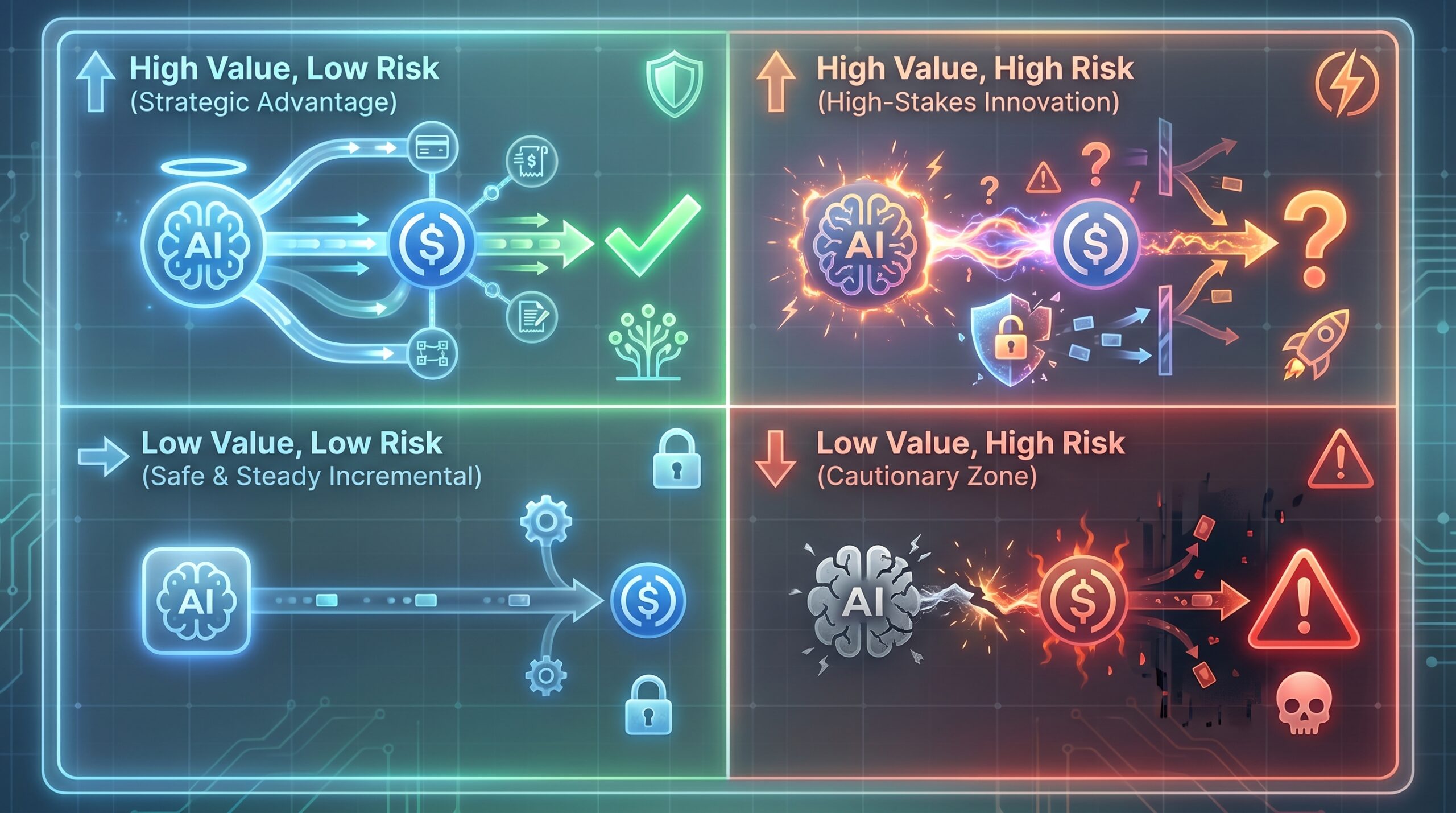
Here is a comprehensive checklist to guide you through the process of deploying a robust, production-ready USDC payment system for your AI agents. Each phase builds upon the previous one, ensuring a structured and secure development approach.
Phase 1: Setup and Funding
The initial phase focuses on establishing the core infrastructure and securing the necessary financial resources for your autonomous payment system.
- Choose your blockchain: Carefully consider the optimal blockchain for your operations. Ethereum offers unparalleled security and decentralization, but typically higher transaction fees. Solana excels in speed and lower costs, ideal for high-volume microtransactions. Polygon offers a balanced solution with lower costs than Ethereum while maintaining strong security. Factor in where your primary payment recipients and services operate to ensure seamless integration.
- Create business wallet: For enhanced security and governance, always opt for professional-grade wallet solutions. Fireblocks or Safe{Wallet} (formerly Gnosis Safe) are recommended due to their multi-signature capabilities, which require multiple approvals for transactions, significantly reducing risk. Never use an exchange wallet for automated payments, as they lack the granular control and security features needed for autonomous agents.
- Fund with USDC: Acquire USDC through reputable and regulated channels such as a Circle Account, Coinbase Prime, or other regulated exchanges compliant with financial regulations. Once acquired, transfer the USDC to your designated business wallet. Ensure that the transfer process is secure and your wallet address is verified to prevent misdirection of funds.
- Set up monitoring: Implement a comprehensive monitoring system to track all financial activities. Configure alerting mechanisms for critical events such as unusually large transactions, when wallet balances fall below predetermined thresholds (e.g., 25% remaining), or if multiple payment attempts fail. Utilize specialized tools like Tenderly or Alchemy for real-time transaction monitoring and detailed analytics, providing immediate visibility into your agent’s financial health.
Phase 2: Agent Integration
This phase involves embedding the payment capabilities directly into your AI agent’s operational logic and connecting it to the chosen wallet infrastructure.
- Integrate wallet SDK: To enable programmatic control over your wallet, integrate the appropriate Software Development Kit (SDK). If using Fireblocks, leverage their API for secure transaction signing. For direct blockchain interaction, utilize libraries like web3.py (for Python) or web3.js (for JavaScript). Crucially, manage all API keys and sensitive credentials using secure environment variables or a dedicated secret management service, never hardcoding them directly into your agent’s codebase.
- Add payment logic: Develop core functions within your agent’s code to handle all aspects of payment processing. This includes: conducting pre-transaction balance checks to prevent insufficient funds, building and formatting blockchain transactions correctly, and implementing robust error handling routines. Incorporate "circuit breakers" that automatically halt payment activities after a predefined number of consecutive failures to prevent uncontrolled spending.
- Implement protocol support: Enhance your agent’s HTTP client to recognize and respond to payment requests specified by emerging protocols like x402. This involves parsing specific HTTP headers (e.g.,
X-402-Price,X-402-Address) from service providers. The agent must then evaluate these requests against its internal policies and approve valid payments, possibly including a payment proof in subsequent requests. - Test on testnet: Before any production deployment, rigorously test your entire payment system on a blockchain testnet. Utilize environments like Goerli for Ethereum-based setups or Devnet for Solana. Request testnet USDC from public faucets to simulate real payments without any financial risk. This phase is critical for identifying and rectifying bugs, validating logic, and ensuring the system operates as expected under various conditions.
Phase 3: Security Hardening
Security hardening is non-negotiable for autonomous financial systems. This phase focuses on implementing safeguards to protect against vulnerabilities and malicious attacks.
- Apply rate limiting: Implement strict rate limits to control the frequency and volume of payments your agent can make. Restrict the maximum number of payments per hour or per day to prevent rapid fund depletion in case of a bug or exploit. Additionally, incorporate progressive backoff strategies for failed transactions, gradually increasing delay between retries to avoid overwhelming the network or triggering further security alerts.
- Add manual override: Develop and implement robust administrative commands that allow for immediate and complete manual intervention. This "kill switch" should enable operators to instantly halt all payment activities, or, in extreme cases, withdraw all funds to a secure cold storage address. This capability is paramount for rapid response to unforeseen security incidents or critical agent malfunctions.
- Audit trail: Establish a comprehensive and immutable audit trail for all payment attempts. Log every transaction with critical details: transaction hashes, exact amounts sent, recipient addresses, and timestamps. Store these logs in a tamper-proof system such as a SIEM (Security Information and Event Management) system or, ideally, an append-only blockchain ledger. This granular logging is crucial for forensic analysis, compliance, and dispute resolution.
- Regular security reviews: Schedule frequent and thorough security audits of both your payment logic and wallet access controls. These reviews, ideally conducted quarterly or whenever significant code changes are deployed, should involve external security experts. The goal is to proactively identify and mitigate vulnerabilities, ensuring that your system remains resilient against evolving threat landscapes.
Phase 4: Production Deployment
Once security is hardened and testing is complete, proceed with careful production deployment, gradually increasing the autonomy and scale of your system.
- Gradual rollout: Initiate your production deployment with conservative payment limits. Start with a very low daily maximum (e.g., $10 per day) and gradually increase this threshold as the system demonstrates reliability and stability over time. This phased approach minimizes financial exposure during the initial operational period and allows for real-world validation.
- Monitor gas optimization: Continuously monitor and optimize gas usage for transactions. On Ethereum, implement EIP-1559 fee estimation to accurately predict and pay for gas. On Solana, develop priority fee calculation mechanisms to ensure transactions are processed swiftly without overpaying. Implementing gas-aware scheduling (e.g., executing transactions during off-peak hours) can significantly reduce operational costs.
- Establish replenishment process: Automate the process of replenishing your agent’s wallet with USDC. Set up triggers for automated USDC purchases or transfers from a central treasury whenever the agent’s wallet balance drops below a predefined threshold. This ensures continuous operation without manual intervention, preventing downtime due to insufficient funds.
- Document incident response: Prepare detailed incident response playbooks for various critical scenarios. These should include step-by-step procedures for handling events such as suspected stolen private keys, persistent transaction failures, or critical protocol upgrades. Clear documentation ensures a swift and coordinated response, minimizing potential damage and recovery time.
Real-World Case Studies
Examining real-world applications of USDC AI agent payments automation provides practical insights into its capabilities and challenges. These case studies highlight how different organizations are leveraging this technology to achieve significant operational efficiencies and introduce innovative services.
Case Study 1: Autonomous Research Agent
Polygence AI developed an advanced research agent tasked with compiling comprehensive market reports. This agent operates autonomously by intelligently purchasing and integrating data from a multitude of external APIs. The implementation details illustrate a sophisticated use of automated payments.
- Architecture: The core AI agent operates on a Python framework, deployed efficiently on AWS Lambda for scalability and cost-effectiveness. Its financial transactions are managed by a Safe{Wallet} smart contract, providing robust security and programmable spending rules on the Ethereum mainnet.
- Payment Flow: When the agent requires specific data, it queries the relevant data API. The API responds by providing x402 payment headers, which include the price and recipient address. The agent’s embedded payment logic then evaluates whether the payment (always under $5 in this scenario) aligns with its budget and policies. If approved, it executes the USDC payment and includes the transaction hash as proof in its subsequent request to access the data.
- Results: This system autonomously processes between 200 and 300 daily payments, with an average transaction value of $1.50. This automation has led to a remarkable 73% reduction in manual data acquisition costs, while simultaneously increasing the breadth and depth of market report coverage.
- Challenge: Initial deployments faced significant transaction failures during periods of high Ethereum network congestion, resulting in delayed data acquisition. This was mitigated by implementing dynamic gas estimation strategies, allowing the agent to adjust its gas bids based on network conditions. As a fallback, the system was configured to switch to Polygon for transactions when Ethereum fees exceeded $2, ensuring continuous operation and cost-efficiency.
Case Study 2: AI Customer Service Agent
HelpDesk AI innovated a customer service agent designed to handle routine inquiries. For more complex issues that require human expertise, this agent autonomously escalates by compensating available human specialists via USDC payments. This unique application demonstrates the power of incentivized human-AI collaboration.
- Architecture: The agent is built on a Node.js framework, facilitating asynchronous communication and high throughput. Its financial operations are secured by a Fireblocks MPC wallet, chosen for its enterprise-grade security and multi-signature capabilities. Payments are executed on the Solana blockchain, leveraging its high speed and low transaction costs.
- Payment Flow: If a customer satisfaction score for an ongoing interaction drops below a predefined threshold, signaling a complex issue, the AI agent automatically offers a USDC bonus to human specialists listed as available. The first specialist to accept the issue is immediately paid the bonus, incentivizing rapid response and resolution.
- Results: This automated escalation and payment system dramatically reduced issue escalation time from an average of 47 minutes to under 90 seconds. Human specialists, motivated by the competitive micro-bonuses, experienced a 15-20% increase in earnings, demonstrating a mutually beneficial human-AI workflow.
- Challenge: A critical requirement was real-time payment confirmation to prevent scenarios where multiple human specialists might accept and work on the same issue due to delayed payment verification. HelpDesk AI integrated the Pyth Network oracle, which provides sub-second transaction verification. This ensured that once a payment was initiated and confirmed by Pyth, the issue was immediately marked as assigned, preventing double work and optimizing resource allocation.
Risk Management and Mitigation
Deploying autonomous financial systems, while offering immense advantages, introduces unique and complex risks that demand specific, robust controls. A proactive and comprehensive risk management strategy is essential to ensure the security, reliability, and compliance of USDC AI agent payment systems.
Technical Risks
- Private key compromise: This is perhaps the most critical technical risk. Mitigation strategies include utilizing MPC wallets (like Fireblocks) that distribute key shares across multiple entities, making single-point-of-failure attacks extremely difficult. Alternatively, integrating hardware security modules (HSMs) keeps private keys isolated in secure enclaves. Crucially, never store private keys in plaintext or easily accessible locations.
- Smart contract bugs: Interactions with smart contracts, whether for a smart contract wallet or a bespoke protocol, carry the risk of vulnerabilities. To mitigate this, rigorously audit all smart contract code, ideally by multiple independent security firms. Prioritize using established, battle-tested protocols and open-source libraries over custom-written, unverified code to leverage community scrutiny and proven reliability.
- Blockchain congestion: High network traffic can lead to prolonged transaction times, increased gas fees, and transaction failures. Implement a multi-chain fallback mechanism allowing your agent to switch to a less congested chain (e.g., from Ethereum to Polygon or Base) when fees become prohibitively high or transaction throughput drops. Integrate dynamic gas estimation to adapt to real-time network conditions.
- Oracle manipulation: Malicious actors could attempt to feed false data to oracles, leading to incorrect payment decisions. Mitigate this by utilizing decentralized oracle networks (like Chainlink) that aggregate data from multiple independent sources, making manipulation significantly harder. Implement checks for anomalous price feeds and cross-reference data from different oracle providers where feasible.
Financial Risks
- Volatility exposure: While USDC is stable, the gas fees required to process transactions on certain blockchains (especially layer 1s) can be highly volatile. A sudden spike in ETH gas prices could quickly deplete an agent’s allocated budget. To address this, budget gas costs in dollar terms, not native cryptocurrency units, and implement dynamic gas fee logic to adjust spending based on real-time network conditions.
- Regulatory changes: The regulatory landscape for stablecoins and autonomous digital entities is still evolving. Upcoming legislation, such as the EU’s MiCA, could impact operations. Continuously monitor stablecoin legislation in all relevant jurisdictions and have contingency plans in place for potential restrictions or new compliance requirements that might affect USDC usage.
- Counterparty risk: When an AI agent interacts with other entities (human or AI), there’s a risk of fraud or non-compliance. Implement automated verification steps for payment recipients. This includes integrating with on-chain analytics tools like Chainalysis to screen addresses against sanctions lists or known illicit activities.
Operational Risks
- Runaway spending: An undetected bug or exploit could cause an agent to initiate an uncontrolled number of transactions, rapidly draining funds. Implement strict hard daily and weekly spending limits. For payments exceeding a certain threshold, require multi-signature approval from human operators. Integrate an "emergency stop" or kill-switch mechanism that can instantly halt all agent payment activities.
- Transaction failure: Intermittent network issues, incorrect gas estimates, or smart contract reverts can lead to failed transactions. Build robust retry logic with exponential backoff, which gradually increases delays between retries to avoid exacerbating network congestion. Implement real-time monitoring to detect and alert on stuck transactions, providing clear pathways for manual intervention or re-submission.
- Balance depletion: While replenishment can be automated, critical failures in the replenishment process could leave an agent without funds, halting its operations. Set up automated alerts at multiple balance thresholds (e.g., 25%, 10%, and 5% of total funds) to notify human operators. Link these alerts to automatic replenishment mechanisms from a secure treasury to ensure continuous liquidity.
Cost Analysis and Optimization
Operating an AI agent payment system involves various cost components that need careful analysis and optimization to ensure economic viability. Understanding where costs accrue is the first step towards building an efficient and sustainable autonomous financial operation.
- Transaction fees (gas): These are highly variable and chain-dependent. On Ethereum, gas fees can range from $0.50 to $5.00 per transaction, fluctuating based on network congestion. Solana offers significantly lower costs, typically between $0.0001 and $0.001 per transaction, due to its high throughput. Polygon, a popular layer 2 solution for Ethereum, provides a middle ground at $0.001 to $0.01. For agents making hundreds or thousands of transactions daily, choosing a lower-cost blockchain or layer 2 solution is paramount.
- Protocol fees: Some specialized payment protocols charge a percentage of each transaction. For instance, while the x402 Protocol is open-source and free to use, proprietary solutions like Circle Nanopayments may impose volume-based fees. Developers must factor these into their cost models and choose protocols that align with their operational scale and budget.
- Wallet infrastructure: Enterprise-grade MPC wallets like Fireblocks involve monthly subscription fees (starting from $500+) in addition to per-transaction costs. Smart contract wallets, on the other hand, typically do not have ongoing subscription fees but require initial development resources for setup and customization. The choice depends on the organization’s security requirements, existing infrastructure, and development capabilities.
- Oracle calls: When agents rely on blockchain oracles for external data (e.g., Chainlink price feeds), each data request incurs a small fee, typically ranging from $0.10 to $1.00 depending on the feed’s frequency and demand. Implementing intelligent caching strategies for frequently accessed but slowly changing data can significantly reduce these costs.
Optimization strategies:
- Batch payments where possible: Instead of making 100 individual $0.10 payments, aggregate them into a single $10 payment with internal accounting. This dramatically reduces per-transaction blockchain fees and can be very effective for internal transfers or recurring payments to the same recipient.
- Use Layer 2 solutions: For Ethereum-based agents, offloading transactions to Layer 2 scaling solutions like Arbitrum or Optimism can drastically cut gas costs while still benefiting from Ethereum’s security.
- Implement gas-aware scheduling: Analyze blockchain network activity patterns and schedule non-urgent transactions during off-peak hours when gas fees are typically lower. This requires a dynamic gas estimation and scheduling module within the agent.
- Negotiate enterprise rates: For high-volume operations, engage with infrastructure providers (e.g., blockchain RPC providers, oracle networks) to negotiate enterprise-level discounts or custom pricing tiers.
Future Developments and Trends
USDC AI Agent Payments Automation: The Definitive Guide for 2026 Framework 3
- Signal: What changed and why this matters now.
- Decision framework: Compare options by cost, risk, and implementation effort.
- Execution checklist: Concrete next step and measurable outcome.
The field of USDC AI agent payments is rapidly evolving, driven by innovations in both AI and blockchain technologies. Several key developments are poised to reshape the landscape of autonomous financial systems in the coming years (2024-2025).
- ERC-7677 and ERC-7683: These are new Ethereum Improvement Proposals (EIPs) aimed at standardizing cross-chain intent resolution. Such standards will significantly simplify how AI agents execute payments and interact across disparate blockchains without manual bridge integrations. This will lead to a more interconnected and fluid multi-chain ecosystem for agents.
- AI-specific Layer 2s: Projects like Ritual are actively building specialized blockchains and Layer 2 solutions optimized specifically for AI agents. These networks often come with integrated payment channels and compute marketplaces, creating a tailored environment for autonomous agents to operate efficiently and cost-effectively. They aim to reduce latency and transaction costs, which are critical for real-time AI applications.
- Enhanced privacy: The integration of Zero-Knowledge Proofs (ZKPs) is expected to become more prevalent. ZKPs will enable agents to make payments and execute transactions without revealing the full transaction graphs or sensitive data, preserving privacy. For AI agents operating with proprietary algorithms or handling sensitive information, this enhanced privacy will be a competitive advantage.
- Regulatory frameworks: The emergence of comprehensive regulatory frameworks, such as the EU’s MiCA regulations and anticipated US legislation, will provide much-needed clarity for autonomous entity payments. These regulations are crucial for reducing compliance uncertainty for enterprises, paving the way for broader institutional adoption and large-scale deployment of AI agent payment systems.
Frequently Asked Questions
What is the minimum technical requirement to implement USDC AI payments?
You need basic programming knowledge (Python/JavaScript is common), a blockchain wallet set up for USDC, and some USDC funds to get started. Many protocols and organizations provide SDKs (Software Development Kits) that abstract away much of the underlying blockchain complexity, making integration easier. It is highly recommended to start with testnets first to gain experience without financial risk.
How do AI agents securely store private keys for payments?
AI agents should never store private keys directly in their code or accessible environment variables. Instead, they should utilize secure solutions like MPC (Multi-Party Computation) wallet services that provide API-based signing, where the key shares are distributed and never fully exposed to the agent. Another option is hardware security modules (HSMs), which keep keys in highly secure, tamper-proof physical enclaves. The agent sends transaction requests to these secure modules, which then sign them without ever revealing the private key.
Can AI agents earn USDC autonomously as well as spend it?
Yes, advanced AI agents can indeed be designed to earn USDC autonomously. This can be achieved by offering valuable services such as advanced data analysis, generative content creation, algorithmic trading strategies, or even acting as autonomous service providers in a decentralized marketplace. To do this, they need to implement payment reception logic, manage their incoming funds, and potentially integrate with invoicing systems for human or other AI clients.
What happens if an AI agent makes an incorrect payment?
To mitigate the risk of incorrect payments, it’s crucial to implement several safeguards. For larger payments, multi-signature requirements, where human oversight is needed above a certain threshold, are effective. For smaller, more frequent payments, build robust validation steps within the agent’s logic to check recipient addresses and amounts multiple times before transaction submission. Maintain comprehensive, immutable logs of all transactions to facilitate forensic analysis and potential recovery through customer support or dispute resolution processes if an error occurs. Emergency kill switches can also halt runaway spending.
How are tax implications handled for autonomous AI payments?
Tax implications for autonomous AI payments can be complex and are an evolving area of law. It is crucial to consult with a tax professional who specializes in cryptocurrency and blockchain transactions. Generally, each payment or receipt by an AI agent might be considered a taxable event, depending on the jurisdiction and the nature of the transaction (e.g., gain/loss on conversion, income from services). Maintaining detailed, timestamped records of all transactions, including amounts, dates, and counterparties, is essential for accurate tax reporting. Some jurisdictions may eventually introduce specific rules for autonomous entities.
Which blockchain is best for USDC AI agent payments?
The "best" blockchain depends on your specific needs. For development and testing, Ethereum testnets (like Sepolia) or Solana devnet are ideal. For production, consider Ethereum for high-value transactions due to its robust security and decentralization, Solana for high-volume micropayments where speed and low cost are paramount, or Polygon (a Layer 2 on Ethereum) for a balanced approach between cost and security. The choice should also be influenced by where your payment recipients operate and the overall ecosystem support available on that chain.
Can AI agents use other stablecoins besides USDC?
Technically, AI agents can be configured to use other stablecoins. However, USDC offers the most compelling combination of stability, robust regulatory compliance, and widespread ecosystem support, making it the preferred choice for most enterprise-grade autonomous payment systems. Other options exist, such as USDT (Tether), but it generally has a less clear regulatory standing. DAI, another popular stablecoin, is decentralized but can exhibit slightly more price volatility compared to USDC’s direct fiat backing. Most payment protocols for AI agents also prioritize native USDC support, simplifying integration.
Key Takeaways for USDC AI Agent Payments Automation
- Autonomous Financial Transactions: AI agents can programmatically send, receive, and manage USDC stablecoin payments for services, data, and APIs without human intervention.
- USDC’s Advantages: Unmatched price stability, fast transaction speeds (chain-dependent), strong regulatory compliance, and a mature ecosystem make USDC the preferred choice.
- Core System Components: Robust AI agent logic, secure wallet infrastructure (MPC or smart contract), specialized payment protocols (x402, Nanopayments), and reliable oracle services are essential.
- Phased Implementation: A structured approach covering setup, agent integration, security hardening, and production deployment minimizes risks and ensures stability.
- Critical Security Measures: Prioritize MPC wallets, rigorous smart contract audits, multi-chain fallback strategies, and strong controls against runaway spending for system integrity.
- Cost Optimization: Batch payments, use Layer 2 solutions, implement gas-aware scheduling, and negotiate enterprise rates to manage operational expenses effectively.
- Future Evolution: Upcoming standards (ERC-7677/7683), AI-specific Layer 2s, ZKPs for privacy, and clearer regulatory frameworks will drive further adoption and innovation.
What to Do Next
To begin your journey with USDC AI agent payments automation, adopt a methodological and exploratory approach. Start small on a testnet implementation. Choose one readily available payment protocol, such as x402, and focus on integrating basic payment functionality into your AI agent’s logic. Utilize testnet USDC from public faucets to conduct experiments and gain practical experience without incurring any financial risk. This sandbox environment is crucial for understanding the intricacies of blockchain interactions and agent-specific payment flows.
Engage with the vibrant developer communities dedicated to this emerging field. Join Discord channels for projects like the x402 Protocol or the Circle Developer Channel. These platforms offer invaluable opportunities to learn from peers, share insights, and get support from experienced implementers. Participate in workshops, hackathons, and online forums focused on the convergence of AI and blockchain technology to accelerate your learning and networking.
When transitioning to production deployment, exercise extreme caution. Begin with very strict payment limits and maintain continuous manual oversight. Gradually increase the autonomy of your system as it consistently demonstrates reliability and proves its operational integrity in a live environment. Always ensure that robust emergency stop mechanisms are in place and that comprehensive monitoring tools are active, allowing for immediate intervention if any anomalies or security threats arise.
Document version: 2026.1 | Last updated: April 28, 2026 | Circle USDC supply: $187.3B | x402 Protocol version: 2.3.1