
AI agents are transforming financial markets by automating complex tasks, enhancing decision-making, and improving operational efficiency. From algorithmic trading to fraud detection and portfolio management, these autonomous systems leverage advanced AI to analyze vast datasets, predict market movements, and execute strategies with minimal human intervention. Key benefits include increased speed, accuracy, and scalability, alongside the potential for groundbreaking innovation in financial product development and customer service. However, their adoption also introduces significant challenges, such as regulatory compliance, ethical considerations, data privacy, and the critical need for robust security measures. The future of AI agents in finance points towards hybrid human-AI models, emphasizing collaboration and continuous learning within a highly regulated but dynamic environment.
\n
AI agents for financial markets are autonomous software programs or systems that utilize artificial intelligence technologies, such as machine learning, natural language processing, and advanced analytics, to perform tasks, make decisions, and interact within financial ecosystems without direct human supervision. These agents are designed to analyze real-time market data, execute trades, detect anomalies, manage portfolios, assess credit risk, and engage in various other financial operations, often learning and adapting over time to optimize their performance.
\n
\n
Introduction to AI Agents in Finance
\n
The financial world stands at the precipice of a revolutionary transformation, driven by the increasing sophistication and deployment of artificial intelligence (AI) agents. These intelligent systems are no longer confined to the realm of science fiction; they are actively reshaping how financial institutions operate, how decisions are made, and how individuals interact with their money. The convergence of vast datasets, advanced computing power, and cutting-edge algorithms has paved the way for autonomous entities capable of performing complex financial tasks with unprecedented speed and accuracy.
\n
This comprehensive guide delves into the intricate world of AI agents for financial markets, exploring their foundational concepts, diverse applications, inherent benefits, and the significant challenges they present. We will uncover how these agents are evolving beyond mere automation to become strategic partners in navigating the volatile and intricate landscape of global finance. From algorithmic trading floors to personalized robo-advisors, AI agents are redefining efficiency, risk management, and client engagement. Understanding their capabilities and limitations is paramount for anyone seeking to thrive in the financial ecosystem of tomorrow.
\n
What Are AI Agents?
\n
At its core, an AI agent is an autonomous software entity designed to perceive its environment through sensors, process information, make decisions, and act upon that environment through effectors. In the context of finance, these \”sensors\” involve ingesting prodigious amounts of financial data—such as stock prices, economic indicators, news sentiment, and company reports. Their \”effectors\” translate into actions like executing trades, adjusting portfolios, sending alerts, or interacting with clients.
\n
AI agents leverage various artificial intelligence techniques, including machine learning (ML), deep learning (DL), natural language processing (NLP), and reinforcement learning (RL). These technologies enable agents to not only follow predefined rules but also to learn from experience, identify patterns, adapt to changing market conditions, and even predict future trends. The level of autonomy can vary, from semi-autonomous agents that make recommendations to fully autonomous systems that execute decisions without human intervention.
\n
Distinguishing AI Agents from Traditional AI
\n
While all AI agents utilize AI, not all AI constitutes an AI agent. The key differentiator lies in the agent’s autonomy, goal-directed behavior, and its ability to perceive and act within an environment over time. Traditional AI applications might excel at specific tasks, such as classifying data or generating reports, but often lack the continuous perception-action loop and the ability to learn and adapt that defines an agent.
\n
For instance, a traditional AI system might analyze historical stock data to identify trends, while an AI agent would continuously monitor real-time market feeds, decide when to buy or sell based on its learned strategy, and directly execute those trades. Agents are designed to be proactive and goal-oriented, constantly striving to optimize a predefined objective, such as maximizing profit or minimizing risk, within a dynamic environment. They can also represent and reason about their own beliefs, desires, and intentions, exhibiting more sophisticated cognitive capabilities than simpler AI programs.
\n
AI Agent vs. Traditional AI: Key Differentiators
- AI Agent: Autonomous, goal-directed, perceives environment, acts on environment, learns and adapts over time. Examples: Algorithmic trading bots, robo-advisors.
- Traditional AI: Performs specific tasks, often reactive, requires human input for execution or adaptation. Examples: Data classification models, static recommendation engines.
- Key Distinction: The perception-action loop and the ability to operate autonomously over a continuous period.
- Cognitive Level: Agents often exhibit higher-level reasoning and decision-making beyond pattern recognition.
- Financial Application Focus: Agents manage ongoing processes (e.g., portfolio rebalancing), while traditional AI supports specific analytical tasks (e.g., fraud scoring).
\n
The Rise of AI in Financial Markets
\n
The integration of artificial intelligence into financial markets is not a sudden phenomenon but the culmination of decades of technological advancement and an increasing demand for more efficient, accurate, and scalable financial operations. The journey from early computational models to today’s sophisticated AI agents reflects a continuous drive for innovation within a highly competitive industry.
\n
Historical Context and Evolution
\n
The seeds of AI in finance were sown with the advent of early statistical models and programmatic trading systems in the 1970s and 1980s. These systems relied on predefined rules and mathematical formulas to execute trades, marking the beginning of automation in financial markets. As computing power grew, so did the complexity of these models, incorporating more variables and conditional logic.
\n
The 1990s and early 2000s saw the rise of expert systems and rudimentary machine learning algorithms, which could learn from historical data to some extent. However, these were often limited by data availability and computational constraints. The real breakthrough came with the big data revolution and advancements in machine learning, particularly deep learning, in the last decade. The sheer volume and velocity of financial data, coupled with powerful GPUs, enabled the training of models capable of discerning subtle patterns and making predictions that were previously impossible. This era ushered in the concept of agents that could learn and adapt, evolving beyond static rule-based systems.
\n
Current State of AI Adoption in Finance
\n
Today, AI adoption in finance is pervasive, with institutions of all sizes leveraging these technologies across various departments. Banks, hedge funds, asset management firms, and fintech startups are deploying AI agents for tasks ranging from ultra-high-frequency trading to complex risk modeling and personalized financial advice. According to recent industry reports, investment in AI within the financial sector continues to grow exponentially, with a significant portion dedicated to developing and deploying autonomous systems.
\n
The current landscape is characterized by a blend of specialized AI applications and more generalized AI agents capable of handling diverse tasks. We see everything from sophisticated natural language processing agents analyzing earnings call transcripts to reinforcement learning agents optimizing trading strategies in real-time. The goal is no longer just automation, but intelligent automation—systems that can learn, reason, and make decisions that contribute directly to strategic objectives.
\n
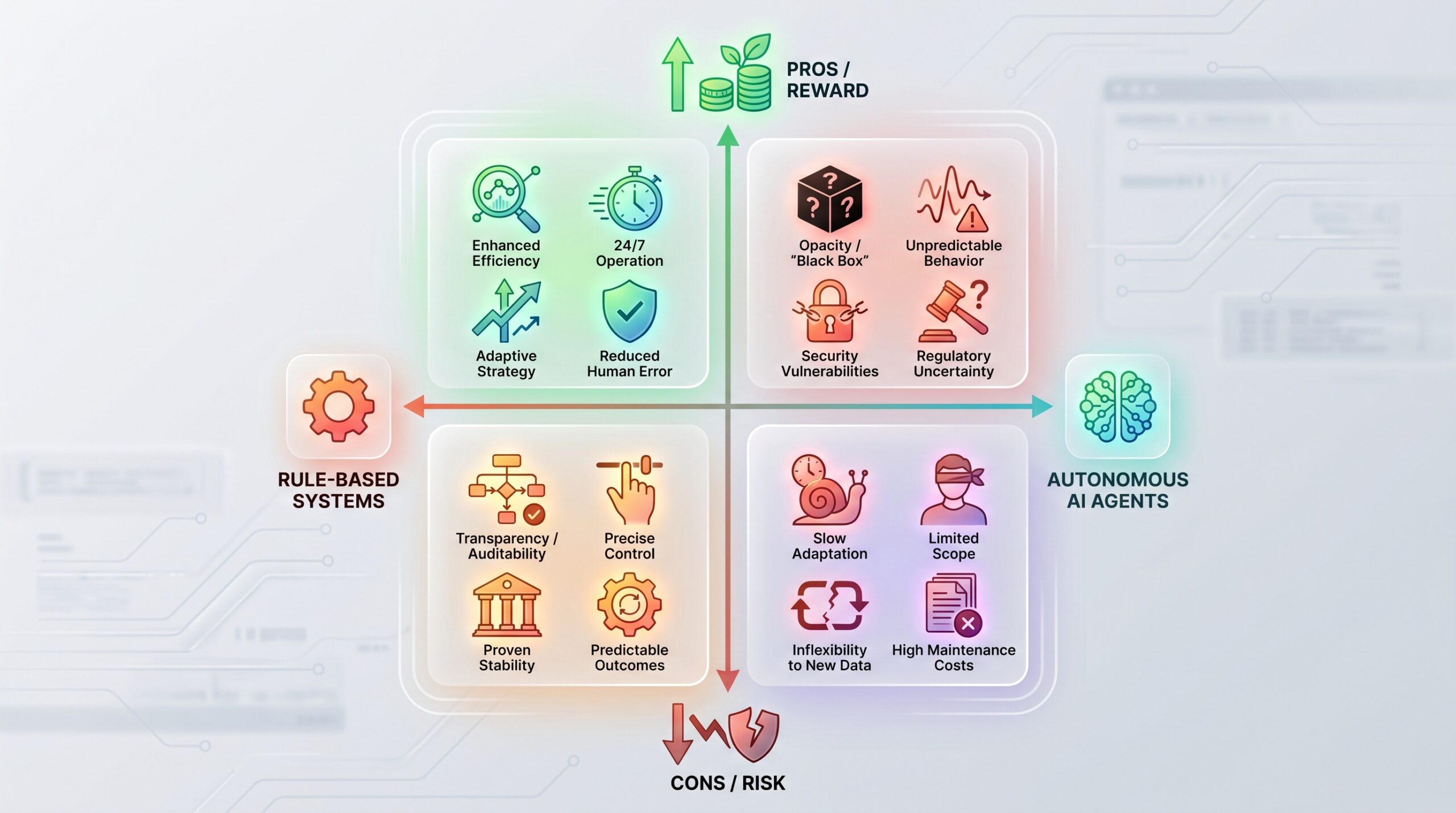
Key Applications of AI Agents in Financial Markets
\n
AI agents are transforming virtually every facet of the financial industry. Their ability to process, analyze, and act upon vast quantities of data at incredible speeds makes them indispensable tools for modern financial institutions. Here are some of the most impactful applications:
\n
Algorithmic Trading and Portfolio Management
\n
This is perhaps one of the most visible and widely adopted applications. AI agents are at the heart of algorithmic trading, executing orders at optimal times, identifying arbitrage opportunities, and managing complex trading strategies. These agents can sift through market data, news feeds, and economic indicators simultaneously, reacting to events much faster than human traders.
\n
- \n
- High-Frequency Trading (HFT): Agents are used to execute a large number of orders at extremely high speeds, profiting from minute price discrepancies.
- Smart Order Routing: Directing orders to the best available market to achieve optimal execution prices.
- Portfolio Optimization: Continuously rebalancing portfolios based on market conditions, risk tolerance, and investment goals. Reinforcement learning agents are particularly effective here, learning to maximize returns under various constraints. This can involve sophisticated models, such as those that learn optimal strategies in complex environments.
- Event-Driven Trading: Exploiting market movements triggered by specific events, parsed and acted upon by NLP-driven agents.
\n
\n
\n
\n
\n
Fraud Detection and Risk Management
\n
The financial sector faces constant threats from fraud and requires robust risk management systems. AI agents excel in identifying anomalies and patterns indicative of fraudulent activity or potential financial risks far more effectively than traditional methods.
\n
- \n
- Transactional Fraud Detection: Monitoring millions of transactions in real-time to flag suspicious activities, such as unusual spending patterns or unauthorized access attempts.
- Credit Risk Assessment: Analyzing a broader range of data points, including behavioral and alternative data, to assess the creditworthiness of individuals and businesses with greater accuracy. This moves beyond traditional credit scores.
- Market Risk Analysis: Identifying potential market manipulation, anticipating market crashes, or assessing exposure to various geopolitical or economic risks.
- Compliance Monitoring: Ensuring adherence to regulatory guidelines by identifying non-compliant transactions or behaviors.
\n
\n
\n
\n
\n
Customer Service and Robo-Advisory
\n
AI agents are revolutionizing how financial institutions interact with their clients, offering personalized services at scale.
\n
- \n
- Chatbots and Virtual Assistants: Providing instant support, answering queries, and guiding customers through financial processes 24/7. These range from simple FAQ bots to sophisticated conversational agents.
- Robo-Advisors: Offering automated, algorithm-driven financial planning and investment management services. These agents create and manage diversified portfolios based on a client’s risk profile, financial goals, and time horizon, often at a lower cost than traditional advisors.
- Personalized Financial Insights: Analyzing customer spending habits, income, and financial goals to offer tailored advice on budgeting, saving, and debt management.
\n
\n
\n
\n
Regulatory Compliance and Anti-Money Laundering (AML)
\n
Financial institutions operate under a complex web of regulations. AI agents can significantly streamline and improve compliance efforts.
\n
- \n
- Automated Compliance Checks: Continuously monitoring transactions and customer data against regulatory requirements to ensure adherence to laws like GDPR, AML, and KYC (Know Your Customer).
- Suspicious Activity Reporting (SAR): Automating the identification and reporting of potentially illicit financial activities, drastically reducing the manual effort involved.
- Sanctions Screening: Rapidly checking transactions and customer identities against global sanctions lists to prevent illegal dealings.
\n
\n
\n
\n
Market Sentiment Analysis and Forecasting
\n
Understanding public and institutional sentiment is crucial for predicting market movements. AI agents, particularly those leveraging NLP, excel at this.
\n
- \n
- News and Social Media Analysis: Scanning vast amounts of news articles, social media posts, and public forums to gauge sentiment towards companies, industries, or entire markets. This can provide early indicators of market shifts.
- Earnings Call Analysis: Processing and analyzing transcripts of earnings calls to extract key insights, identify tones, and predict future performance.
- Economic Forecasting: Integrating diverse economic indicators, government reports, and geopolitical developments to build more accurate predictive models for inflation, interest rates, and GDP growth.
\n
\n
\n
\n
Credit Scoring and Loan Origination
\n
AI agents are enhancing the speed and fairness of credit decisions.
\n
- \n
- Automated Underwriting: Streamlining the loan application and approval process by automatically assessing applicant data against lending criteria.
- Alternative Data Analysis: Incorporating non-traditional data sources (e.g., utility payments, rental history, online behavior) to generate more inclusive and accurate credit scores, especially for individuals with limited credit history.
- Dynamic Pricing: Adjusting loan interest rates and terms in real-time based on an applicant’s risk profile and market conditions.
\n
\n
\n
\n
AI Agent Applications in Financial Markets
- Algorithmic Trading: HFT, Smart Order Routing, Portfolio Optimization, Event-Driven Trading.
- Fraud & Risk: Transactional Fraud Detection, Credit Risk Assessment, Market Risk Analysis, Compliance Monitoring.
- Customer Service: Chatbots, Robo-Advisors, Personalized Financial Insights.
- Compliance: Automated Checks, SAR Reporting, Sanctions Screening.
- Sentiment & Forecasting: News/Social Media Analysis, Earnings Call Analysis, Economic Forecasting.
- Lending: Automated Underwriting, Alternative Data Analysis, Dynamic Pricing.
\n
Benefits of Implementing AI Agents in Finance
\n
The widespread adoption of AI agents in financial markets is driven by a compelling array of benefits that directly address the industry’s need for greater efficiency, accuracy, and innovation. These advantages translate into significant competitive differentiation and improved outcomes for both institutions and their clients.
\n
Enhanced Efficiency and Automation
\n
One of the most immediate and tangible benefits of AI agents is their ability to automate repetitive, high-volume, and time-consuming tasks. This frees up human resources to focus on more strategic, complex, and creative endeavors.
\n
- \n
- Faster Processing: Agents can process and analyze data at speeds impossible for humans, leading to quicker transaction execution, faster loan approvals, and rapid anomaly detection.
- Reduced Manual Error: Automation minimizes the risk of human error in data entry, calculations, and decision-making, leading to greater accuracy in financial operations.
- Operational Cost Reduction: By automating tasks and optimizing workflows, institutions can significantly reduce operational overheads associated with manual labor and traditional processes.
\n
\n
\n
\n
Improved Decision-Making and Accuracy
\n
AI agents bring a new level of analytical rigor to financial decision-making, leveraging capabilities that go far beyond human cognitive limits.
\n
- \n
- Data-Driven Insights: Agents can analyze vast, complex datasets, identifying subtle patterns and correlations that human analysts might miss. This leads to more informed and empirical decisions.
- Predictive Analytics: Through advanced machine learning, agents can forecast market movements, credit defaults, and other financial events with greater precision, enabling proactive strategies.
- Reduced Bias: When properly designed and trained on diverse data, AI agents can make decisions free from human emotional biases, which are often detrimental in high-stakes financial scenarios.
\n
\n
\n
\n
Scalability and Cost Reduction
\n
The digital nature of AI agents allows financial services to scale operations rapidly without proportional increases in human capital or infrastructure.
\n
- \n
- Infinite Workload Capacity: Unlike human teams, AI agents can handle an almost infinite number of tasks simultaneously and can be easily replicated or scaled up during peak demand.
- Lower Operating Costs: Automating processes and reducing the need for extensive human oversight directly translates into lower operating expenses. This benefit is particularly acute in areas like back-office operations and customer support.
- Market Expansion: The ability to operate efficiently at scale allows institutions to enter new markets or serve a larger client base with existing resources. Consider how USDC AI agent payments automation can facilitate global financial transactions at scale.
\n
\n
\n
\n
Market Innovation and Competitive Advantage
\n
AI agents are a powerful catalyst for innovation, enabling the creation of new financial products and services that differentiate institutions in a crowded market.
\n
- \n
- New Product Development: Agents can analyze market gaps and consumer needs, suggesting innovative financial products or customized solutions.
- Personalized Financial Services: The ability to tailor advice, products, and experiences to individual clients creates a significant competitive edge and fosters stronger client relationships.
- Agility and Responsiveness: Institutions deploying AI agents can react more swiftly to market changes, regulatory shifts, and competitive pressures, maintaining a proactive stance.
\n
\n
\n
\n
Personalization and Customer Experience
\n
Modern consumers expect highly personalized and seamless experiences. AI agents are instrumental in delivering this within the financial sector.
\n
- \n
- Tailored Advice: Robo-advisors and virtual assistants can offer investment advice, budgeting tips, and product recommendations specifically suited to each client’s unique financial situation and goals.
- 24/7 Availability: Chatbots and automated systems ensure that clients can access support and information anytime, anywhere, significantly improving convenience.
- Proactive Engagement: Agents can proactively alert clients to potential issues (e.g., suspicious activity, upcoming bills) or opportunities (e.g., better interest rates, investment options), enhancing trust and satisfaction.
\n
\n
\n
\n
Challenges and Risks of AI Agents in Financial Markets
\n
While the benefits of AI agents in finance are substantial, their implementation is not without significant hurdles and risks. Institutions must carefully navigate these challenges to ensure responsible, ethical, and effective deployment.
\n
Data Privacy and Security Concerns
\n
Financial data is among the most sensitive information a person possesses. The vast amounts of data required to train and operate AI agents raise critical concerns.
\n
- \n
- Vulnerability to Cyberattacks: AI systems, especially those that are interconnected, present new attack vectors for malicious actors. Breaches could lead to devastating financial losses and reputational damage.
- Data Leakage: The potential for sensitive financial information to be inadvertently exposed or misused, particularly if agents are integrated with third-party services.
- Compliance with Data Regulations: Adhering to strict data privacy regulations like GDPR, CCPA, and upcoming financial data protection acts requires robust data governance frameworks and ethical data handling practices for AI models.
\n
\n
\n
\n
Regulatory and Compliance Complexities
\n
The dynamic nature of AI agents often outpaces existing regulatory frameworks, creating a complex environment for financial institutions.
\n
- \n
- Lack of Specific AI Regulations: Many jurisdictions are still developing comprehensive regulations specifically for AI in finance, leading to uncertainty and potential compliance gaps.
- Accountability and Liability: Determining who is accountable when an autonomous AI agent makes an error resulting in financial loss or regulatory breach is a significant legal and ethical challenge.
- Auditability and Reporting: Regulators require transparent and auditable systems. Ensuring that AI agent decisions can be explained and verified for compliance purposes is critical. The push for faithful autoformalization via roundtrip verification and repair aims to address some of these issues.
\n
\n
\n
\n
Ethical Considerations and Bias
\n
AI agents are only as unbiased as the data they are trained on and the algorithms that govern them. This presents significant ethical dilemmas in finance.
\n
- \n
- Algorithmic Bias: If training data reflects historical human biases (e.g., racial or gender bias in lending), the AI agent will perpetuate and even amplify these biases, leading to discriminatory outcomes.
- Fairness and Equity: Ensuring that AI-driven decisions (e.g., credit scoring, insurance premiums) are fair and equitable for all demographic groups is a major ethical imperative.
- Lack of Human Empathy: Autonomous agents, by their nature, lack empathy, which can be a critical component in sensitive financial interactions, especially during times of hardship.
\n
\n
\n
\n
Explainability and Transparency (XAI)
\n
The \”black box\” nature of many advanced AI models, particularly deep learning networks, poses a significant challenge in regulated industries like finance.
\n
- \n
- Debugging and Auditing: Understanding why an AI agent made a particular decision is crucial for debugging errors, identifying biases, and meeting regulatory requirements.
- Trust and Acceptance: Users—both internal employees and external clients—are more likely to trust and adopt systems whose decisions can be understood and explained.
- Regulatory Requirement: Regulators increasingly demand explainability, especially for decisions impacting individuals (e.g., loan denials).
\n
\n
\n
\n
System Complexity and Integration Challenges
\n
Deploying AI agents requires sophisticated infrastructure and seamless integration with existing, often legacy, financial systems.
\n
- \n
- Integration with Legacy Systems: Financial institutions often rely on decades-old infrastructure. Integrating new, complex AI systems without disrupting existing operations is a formidable task.
- Talent Gap: There is a significant shortage of skilled AI engineers, data scientists, and ethicists capable of developing, deploying, and managing these advanced systems.
- Maintenance and Monitoring: AI agents require continuous monitoring, retraining, and maintenance to ensure their performance remains optimal and they adapt to evolving market conditions and data distributions. This involves continuous learning loops and sophisticated asynchronous AI execution policies.
\n
\n
\n
\n
Job Displacement and Workforce Transformation
\n
The automation enabled by AI agents inevitably leads to shifts in the workforce landscape.
\n
- \n
- Impact on Human Employment: While AI creates new roles, it also automates tasks traditionally performed by humans, leading to concerns about job displacement in certain financial roles.
- Need for Reskilling: The financial workforce will require significant reskilling and upskilling to work alongside AI agents, focusing on roles that involve AI oversight, creative problem-solving, and relationship management.
\n
\n
\n
Challenges of AI Agents in Financial Markets
- Data Risks: Privacy, Security, Cyberattacks, Data Leakage.
- Regulatory Vacuum: Unclear regulations, Accountability, Auditability.
- Ethical Concerns: Algorithmic Bias, Fairness, Lack of Empathy.
- Transparency Issues: \”Black Box\” models, Debugging, Trust.
- Implementation Headaches: Legacy System Integration, Talent Gap, Maintenance.
- Workforce Impact: Job Displacement, Reskilling Needs.
\n
Future Trends and Development
\n
The field of AI agents in financial markets is rapidly evolving, driven by ongoing research, technological breakthroughs, and an increasing understanding of their potential. The next decade promises even more sophisticated and integrated AI solutions.
\n
Hybrid Human-AI Models
\n
Rather than complete replacement, the future largely points toward a collaborative ecosystem where humans and AI agents work synergistically. These hybrid models leverage the strengths of both entities—AI for speed, data processing, and pattern recognition; humans for creativity, emotional intelligence, strategic oversight, and ethical reasoning.
\n
- \n
- Augmented Intelligence: AI agents will increasingly serve as intelligent assistants, augmenting human capabilities by providing sophisticated insights, flagging critical anomalies, and automating routine tasks, allowing human experts to make final, nuanced decisions.
- Explainable AI (XAI) in Practice: The demand for transparency will drive the development of more inherently interpretable AI models and tools that can clearly articulate their reasoning to human users, fostering trust and facilitating collaboration.
\n
\n
\n
Advancements in Reinforcement Learning and Generative AI
\n
Cutting-edge AI research will find direct applications in finance.
\n
- \n
- Sophisticated Decision-Making with RL: Reinforcement learning agents, similar to those that master complex games, will become even more adept at optimizing long-term financial strategies in dynamic and uncertain markets, learning from trial and error. This aligns with developments in Discrete Diffusion Policies for Asynchronous AI Execution.
- Generative AI for Scenario Planning and Product Design: Generative AI models could simulate market scenarios, create synthetic financial data for stress testing, or even autonomously design novel financial products tailored to specific market niches or regulatory environments. NVIDIA’s Nemotron 3 Nano Omni, for example, explores multimodal AI that could empower such agents. See NVIDIA Nemotron 3 Nano Omni: Multimodal AI for Agents and NVIDIA Nemotron 3 Nano Omni Released for Multimodal AI Agents for more details.
\n
\n
\n
Interoperability and Ecosystem Integration
\n
The future will see AI agents operating more seamlessly across different platforms and institutions, supported by standardized protocols and open APIs.
\n
- \n
- Connected Financial Ecosystems: Agents from different financial service providers might exchange information securely to offer a more holistic view of a client’s financial health or to collaborate on complex transactions.
- API-Driven Finance: The increasing prevalence of API-first strategies will enable easier integration of third-party AI agents and specialized financial AI services, fostering a more modular and innovative ecosystem.
\n
\n
\n
Decentralized Finance (DeFi) and Blockchain Integration
\n
The emergence of DeFi offers new paradigms for AI agents.
\n
- \n
- Autonomous Agents on Blockchain: AI agents could operate on decentralized ledgers, executing smart contracts, managing decentralized autonomous organizations (DAOs), and providing liquidity in DeFi protocols without central intermediaries.
- Enhanced Security and Transparency: Blockchain’s inherent security and immutability could provide a robust and auditable foundation for AI agent operations, particularly in areas requiring high trust and transparency.
\n
\n
\n
Autonomous Financial Planning
\n
Beyond current robo-advisory, AI agents will offer increasingly comprehensive and proactive financial planning.
\n
- \n
- Holistic Wealth Management: Agents will integrate data from budgeting, investments, taxes, insurance, and estate planning to provide truly holistic and adaptive financial guidance, anticipating life events and market changes.
- Predictive Life Event Management: AI could analyze an individual’s data to predict significant life events (e.g., buying a home, retirement, education planning) and proactively offer tailored financial strategies and recommendations.
\n
\n
\n
Case Studies and Real-World Examples
AI Agents for Financial Markets: The Complete Guide to Autonomous Finance Framework 3
- Signal: What changed and why this matters now.
- Decision framework: Compare options by cost, risk, and implementation effort.
- Execution checklist: Concrete next step and measurable outcome.
\n
The theoretical benefits and future trends of AI agents are already manifesting in tangible applications across the financial landscape. Examining these real-world examples helps to illustrate the transformative impact of these technologies.
\n
Leading Financial Institutions Leveraging AI Agents
\n
- \n
- JPMorgan Chase: Has extensively invested in AI for various applications, including contract analysis using natural language processing (NLP) to review legal documents in seconds, reducing hundreds of thousands of hours of legal work annually. They also deploy AI for fraud detection and risk management across billions of transactions. Their use of AI agents extends to optimizing trading strategies and automating back-office operations.
- Goldman Sachs: Utilizes AI and machine learning for predictive analytics in trading, risk assessment, and identifying market opportunities. Their AI-powered platforms help parse vast data streams, including news and social media, to inform investment decisions and manage client portfolios more effectively.
- Bank of America: Deployed \”Erica,\” its AI-powered virtual financial assistant, which serves millions of customers. Erica can help customers check balances, track spending, pay bills, and provide personalized financial insights. This represents a significant step in AI-driven customer service.
- UBS: Employing AI for wealth management, including client profiling, personalized investment recommendations, and compliance. Their AI systems help advisors sift through complex financial data to provide more tailored advice and ensure regulatory adherence.
\n
\n
\n
\n
\n
FinTech Startups Disrupting the Market
\n
- \n
- Betterment/Wealthfront (Robo-Advisors): These platforms are quintessential examples of AI agents in action. They provide automated, algorithm-driven investment management services. Clients answer a few questions about their financial goals and risk tolerance, and the AI agent builds and manages a diversified portfolio, rebalancing it automatically, and often handling tax-loss harvesting. This democratizes sophisticated investment advice.
- Ant Group (Alipay, China): Leverages massive amounts of data and advanced AI agents for credit scoring, insurance risk assessment, and personalized financial product recommendations for hundreds of millions of users. Their AI models process alternative data sources to provide financial services to populations traditionally underserved by traditional banks.
- Zest AI (Credit Underwriting): Focuses on using AI to improve credit underwriting decisions. Their platform helps lenders use more data and machine learning to make fairer and more accurate lending decisions, reducing bias and expanding access to credit.
- QuantConnect: Provides a platform for quantitative traders to develop, test, and deploy algorithmic trading strategies. While not strictly an AI agent itself, it empowers users to build and run their AI trading agents by providing access to vast financial data and computational resources.
- Affirm (Point-of-Sale Loans): Uses AI and machine learning to underwrite loans at the point of sale, offering instant credit decisions and transparent repayment plans. Their AI agents assess risk in real-time using diverse data points.
\n
\n
\n
\n
\n
\n
Building and Deploying AI Agents for Financial Applications
\n
Developing and implementing AI agents in the financial sector is a complex undertaking that requires a robust technology stack, meticulous data management, and rigorous testing. Institutions must approach this process strategically to ensure efficacy, security, and compliance.
\n
Technology Stack and Tools
\n
A sophisticated AI agent typically relies on a combination of foundational technologies and specialized tools:
\n
- \n
- Programming Languages: Python is dominant due to its rich ecosystem of AI libraries. Java and C++ are often used for high-performance components, especially in high-frequency trading.
- Machine Learning Frameworks: TensorFlow, PyTorch, and Scikit-learn are essential for building and training machine learning models that are the “brain” of the AI agent.
- Big Data Technologies: Apache Kafka for real-time data streaming, Apache Spark for large-scale data processing, and Hadoop for distributed storage are crucial for handling the immense volume and velocity of financial data.
- Cloud Platforms: AWS, Google Cloud Platform, and Microsoft Azure provide scalable computing resources, AI/ML services (e.g., AWS SageMaker, GCP AI Platform), and robust security features necessary for production deployments. Financial institutions are increasingly leveraging these platforms; for example, OpenAI Models on Amazon Bedrock demonstrates how leading AI can be integrated into enterprise cloud environments. Similarly, OpenAI Models, Codex, and Managed Agents Now on AWS highlights the increasing availability of sophisticated AI tools on cloud infrastructure.
- Specialized Libraries: Libraries for natural language processing (NLTK, SpaCy), time series analysis (Prophet, Statsmodels), and quantitative finance (QuantLib) are vital for specific agent functionalities.
- Agent Architectures: Implementing frameworks for multi-agent systems, such as those that might appear in OpenAI’s Latest Leap: GPT-5.5, Autonomous Agents, requires careful design.
\n
\n
\n
\n
\n
\n
\n
Best Practices for Data Management
\n
Data is the lifeblood of AI agents. Effective data management is paramount for their performance and reliability.
\n
- \n
- Data Quality and Governance: Implementing strict protocols for data collection, cleansing, validation, and storage to ensure accuracy, completeness, and consistency. Poor data quality leads to flawed AI decisions.
- Data Security and Privacy: Employing advanced encryption, access controls, tokenization, and anonymization techniques to protect sensitive financial data. Compliance with regulations like GDPR is non-negotiable.
- Feature Engineering: The process of transforming raw data into features that best represent the underlying patterns for machine learning models. This is often an iterative and expert-driven process in finance.
- Real-time Data Pipelines: Establishing robust infrastructure for ingesting, processing, and analyzing streaming financial data (e.g., market quotes, news feeds) to enable agents to react instantaneously.
- Synthetic Data Generation: In cases of limited or highly sensitive real data, generative AI can create synthetic datasets for training agents, provided the synthetic data accurately reflects real-world distributions.
\n
\n
\n
\n
\n
\n
Testing, Validation, and Monitoring
\n
Due to the high stakes in finance, AI agents must undergo rigorous and continuous evaluation.
\n
- \n
- Backtesting: Testing algorithmic trading agents against historical market data to evaluate their performance under various past market conditions. This is a critical step, though past performance does not guarantee future results.
- Simulation Sandboxes: Creating realistic simulated environments where agents can operate and learn without impacting real financial markets. This allows for safe experimentation and optimization.
- Adversarial Testing: Deliberately trying to trick or break the AI agent to identify vulnerabilities and improve its robustness against sophisticated manipulative attacks or unexpected market events.
- Continuous Monitoring and Retraining: AI models can suffer from concept drift (when the relationship between input features and target variable changes over time). Agents require constant monitoring of their performance metrics and regular retraining with new data to ensure their decisions remain accurate and relevant.
- Human Oversight and Intervention: Even autonomous agents should have clear human oversight mechanisms, including kill switches and alert systems, allowing human experts to intervene in case of unexpected or detrimental agent behavior.
\n
\n
\n
\n
\n
\n
AI Agent Deployment Lifecycle in Finance
- 1. Data Preparation: Collection, Cleansing, Feature Engineering, Security & Privacy (GDPR, CCPA).
- 2. Model Development: Choose ML frameworks (TensorFlow, PyTorch), develop algorithms (Python, C++), utilize cloud MLOps tools.
- 3. Agent Architecture: Design for autonomy, perception-action loop, learning capabilities; consider multi-agent systems.
- 4. Training & Backtesting: Train with historical data, rigorous backtesting, use synthetic data for expansion.
- 5. Validation & Simulation: Test in sandboxes, adversarial testing, assess ethical implications & bias.
- 6. Deployment & Monitoring: Integrate with existing systems, real-time data pipelines, continuous performance monitoring, retraining, human oversight & kill switches.
\n
Conclusion: The Transformative Power of AI Agents in Finance
\n
AI agents are no longer a futuristic concept but a present-day reality rapidly reshaping the financial services industry. Their unparalleled ability to process vast quantities of data, identify complex patterns, and execute decisions with speed and precision is driving unprecedented levels of efficiency, accuracy, and innovation. From algorithmic trading and fraud detection to personalized customer service and regulatory compliance, AI agents are proving to be indispensable tools for navigating the complexities of modern financial markets.
\n
While the benefits are profound, the journey of integrating AI agents is fraught with challenges related to data privacy, regulatory complexities, ethical considerations, and the need for robust explainability. Financial institutions must adopt a proactive and responsible approach, focusing on secure data governance, continuous monitoring, and the development of hybrid human-AI models that leverage the strengths of both intelligence types.
\n
The future promises even more sophisticated and integrated AI solutions, with advancements in reinforcement learning, generative AI, and deeper integration with decentralized finance paradigms. As technology continues to evolve, AI agents will continue to be a driving force, ensuring that the financial sector remains dynamic, resilient, and responsive to the ever-changing global economic landscape. Embracing this transformation is not merely an option but a strategic imperative for sustained success in the financial markets of tomorrow.
\n
Key Takeaways on AI Agents for Financial Markets
- Definition: Autonomous software programs leveraging AI to perform tasks, make decisions, and interact within financial ecosystems without constant human oversight.
- Applications: Algorithmic trading, fraud detection, risk management, customer service (robo-advisors), regulatory compliance (AML), market sentiment analysis, credit scoring.
- Benefits: Enhanced efficiency, improved decision-making, scalability, cost reduction, market innovation, and personalized customer experiences.
- Challenges: Data privacy & security, regulatory complexities, ethical concerns (bias), explainability, integration with legacy systems, and workforce transformation.
- Future Trends: Hybrid human-AI models, advanced reinforcement learning & generative AI, increased interoperability, DeFi integration, and autonomous financial planning.
- Implementation: Requires robust tech stack (Python, TensorFlow, Cloud), meticulous data management (quality, security), and rigorous testing (backtesting, simulation, monitoring).
\n
Frequently Asked Questions about AI Agents in Financial Markets
\n
What is the primary role of an AI agent in financial markets?
\n
The primary role of an AI agent in financial markets is to leverage artificial intelligence to autonomously perform complex tasks, analyze vast datasets, make informed decisions, and execute actions within financial ecosystems. This includes operations like algorithmic trading, fraud detection, risk management, portfolio optimization, and providing personalized financial advice, all with minimal human intervention.
\n
\n
\n
How do AI agents differ from traditional AI applications in finance?
\n
AI agents distinguish themselves from traditional AI by their autonomy, goal-directed behavior, and a continuous perception-action loop within a dynamic environment. While traditional AI might perform specific analytical tasks (e.g., classifying data), an AI agent continuously monitors its environment, learns, adapts, makes decisions, and takes direct action (e.g., executing a trade), working towards specific objectives without constant human guidance.
\n
\n
\n
What are the biggest challenges in deploying AI agents in financial institutions?
\n
Key challenges include ensuring data privacy and robust security against cyber threats, navigating complex and evolving regulatory landscapes, mitigating algorithmic bias and other ethical concerns, achieving explainability and transparency for AI decisions, integrating new AI systems with existing legacy infrastructure, and addressing potential job displacement through workforce reskilling.
\n
\n
\n
Can AI agents completely replace human financial advisors or traders?
\n
While AI agents can automate many tasks performed by human financial advisors and traders, complete replacement is unlikely in the foreseeable future. The trend is towards hybrid human-AI models, where AI agents augment human capabilities by providing data-driven insights and automating routine tasks, while humans provide strategic oversight, creativity, emotional intelligence, and handle complex, nuanced interactions requiring empathy and ethical reasoning.
\n
\n
\n
What role does data play in the effectiveness of AI agents in finance?
\n
Data is absolutely critical to the effectiveness of AI agents. Their ability to learn, adapt, and make accurate decisions is directly dependent on the quality, quantity, and relevance of the data they are trained on and continuously ingest. High-quality, secure, and diverse financial data enables agents to identify robust patterns, make accurate predictions, and perform reliably in dynamic market conditions. Poor data quality can lead to biased or incorrect decisions.
\n
\n
\n
\n