
Current as of: 2026-05-13. FrontierWisdom checked recent web sources and official vendor pages for recency-sensitive claims in this article.
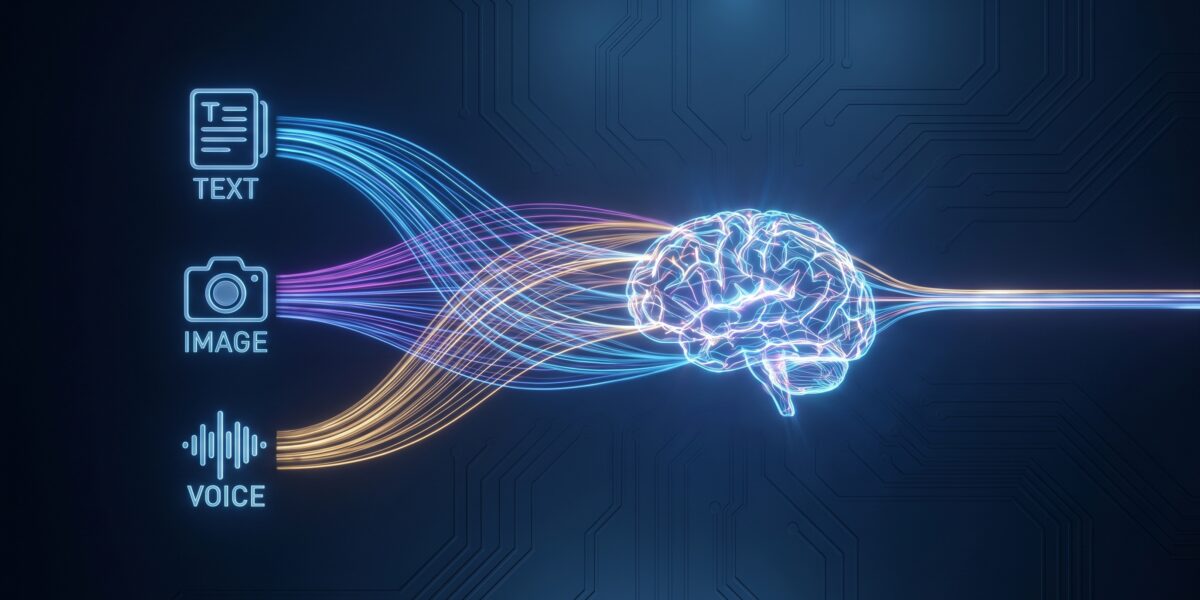
OpenAI just fundamentally changed the AI landscape with its May 2026 releases of GPT-5.5, ChatGPT Images 2.0, and true multimodal voice intelligence. These aren’t incremental updates but represent a paradigm shift in how AI understands and processes multiple data types simultaneously, erasing the boundaries between text, image, and voice interactions.
TL;DR
- GPT-5.5 delivers quantum leaps in reasoning, accuracy, and context understanding
- ChatGPT Images 2.0 creates more coherent, detailed, and context-aware visuals
- New voice models accept text and image inputs, making interactions truly multimodal
- All models process any combination of inputs by default
- The API availability makes these powerful engines integratable immediately
Key takeaways
- Multimodal capabilities are now native and default across all new OpenAI models
- The API availability means businesses can integrate these capabilities within days, not months
- Tasks requiring multiple software tools can now be accomplished through single conversational prompts
- Human oversight remains critical despite improved accuracy and reasoning capabilities
- Early adoption provides significant competitive advantage across creative, technical, and business functions
What Actually Changed in OpenAI’s 2026 Release
OpenAI’s latest releases focus on erasing the artificial boundaries between different AI capabilities. Instead of separate models for different data types, we now have truly unified systems.
GPT-5.5: The Enhanced Reasoning Engine
GPT-5.5 represents the latest evolution of OpenAI’s core language model architecture. This isn’t just a version number change—it’s a fundamental improvement in how AI understands context, follows complex instructions, and reduces factual errors. The model demonstrates significantly better performance on nuanced tasks that previously frustrated users.
ChatGPT Images 2.0: The Advanced Visual Cortex
This upgrade goes beyond higher resolution output. ChatGPT Images 2.0 understands spatial relationships, maintains style consistency, and interprets subtle prompts with remarkable fidelity. You can now ask it to transform a spreadsheet into a readable chart or generate product imagery that matches your brand guidelines.
Voice Intelligence Models: From Output to Sophisticated Input
Previously, voice capabilities were primarily about converting text to speech. The new voice models accept multiple input types, including images alongside voice commands. This enables complex, real-time assistance scenarios that were previously confined to science fiction.
The bottom line: The friction of switching between different AI tools for text, image, and voice tasks has been eliminated. You now have a single, powerful conduit for any multimodal task.
Why This Multimodal Breakthrough Matters Right Now
This release represents an inflection point in AI utility moving beyond niche applications into mainstream professional workflows.
Productivity Redefined
Tasks that previously required multiple software licenses and specialized skills can now be accomplished through conversational prompts. A marketing professional can generate product imagery, write accompanying copy, and storyboard a voiceover in a single continuous session.
Collapsed Integration Barriers
With these capabilities available through a standardized API, developers can integrate world-class multimodal AI into applications within days rather than months. This dramatically lowers the barrier to creating AI-enhanced products and services.
Competitive Landscape Shift
Organizations not experimenting with these tools risk being outpaced in efficiency, creativity, and cost-effectiveness. The gap between early adopters and laggards will widen significantly throughout 2026.
How the Unified Multimodal Architecture Works
The technical breakthrough lies in the unified training approach. Instead of separate models clumsily connected, these systems are trained end-to-end on all data types simultaneously.
The Three-Step Process
Input: You provide a prompt consisting of any combination of text, images, or voice. For example, a photo of machinery plus the voice question “What component is this and why might it be failing?”
Processing: The model encodes all input data into a shared internal representation, understanding the image context alongside the spoken words.
Output: The system generates a coherent response in the requested format, drawing upon its unified knowledge across modalities.
This architecture finally enables true AI assistants that see what you see and understand what you mean in real context.
Real-World Applications Across Industries
| Industry | Use Case | Impact |
|---|---|---|
| E-commerce | Show a voice model your living room and ask for coffee table suggestions matching the style and space | Reduces purchase friction and return rates dramatically |
| Education | Point phone at math problem and ask for step-by-step voice guidance through solution | Provides personalized, on-demand tutoring at scale |
| Software Development | Feed UI bug screenshot and description to generate automated bug report and code fix suggestions | Slashing triage and debugging time significantly |
| Content Creation | Generate product imagery, then write blog post and social captions in the same session | Unifies entire creative workflow from concept to publication |
These examples represent just the beginning of possible applications as developers explore the new capabilities.
GPT-5.5 vs. Predecessors: Beyond Incremental Improvement
The advancement from previous models represents qualitative improvement across multiple dimensions.
Enhanced Reasoning Capabilities
GPT-5.5 demonstrates significantly better logical deduction, complex instruction following, and avoidance of simple mistakes that plagued earlier models.
Extended Context with Accuracy
The model handles longer context windows while maintaining accuracy, meaning it forgets less within extended conversations or document analysis.
Reduced Hallucinations
Factual accuracy improvements make the model more reliable for research and analysis tasks where precision matters.
Nuance Understanding
The model interprets subtlety, irony, and user intent with much higher fidelity, making interactions feel more natural and effective.
The reality: Tasks that were frustratingly inconsistent with previous models are now consistently achievable with GPT-5.5.
Getting Started: Your First Week with the New API
The real opportunity lies in API integration rather than just chatting with the interface.
Initial Setup Steps
1. Access the Dashboard: Sign into the OpenAI API platform and ensure your API keys are active.
2. Review Documentation: Focus on the new endpoints for gpt-5.5, chat-based image generation, and the enhanced audio API.
3. Run Simple Tests: Use provided code snippets to send multimodal prompts and examine the JSON responses.
4. Prototype One Workflow: Identify one repetitive task involving multiple data types and build a simple automation script.
Required Tools
You’ll need your existing code editor, the updated OpenAI Python library, and a clear problem statement to solve.
Costs, ROI, and Business Leverage Calculations
Understanding the financial implications ensures realistic implementation planning.
Pricing Structure
API pricing remains per-token for text and per-image for generation. While the new models carry marginally higher rates, the efficiency gains typically reduce overall cost-per-task substantially.
Return on Investment
ROI should be measured in hours saved rather than direct cost comparison. Automating a five-hour weekly task provides massive ROI even with API costs considered.
Competitive Leverage
Early integration provides significant market advantage. Offering services powered by multimodal AI instantly differentiates your offerings in crowded markets.
This is particularly relevant for customer service applications where voice and visual understanding create superior experiences.
Risks, Myths vs. Facts, and Responsible Implementation
With powerful capabilities come important considerations for responsible use.
Common Misconceptions
Myth: This represents artificial general intelligence that can run unsupervised.
Fact: These are powerful tools requiring human oversight, not autonomous employees.
Myth: AI will replace all creative jobs.
Fact: It replaces tasks, not roles. The value shifts from execution to direction and editing.
Implementation Risks
Prompt Ambiguity: Powerful models responding to vague prompts can produce unexpected results. The skill now lies in writing precise, clear instructions.
Over-reliance: Despite improved accuracy, verification remains essential for critical applications. These tools augment human capability rather than replace it.
These considerations echo lessons from other AI-driven transformations where human oversight proved crucial.
Glossary: Key Terms Explained
GPT-5.5: The latest iteration of OpenAI’s generative pre-trained transformer model, designed for advanced language understanding and generation with improved reasoning capabilities.
ChatGPT Images 2.0: An enhanced version of ChatGPT’s image generation and understanding capabilities, enabling more sophisticated visual interactions and consistency.
Multimodal Capabilities: The ability of AI models to process and generate multiple types of data (text, images, voice) within a unified architecture for comprehensive applications.
API (Application Programming Interface): A set of protocols and tools that allows developers to integrate AI capabilities directly into their own applications and services.
Frequently Asked Questions
When was GPT-5.5 officially released?
OpenAI announced and released access to GPT-5.5 in early May 2026, with general availability expanding throughout the month.
Do I need a new ChatGPT subscription to access these capabilities?
The conversational chat interface includes these updates, but serious implementation requires API access, which operates on a separate pay-as-you-go model.
Can these models process video content directly?
Not natively. Current multimodal capabilities cover text, images, and audio. Video processing would require frame-by-frame analysis, which isn’t a built-in feature.
How does this affect existing OpenAI API integrations?
Developers will need to update their implementations to leverage the new models and endpoints, but backward compatibility is maintained for existing integrations.
References and Further Reading
- OpenAI Official Website – Primary source for model specifications and capabilities
- OpenAI API Documentation – Technical details and implementation guidance
- OpenAI LinkedIn – Company updates and development philosophy
- OpenAI’s Enterprise AI Strategy – Business context for API deployment