Google AI has introduced event-driven webhooks for the Gemini API, enabling push-based notifications for long-running AI jobs such as deep research and extensive video generation. This update eliminates the need for developers to continuously poll the API for job completion, significantly reducing latency and friction in agentic workflows. For operators, this means more efficient resource utilization, faster iteration cycles for complex AI tasks, and a shift towards more responsive, asynchronous system designs that can better handle the demands of advanced AI applications.
- Gemini API now supports event-driven webhooks for long-running AI tasks.
- This eliminates inefficient polling, improving latency and resource usage.
- The feature is crucial for agentic workflows and high-volume processing like video generation.
- Operators can build more responsive, asynchronous AI applications.
What changed
On , Google AI announced the integration of event-driven webhooks into the Gemini API. This new capability provides a push-based notification system, fundamentally altering how developers manage long-running AI jobs. Previously, applications would typically employ polling mechanisms, repeatedly querying the API to check the status of an ongoing task. This method is inherently inefficient, consuming unnecessary resources and introducing latency due to the fixed polling intervals.
With webhooks, the Gemini API can now directly notify a specified endpoint once a long-running job, such as “Deep Research” or “long video generation,” reaches completion or a specific milestone. This shift is particularly relevant as Gemini evolves towards more complex “agentic workflows and high-volume processing,” as noted by Google AI. The introduction of webhooks aligns the Gemini API with modern asynchronous programming patterns, which are essential for building scalable and responsive AI applications.
How it works
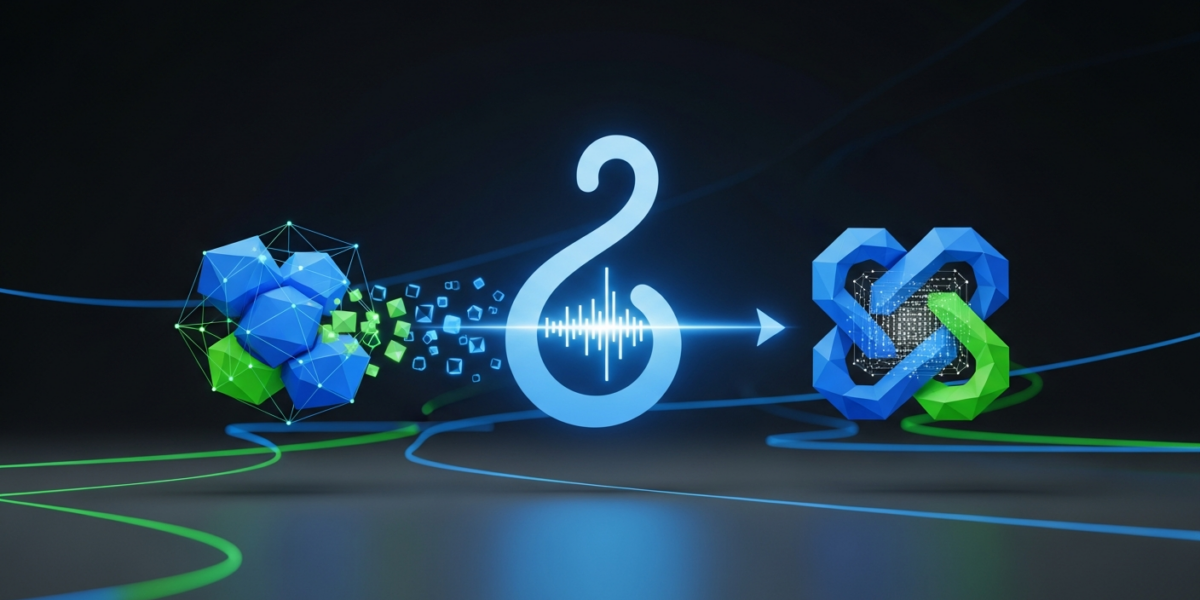
Event-driven webhooks operate on a publish-subscribe model. When a developer initiates a long-running job through the Gemini API, they can configure a webhook endpoint. Instead of the client application continuously asking “Is it done yet?”, the Gemini API itself becomes responsible for notifying the client. Once the AI model completes its task (e.g., finishes processing a video or compiling research), it sends an HTTP POST request to the pre-registered webhook URL, containing the job status and any relevant output or metadata.
This mechanism ensures that the client application is immediately informed upon job completion, rather than waiting for the next polling interval. It reduces the computational overhead on both the client and server sides, as fewer unnecessary requests are made. For tasks that might take minutes or even hours, like generating extensive video content or performing complex data analysis, this asynchronous, push-based communication is significantly more efficient than constant polling, which can lead to increased token usage and latency if not managed carefully, as highlighted in discussions around Gemini API optimization.
Why it matters for operators
For operators building with the Gemini API, the introduction of webhooks is more than just a convenience; it’s a critical enabler for robust, scalable AI systems. The shift from polling to event-driven notifications directly impacts operational efficiency and cost. Polling, especially for long-running tasks, can inadvertently inflate API call counts and consume compute resources on both ends, leading to higher operational costs and slower response times. Webhooks cut this waste, allowing systems to react instantly and only when necessary.
This feature is particularly vital for the emerging class of “agentic workflows” that Google AI mentions. Imagine an AI agent orchestrating multiple complex tasks—deep research, content generation, data synthesis. Without webhooks, each sub-task would require its own polling loop, creating a spaghetti of asynchronous checks and potential race conditions. With webhooks, agents can simply register for completion events, freeing up their processing cycles for other tasks and simplifying the orchestration logic. This enables the creation of more sophisticated, multi-agent systems that can autonomously divide tasks and collaborate efficiently, as seen in advanced frameworks like JiuwenClaw discussed in the broader AI community. Operators can now design truly asynchronous pipelines, where a large language model (LLM) can kick off a resource-intensive job and immediately move on, confident that it will be notified precisely when the results are ready. This paradigm shift will be crucial for managing the cost and complexity of high-volume, multimodal AI applications, especially those dealing with continuous streams of audio, video, or text via APIs like Gemini Live. It pushes operators towards architecting truly reactive systems, which is a non-negotiable for competitive AI product development.
Risks and open questions
- Webhook endpoint reliability: While webhooks eliminate polling, they introduce a dependency on the reliability and availability of the developer’s webhook endpoint. Operators must ensure their endpoints are robust, secure, and capable of handling potential retries or duplicate notifications from the Gemini API.
- Security implications: Exposing a public webhook endpoint requires careful security considerations, including signature verification to ensure the authenticity of notifications and protection against denial-of-service attacks. Google AI’s documentation will need to provide clear guidance on best practices for securing these endpoints.
- Granularity of events: The announcement mentions “event-driven webhooks.” An open question is the granularity of these events. Will developers receive notifications only upon final completion, or will there be intermediate progress updates for extremely long-running tasks? More granular events could enable richer user experiences and better progress tracking.
- Error handling and observability: How will errors in long-running jobs be communicated via webhooks? Operators will need robust mechanisms to monitor webhook deliveries, track job failures, and debug issues effectively within their systems.
Sources
- Reduce friction and latency for long-running jobs with Webhooks in Gemini API — Google AI Blog
- Google Adds Event-Driven Webhooks to the Gemini API, Eliminating the Need for Polling in Long-Running AI Jobs — Marktechpost
- r/Gemini — Reddit
- Gemini API optimization and inference — Google AI for Developers
- Gemini AI Slow Response? How to Fix It Fast (2026 Guide) — AIFixHelp
- Gemini Live API overview — Google Cloud Documentation
- A guide to Gemini Enterprise — Global IT Research
- Understand and count tokens — Google AI for Developers