

Wall Street AI investment banks are at the forefront of leveraging artificial intelligence to transform traditional financial services. These institutions deploy AI and machine learning across a spectrum of activities, including algorithmic trading, risk management, predictive analytics for market trends, personalized financial advice, and automated compliance. The integration of AI aims to enhance efficiency, accuracy, and decision-making capabilities, ultimately driving competitive advantage and new revenue streams in a rapidly evolving financial landscape.
Wall Street is rapidly integrating Artificial Intelligence into investment banking, revolutionizing operations from trading and risk management to client services. AI-driven platforms are enhancing predictive analytics, automating complex tasks, and personalizing financial advice. This transformation is creating new roles, demanding specialized skills, and raising critical ethical and regulatory questions for the future of finance.
- A New Era: Wall Street AI Investment Banks Redefining Finance
- Core Applications of AI in Investment Banking
- Leading Wall Street Firms and Their AI Strategies
- The Transformative Impact of AI on Investment Banking Operations
- Challenges and Considerations for AI Adoption
- The Future Outlook for AI in Investment Banking
- Conclusion: AI as the New Frontier of Finance
- What to Do Next
- FAQ
Key Takeaways
- AI is central to Wall Street’s future: Investment banks are deploying AI for algorithmic trading, risk management, predictive analytics, and personalized client services.
- Efficiency and insights are paramount: AI drives cost reduction, enhances decision-making through advanced data analysis, and fosters the creation of innovative financial products.
- Leading firms are investing heavily: Goldman Sachs, Morgan Stanley, J.P. Morgan Chase, and BlackRock are among those integrating AI deeply into their core operations.
- Challenges include data quality and ethics: Addressing issues like data integrity, AI bias, regulatory compliance, and cybersecurity is crucial for successful AI adoption.
- The talent landscape is shifting: There’s a growing demand for professionals who possess both financial acumen and strong AI/data science skills.
- Hyper-personalization is the future: AI will enable even more tailored financial products and proactive advice, fundamentally changing client interactions.
A New Era: Wall Street AI Investment Banks Redefining Finance
The financial world, particularly on Wall Street, is undergoing a profound transformation. Artificial Intelligence (AI) is no longer a futuristic concept but a present-day reality, fundamentally reshaping how investment banks operate. This seismic shift is creating a new breed of financial institutions: Wall Street AI investment banks. These firms are not just adopting technology; they are embedding AI into the very fabric of their strategies, processes, and service offerings.
The integration of AI promises to unlock unprecedented levels of efficiency, generate deeper market insights, and mitigate risks in ways previously unimaginable. From the fast-paced world of high-frequency trading to the complex realm of mergers and acquisitions, AI is proving to be a game-changer. This article delves into how AI is redefining investment banking, exploring its core applications, the strategies of leading firms, and the challenges and opportunities that lie ahead.
What Are Wall Street AI Investment Banks?
Wall Street AI investment banks are financial institutions that extensively integrate artificial intelligence and machine learning technologies across their entire value chain. This integration moves beyond simple automation, encompassing sophisticated data analysis, predictive modeling, and autonomous decision-making support systems.
These banks leverage AI to enhance every aspect of their operations. This includes everything from optimizing trading strategies and managing vast portfolios to client relationship management and ensuring regulatory compliance. The goal is to move from traditional, human-centric processes to more data-driven, agile, and intelligent workflows.
They are characterized by their significant investment in AI research and development, their partnerships with technology firms, and their aggressive recruitment of AI talent. These institutions recognize that AI is not just another tool, but a core strategic differentiator in an increasingly competitive global marketplace.
The Driving Forces Behind AI Adoption in Investment Banking
Several powerful forces are compelling Wall Street firms to embrace AI with urgency. The sheer volume and velocity of financial data available today are overwhelming for human analysis, making AI an indispensable tool for extracting meaningful insights. As a result, banks can gain a crucial edge by processing and understanding this data more effectively.
Increasing market volatility, coupled with stringent regulatory requirements, also necessitates more sophisticated risk management and compliance solutions. AI offers the ability to monitor vast datasets for anomalies and potential risks in real-time. This proactive approach helps banks navigate complex regulatory landscapes more effectively.
The relentless pursuit of competitive advantage is another primary driver. Firms that can leverage AI to execute trades faster, identify obscure market opportunities, or provide hyper-personalized services will inevitably outperform their peers. Client expectations for more tailored and efficient services are also pushing banks towards AI-driven solutions. Finally, the rise of fintech and challenger banks, often built on AI-first principles, serves as a powerful catalyst, urging established institutions to innovate or risk obsolescence.
AI Adoption Drivers in Investment Banking
- Data Overload: Massive, real-time financial data volume requires AI for actionable insights.
- Market Volatility: Need for advanced predictive models and real-time risk assessment.
- Regulatory Pressure: AI for enhanced compliance, fraud detection, and RegTech solutions.
- Competitive Edge: Demands for faster trading, better insights, and superior client experience.
- Client Expectations: Desire for personalized advice and more efficient digital services.
- Cost Efficiency: Automation of repetitive tasks to reduce operational expenditure.
Core Applications of AI in Investment Banking
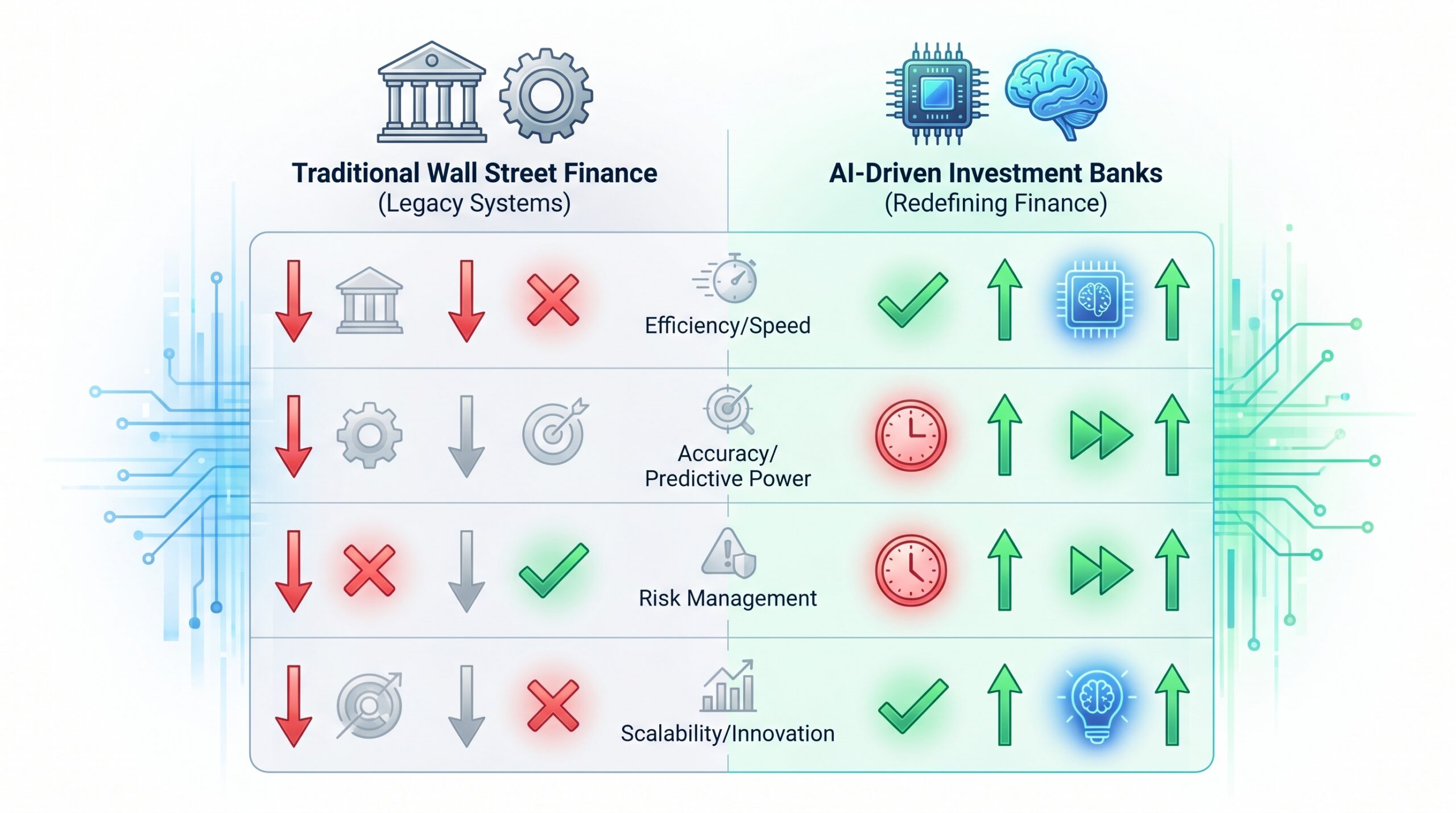
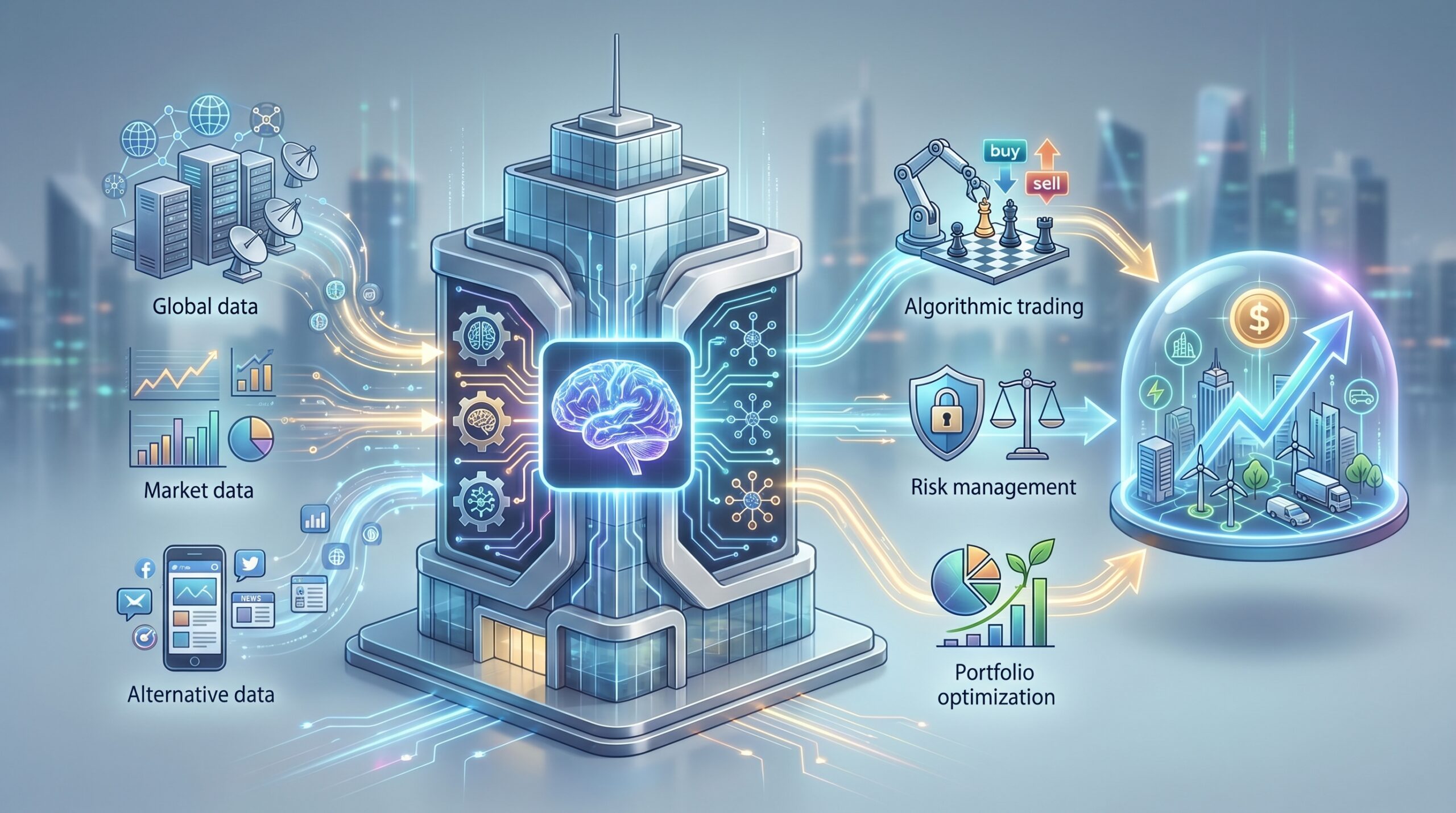
The integration of AI into investment banking is not confined to a single area; rather, it permeates numerous critical functions. Each application offers distinct advantages, contributing to a more robust, efficient, and intelligent financial ecosystem. Understanding these core applications is crucial to grasp the full scope of AI’s transformative power on Wall Street.
Algorithmic Trading and Market Microstructure
Algorithmic trading has long been a staple on Wall Street, but AI is pushing its capabilities to new frontiers. AI-powered algorithms can analyze market data, news sentiment, and historical patterns at astonishing speeds, identifying arbitrage opportunities and executing trades milliseconds before human traders could react. Machine learning models can adapt to changing market conditions, optimizing trade execution strategies in real-time to minimize slippage and maximize returns.
Furthermore, AI is instrumental in understanding market microstructure – the intricacies of order books, bid-ask spreads, and liquidity dynamics. Advanced algorithms can predict short-term price movements and optimize order placement strategies, crucial for high-frequency trading firms. This sophisticated approach to trading not only enhances profitability but also contributes to overall market efficiency by rapidly incorporating new information into asset prices.
Risk Management and Fraud Detection
Risk management is arguably one of the most critical areas benefiting from AI in investment banking. Traditional risk models often struggle with the complexity and dynamism of modern financial markets, but AI offers a powerful solution. Machine learning algorithms can process vast amounts of data, including structured financial statements, unstructured news articles, and social media sentiment, to identify emerging risks like credit default, market instability, or systemic threats.
For fraud detection, AI excels at identifying subtle anomalies and patterns indicative of fraudulent activity that humans might miss. By continuously learning from new data, AI systems can adapt to evolving fraud schemes, protecting both the institution and its clients. This proactive approach to risk management and fraud detection significantly strengthens the financial safeguards of an investment bank, underpinning its stability and integrity. The proactive identification of vulnerabilities is crucial, echoing similar strategies for AI detecting crypto insider trading.
Predictive Analytics and Market Forecasting
The ability to predict market movements and identify future trends is the holy grail of investment banking. AI, particularly deep learning and natural language processing (NLP), provides unparalleled capabilities in predictive analytics and market forecasting. These systems can analyze economic indicators, political events, corporate earnings reports, and even social media chatter to generate highly accurate forecasts.
Beyond simple trend prediction, AI models can identify causal relationships and complex interdependencies within global markets. This allows investment banks to make more informed decisions regarding asset allocation, sector selection, and individual stock picks. Whether it’s predicting the success of an IPO or forecasting the impact of a geopolitical event, AI offers a data-driven lens into the future, providing a significant competitive advantage to firms willing to invest.
Due Diligence and Deal Sourcing Automation
Mergers & Acquisitions (M&A) and private equity deals often involve extensive due diligence – a labor-intensive process that can consume significant time and resources. AI is revolutionizing this by automating large portions of document review and analysis. NLP algorithms can rapidly scan and extract key information from countless legal documents, financial statements, and regulatory filings, highlighting anomalies or red flags.
Furthermore, AI is transforming deal sourcing. Instead of manually sifting through industry reports and company databases, AI platforms can identify potential target companies based on predefined criteria, market trends, and growth potential. This not only streamlines the initial stages of a deal but also uncovers opportunities that might otherwise be overlooked. The automation of these processes allows investment bankers to focus on strategic execution and client relationship building, rather than tedious data gathering.
Personalized Wealth Management and Robo-Advisors
The wealth management arm of investment banks is increasingly turning to AI to deliver highly personalized services and scalable advice. Robo-advisors, powered by AI, can assess a client’s financial goals, risk tolerance, and investment horizon to construct diversified portfolios automatically. These platforms can rebalance portfolios, harvest losses, and even provide tax-efficient strategies with minimal human intervention.
Beyond automated portfolio management, AI enables hyper-personalization of financial advice. By analyzing a client’s spending patterns, lifestyle, and financial behaviors, AI can offer bespoke recommendations on savings, debt management, and future investments. This level of tailored guidance, often delivered through conversational AI interfaces, enhances client satisfaction and democratizes access to sophisticated financial planning. This approach enables a more efficient and personalized customer journey, reminiscent of how Salesforce Headless 360 is redefining CRM with AI agent infrastructure.
AI Applications in Investment Banking Workflow
- Front Office: Algorithmic Trading Optimization, Market Sentiment Analysis, Deal Sourcing & Origination.
- Middle Office: Real-time Risk Assessment, Fraud Detection, Compliance Monitoring, Performance Attribution.
- Back Office: Robotic Process Automation (RPA) for Settlements, Data Management & Validation, IT Operations.
- Client Services: Robo-Advisors, Personalized Financial Planning, AI-Powered Chatbots for Support.
- Research & Analytics: Predictive Modeling, Economic Forecasting, Due Diligence Automation, Alternative Data Processing.
Compliance and Regulatory Technology (RegTech)
In the heavily regulated financial industry, compliance is a constant, complex, and costly challenge. AI-powered RegTech solutions are emerging as a crucial tool for investment banks to navigate this intricate landscape. AI can monitor transactions in real-time, identifying suspicious activities that might indicate money laundering or other illicit financial dealings, thereby fulfilling Anti-Money Laundering (AML) and Know Your Customer (KYC) requirements more effectively.
Natural Language Processing (NLP) is particularly valuable here, applied to regulatory texts and internal policies. AI can analyze vast quantities of legal documents, interpret complex regulations, and ensure that internal protocols align with the latest compliance standards. This significantly reduces the manual effort involved in compliance, minimizes the risk of regulatory fines, and provides a continuous, adaptive layer of oversight. The application of such technology is becoming increasingly critical, much like the CFTC’s AI Revolution in reshaping crypto regulation.
Leading Wall Street Firms and Their AI Strategies
Major investment banks on Wall Street are not merely dabbling in AI; they are making substantial strategic investments to integrate it deeply into their operations. The approaches vary, reflecting each firm’s unique strengths, client base, and strategic priorities. However, a common thread is the recognition that AI is a critical component for future success and differentiation.
These firms are building internal AI capabilities, acquiring AI startups, and partnering with technology providers to accelerate their transformation. Understanding their individual strategies provides a glimpse into the diverse ways AI is being applied to gain an edge in the competitive financial market.
Goldman Sachs: Data-Driven Excellence
Goldman Sachs has positioned itself as a leader in leveraging data and AI to drive its business. The firm has invested heavily in its data platform, Marquee, which provides clients with data, analytics, and execution services, powered by internal AI capabilities. Goldman uses machine learning for advanced risk modeling, detecting market anomalies, and optimizing capital allocation decisions.
Their AI initiatives extend to areas like automated due diligence for M&A transactions, dramatically speeding up the review of legal documents and financial reports. Furthermore, Goldman Sachs leverages AI to enhance its sales and trading desks, using predictive models to identify trading opportunities and improve order execution. The firm’s commitment to data-driven excellence is evident in its significant investments in AI talent and infrastructure, aiming to maintain its competitive edge.
Morgan Stanley: Personalized Client Solutions
Morgan Stanley has focused its AI strategy on enhancing personalized client solutions, particularly within its wealth management division. The firm utilizes AI to provide tailored financial advice and investment strategies, leveraging machine learning to analyze client portfolios, risk appetites, and financial goals. Their “Next Best Action” engine, for instance, uses AI to suggest relevant financial products and services to advisors, improving client engagement and satisfaction.
Beyond wealth management, Morgan Stanley also applies AI in its institutional securities business for advanced analytics in trading and research. They use natural language processing to extract insights from vast amounts of unstructured data, including news, research reports, and social media. This comprehensive approach ensures that AI underpins both personalized client interactions and sophisticated institutional operations.
J.P. Morgan Chase: AI at Scale
J.P. Morgan Chase has one of the largest AI initiatives on Wall Street, deploying AI and machine learning across virtually every aspect of its vast operations. With thousands of AI models in production, their strategy is centered on achieving AI at scale. Their applications range from fraud detection and anti-money laundering (AML) compliance to optimizing customer service with intelligent chatbots and personalizing banking experiences.
In investment banking, J.P. Morgan uses AI for predictive analytics in trading, identifying market opportunities, and automating back-office processes. They have famously used AI to analyze legal documents for loan agreements, drastically reducing the time required for due diligence. Their commitment also extends to AI research, with the firm actively publishing white papers and contributing to the broader AI community, solidifying their role as an AI leader in finance.
BlackRock: Pioneering AI in Asset Management
BlackRock, the world’s largest asset manager, is a pioneer in integrating AI into its investment processes, particularly through its Aladdin platform. Aladdin, a sophisticated risk management and portfolio analytics system, increasingly incorporates machine learning models to provide deep insights into market risk, portfolio construction, and performance attribution. AI helps BlackRock analyze vast datasets, including alternative data sources, to identify investment opportunities and manage complex portfolios more effectively.
The firm employs AI not just for quantitative strategies but also to augment human decision-making, providing portfolio managers with enhanced analytical tools. BlackRock’s AI strategy emphasizes leveraging technology to scale its expertise, offer superior risk management, and deliver sophisticated, data-driven investment solutions to its diverse client base.
Bank of America: AI for Operational Efficiency
Bank of America focuses its AI efforts heavily on operational efficiency, customer service, and fraud prevention. Their virtual assistant, Erica, is a prime example of their commitment to AI-driven customer experience, providing personalized insights, managing payments, and answering customer queries. Erica demonstrates how Character.AI principles can be applied to enhance financial services interaction.
Within investment banking and corporate banking, AI is used for automating repetitive tasks, streamlining document processing, and enhancing regulatory compliance. The bank leverages machine learning for advanced fraud detection systems, protecting billions of dollars in client assets annually. By using AI to automate and optimize internal processes, Bank of America aims to reduce costs, improve accuracy, and free up human capital for more strategic tasks.
The AI Race on Wall Street
The competition among Wall Street AI investment banks is intense. Firms are not only investing in technology but also in fostering an AI-savvy culture, continuously upskilling their workforce, and attracting top data science talent. This proactive stance ensures they remain at the cutting edge of financial innovation.
The Transformative Impact of AI on Investment Banking Operations
The integration of AI into investment banking is not merely about incremental improvements; it represents a fundamental paradigm shift. It is transforming core operational processes, redefining roles, and establishing new benchmarks for efficiency and analytical depth. This transformative impact is visible across several key dimensions, from cost structures to strategic planning.
Investment banks are becoming more agile, data-driven, and client-centric as AI permeates their workflows. The evolution impacts everything from the back-office automation to front-office advisory services, fundamentally altering how value is created and delivered in the financial ecosystem.
Efficiency and Cost Reduction
One of the most immediate and tangible benefits of AI in investment banking is the dramatic improvement in operational efficiency and subsequent cost reduction. AI-powered automation of tasks like data entry, reconciliation, legal document review, and report generation significantly reduces the need for manual labor, freeing up human professionals for higher-value activities.
For example, Robotic Process Automation (RPA) tools, often enhanced with AI, can handle repetitive, rule-based processes with greater speed and accuracy than humans. This translates into fewer errors, faster processing times, and lower operational costs. The efficiency gains extend to infrastructure as well, with AI-driven analytics optimizing resource allocation for computing power and data storage. The goal is to maximize throughput while minimizing the human-intensive, error-prone aspects of traditional banking processes.
Enhanced Decision-Making
AI provides investment bankers with unprecedented capabilities for enhanced decision-making. By analyzing vast and complex datasets at speeds impossible for humans, AI models can uncover hidden patterns, correlations, and causal relationships that inform strategic choices. This includes more accurate valuations of companies for M&A, better identification of market trends for trading, and more robust risk assessments for lending and underwriting.
Instead of relying solely on intuition or limited historical data, decision-makers are now armed with predictive insights and sophisticated scenario analyses generated by AI. This does not replace human judgment but augments it, allowing bankers to make more confident, data-backed decisions. The result is a shift from reactive to proactive strategies, leading to potentially higher returns and reduced exposure to unforeseen risks.
New Product and Service Development
AI is a catalyst for innovation, enabling investment banks to develop entirely new products and services that cater to evolving client needs. For instance, AI algorithms can identify gaps in the market or pinpoint emerging asset classes, leading to the creation of novel investment vehicles or structured financial products. The ability to process alternative data sources, such as satellite imagery, social media trends, or sensor data, opens up new avenues for generating unique alpha.
Furthermore, AI facilitates the creation of hyper-personalized financial advice and bespoke investment portfolios at scale, a service once reserved for ultra-high-net-worth individuals. Robo-advisory platforms are continually evolving, integrating more sophisticated AI to offer dynamic, tax-optimized, and goal-based investment strategies to a broader client base. This democratizes access to advanced financial planning and expands the reach of investment banks into new market segments, much like how AI on Android in 2026 is revolutionizing mobile development.
Talent Revolution: Skills and Roles in the AI Era
The advent of AI is sparking a talent revolution within investment banking. While some fear job displacement, the reality is a significant shift in required skills and the emergence of new, high-value roles. There is a growing demand for professionals who possess a hybrid skill set: deep financial acumen combined with expertise in data science, machine learning, and programming.
New roles like AI ethicists, data governance specialists, machine learning engineers, and explainable AI (XAI) experts are becoming crucial. Existing roles, such as financial analysts and portfolio managers, are being augmented by AI tools, requiring them to become adept at interpreting AI-generated insights and managing AI-driven workflows. Investment banks are investing heavily in upskilling their current workforce and aggressively recruiting from technology sectors to meet this evolving talent demand, reshaping the traditional Wall Street career path. This is a crucial response to what some refer to as the AI talent crisis.
Challenges and Considerations for AI Adoption
Despite the immense potential of AI, its widespread adoption in investment banking is not without significant hurdles. These challenges span technological, ethical, and regulatory dimensions, requiring careful consideration and strategic planning to overcome. Addressing these issues effectively is paramount for banks looking to fully harness the power of AI while safeguarding their operations and reputation.
Data Quality and Accessibility
AI models are only as good as the data they are trained on. In investment banking, ensuring high data quality and accessibility is a monumental task. Banks deal with vast quantities of data from disparate sources, often in varying formats and with different levels of cleanliness and consistency. Poor data quality – including incompleteness, inaccuracies, or biases – can lead to flawed AI insights, erroneous predictions, and ultimately, costly mistakes.
Furthermore, data silos within large organizations and challenges in integrating legacy systems often restrict data accessibility. Creating a unified, clean, and accessible data infrastructure is a foundational requirement for effective AI deployment. This involves significant investment in data governance, data engineering, and robust data management practices to feed AI models with the reliable information they need to perform.
Ethical AI and Bias
The ethical implications of AI are particularly pronounced in financial services. AI models, especially those built on historical data, can inadvertently perpetuate or even amplify existing biases found in that data. This could lead to discriminatory outcomes in areas such as credit scoring, loan approvals, or investment recommendations, raising serious concerns about fairness and equity.
Investment banks must implement robust frameworks for ethical AI development and deployment. This includes auditing AI models for bias, ensuring transparency in decision-making processes (explainable AI), and establishing oversight mechanisms. Addressing ethical AI is not just a regulatory imperative but also a matter of maintaining client trust and brand reputation. Ensuring ethical considerations are paramount from the outset avoids future complications and safeguards the integrity of AI-driven financial systems.
Regulatory and Compliance Complexities
The highly regulated nature of the financial industry poses unique challenges for AI adoption. Existing regulations often predate advanced AI capabilities, creating legal ambiguities regarding accountability, data privacy, and model validation. Regulators are grappling with how to supervise AI effectively, leading to an evolving and sometimes uncertain landscape.
Investment banks must navigate these complexities by ensuring their AI models are explainable, auditable, and compliant with current and emerging regulations like GDPR, CCPA, and industry-specific financial rules. This often requires close collaboration with legal and compliance teams, as well as proactive engagement with regulatory bodies to help shape future policies. The burden of proof for AI model integrity and fairness increasingly rests with the financial institutions themselves.
Cybersecurity Risks
The reliance on AI systems introduces new dimensions of cybersecurity risk. AI models and the vast datasets they consume become attractive targets for cybercriminals. Malicious actors could attempt to poison training data to manipulate AI outcomes, exploit vulnerabilities in AI algorithms, or gain unauthorized access to sensitive financial information processed by AI systems.
Investment banks must bolster their cybersecurity defenses to protect their AI infrastructure. This includes implementing advanced encryption, multi-factor authentication, robust network security, and continuous monitoring for threats. Furthermore, securing the APIs that connect AI systems with other platforms is critical, a concept familiar from discussions around Hyperliquid API Wallet Security. The integration of AI necessitates a constant evolution of cybersecurity strategies to mitigate these emerging threats and maintain the integrity of financial operations.
Integration with Legacy Systems
Many Wall Street institutions operate on decades-old legacy IT infrastructure that was not designed for the demands of modern AI. Integrating cutting-edge AI technologies with these monolithic, often inflexible legacy systems is a significant technical and financial challenge. The process can be time-consuming, expensive, and complex, posing risks to operational continuity.
Banks must devise careful strategies for modernization, which may include phased rollouts, containerization, API-first approaches, and gradual migration to cloud-based architectures. Bridging the gap between old and new technologies requires skilled engineers and a clear roadmap to ensure seamless data flow and functionality between AI models and core banking systems. Without effective integration, the full potential of AI cannot be realized.
AI Adoption Challenges: A FrontierWisdom Perspective
- Data Quality & Volume: Garbage in, garbage out. Need for clean, vast, diverse datasets.
- Talent Gap: Shortage of AI specialists with financial domain knowledge.
- Ethical & Bias Concerns: Ensuring fairness, transparency, and accountability in AI decisions.
- Regulatory Uncertainty: Evolving legal frameworks for AI in finance.
- Cybersecurity Threats: Protecting AI models and data from sophisticated attacks.
- Legacy System Integration: Overhauling or bridging old infrastructure with new AI tech.
- Cost of Implementation: Significant investment in R&D, infrastructure, and skilled personnel.
The Future Outlook for AI in Investment Banking
Wall Street AI Investment Banks: Complete Guide to Redefining Finance Framework 3
- Signal: What changed and why this matters now.
- Decision framework: Compare options by cost, risk, and implementation effort.
- Execution checklist: Concrete next step and measurable outcome.
The journey of AI in investment banking is still in its nascent stages, with far greater disruptive potential yet to be realized. Looking ahead, AI is set to become even more pervasive, sophisticated, and integral to the core functions of Wall Street. The future will be characterized by new levels of personalization, predictive accuracy, and operational autonomy, reshaping the very definition of financial services.
As technology advances and regulatory frameworks mature, AI will unlock innovative ways to create value, manage risk, and interact with clients. This ongoing evolution promises an exciting, albeit complex, future for Wall Street AI investment banks.
Hyper-Personalization and Proactive Advice
The future of AI in investment banking will move beyond simple personalization to hyper-personalization. AI systems will continuously analyze individual client data – not just financial transactions but also behavioral patterns, life events, and even real-time sentiment – to offer ultra-tailored financial advice and product recommendations. This means a shift from reactive service to proactive guidance, where AI anticipates client needs and offers solutions before they are explicitly requested.
Imagine an AI assistant that not only manages your portfolio but also alerts you to new investment opportunities aligning with your evolving personal values, suggests tax-saving strategies based on real-time life changes, or even helps you optimize your mortgage based on market forecasts. This level of predictive, individualized care will significantly deepen client relationships and create a highly sticky service ecosystem. This proactive service delivery aligns with the principles underpinning AI Workflow Automation, enhancing client engagement.
Adaptive and Resilient Risk Models
As financial markets become more interconnected and volatile, the need for robust and adaptive risk models intensifies. Future AI applications will feature highly resilient risk models that can not only identify known risks but also detect and adapt to novel, unforeseen threats in real-time. These models will leverage quantum computing and advanced machine learning techniques to process an even greater diversity of data points, including geopolitical shifts, climate change impacts, and global supply chain disruptions.
Such adaptive models will reduce the likelihood of systemic failures and provide investment banks with a more accurate and dynamic understanding of their overall risk exposure. They will move beyond static historical data analysis to incorporate continuous learning from real-time events, making risk management a far more agile and protective function for financial institutions.
The Rise of AI-Driven Deal Makers
While human relationships will always be central to deal-making, AI is poised to play an increasingly prominent role in M&A and capital markets. Future AI systems will not just automate due diligence but will actively participate in deal sourcing, target identification, valuation, and even negotiation strategy. AI could analyze millions of data points to identify synergistic acquisition targets, predict deal success rates, and optimize transaction structures. AI could also simulate negotiation outcomes, providing bankers with data-backed strategies to achieve better terms.
Rather than replacing human bankers, AI will elevate them into super-strategists, allowing them to focus on complex relationship management, creative problem-solving, and the nuanced aspects of closing a deal. This will redefine the role of the investment banker, moving away from grunt work and towards high-level strategic advisory, aided by powerful AI co-pilots.
Regulatory Evolution and AI Governance
As AI becomes more sophisticated, so too will the regulatory frameworks governing its use in finance. We can expect to see the development of specialized AI governance structures within investment banks and more prescriptive regulations from bodies like the SEC, CFTC, and global financial authorities. These regulations will likely focus on transparency, accountability, bias detection, and explainability of AI models.
The future will involve a collaborative effort between regulators, financial institutions, and AI developers to establish industry standards for ethical AI, data privacy, and model validation. Investment banks that proactively invest in robust AI governance frameworks and maintain strong relationships with regulators will be best positioned to thrive in this evolving environment, demonstrating leadership in responsible AI adoption.
AI: The New Utility in Finance
Just as electricity transformed industries in the 20th century, AI is becoming the new ubiquitous utility of the 21st-century financial world. Its omnipresence will define which institutions lead and which fall behind.
Conclusion: AI as the New Frontier of Finance
The rise of Wall Street AI investment banks marks a pivotal moment in the history of finance. AI is not merely an incremental technology; it is a fundamental force reshaping every facet of investment banking. From supercharging algorithmic trading and fortifying risk management to hyper-personalizing client services and streamlining complex due diligence, AI is driving unprecedented levels of efficiency, insight, and innovation.
While challenges such as data quality, ethical considerations, regulatory complexities, and cybersecurity risks remain significant, the leading firms are actively addressing these hurdles through strategic investments and collaborative efforts. The investment banking landscape is rapidly evolving, demanding a new breed of financial professional adept at leveraging AI’s power.
The future promises even more profound transformations: hyper-personalized financial advice, self-adaptive risk models, and AI-augmented deal-makers. As AI continues to mature, it will not only redefine how investment banks operate but also how they create value for clients and navigate an increasingly complex global economy. Wall Street’s embrace of AI is not optional; it is the new frontier of finance, essential for those aiming to lead in the digital age.
FAQ
How are Wall Street investment banks using AI today?
Wall Street investment banks are using AI for a wide range of applications, including algorithmic trading, advanced risk management (credit, market, operational), fraud detection, predictive analytics for market forecasting, automating due diligence processes, personalizing wealth management services, and enhancing regulatory compliance (RegTech). AI helps them process vast amounts of data more efficiently, identify patterns, and make more informed decisions.
What are the biggest benefits of AI for investment banks?
The biggest benefits include significantly enhanced operational efficiency and cost reduction through automation, improved decision-making capabilities driven by advanced analytics and predictive insights, the ability to develop new, highly personalized financial products and services, and superior risk management and fraud detection. AI allows banks to operate with greater speed, accuracy, and strategic foresight.
What challenges do investment banks face when adopting AI?
Key challenges include ensuring high data quality and accessibility across disparate legacy systems, addressing ethical concerns such as AI bias and ensuring fairness in outcomes, navigating complex and evolving regulatory landscapes, mitigating new cybersecurity risks introduced by AI systems, and bridging the talent gap between financial expertise and AI/data science skills. Successful adoption requires addressing these multifaceted issues comprehensively.
Which Wall Street firms are leaders in AI adoption?
Leading firms include Goldman Sachs, known for its data-driven excellence and Marquee platform; Morgan Stanley, with a focus on personalized wealth management solutions; J.P. Morgan Chase, recognized for deploying AI at scale across diverse operations; BlackRock, pioneering AI in asset management through its Aladdin platform; and Bank of America, leveraging AI for operational efficiency and customer service with its virtual assistant, Erica.
How is AI changing the job market in investment banking?
AI is creating a significant shift in the job market, leading to a demand for new hybrid roles that combine financial knowledge with data science and machine learning expertise. While some routine tasks may be automated, AI augments human capabilities, allowing professionals to focus on higher-value strategic work, relationship management, and complex problem-solving. This shift necessitates continuous upskilling and a focus on analytical and interpretive skills.