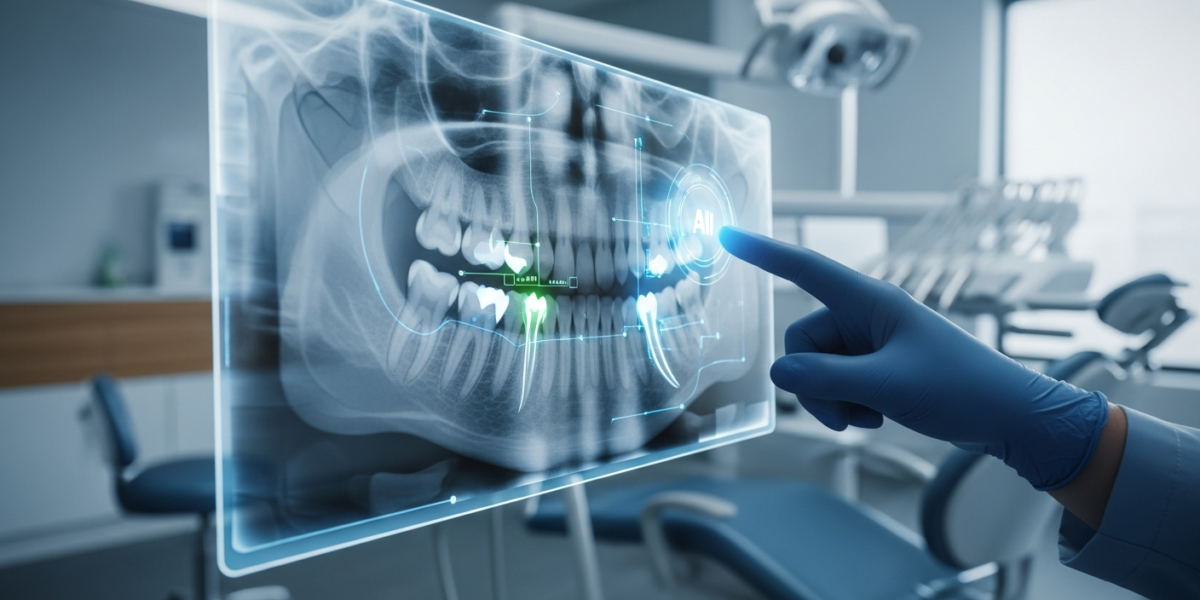
The OralMLLM-Bench, a new benchmark released on , provides a critical evaluation framework for Multimodal Large Language Models (MLLMs) in dental radiographic analysis. It employs 27 clinically grounded tasks across three imaging modalities and four cognitive categories (perception, comprehension, prediction, decision-making), revealing a significant performance gap between even advanced MLLMs like GPT-5.2 and GLM-4.6, and human clinicians. This benchmark highlights current AI limitations in complex dental diagnostic reasoning, offering a roadmap for safer, more clinically aligned AI development.
- OralMLLM-Bench is a new, comprehensive benchmark for MLLMs in dental radiography, released on .
- It evaluates MLLMs across perception, comprehension, prediction, and decision-making using 27 tasks and 3,820 clinician assessments.
- The benchmark demonstrates a notable performance gap between frontier MLLMs (e.g., GPT-5.2, GLM-4.6) and human clinicians in dental practice.
- It identifies specific strengths, limitations, and failure patterns of current MLLMs in complex dental diagnostic scenarios.
- The resource aims to guide the development of future AI systems that better align with clinical cognition and safety requirements in dentistry.
What changed
The landscape of AI evaluation in dentistry has historically seen varied approaches, with studies often focusing on specific tasks like anatomical landmark identification or diagnostic reasoning using multimodal LLMs [2, 3]. While general benchmarks exist for evaluating LLM performance across various capabilities [4], a comprehensive, multi-level cognitive assessment specifically for dental radiographic analysis was lacking.
The introduction of OralMLLM-Bench on , fundamentally changes this by offering a structured, clinically grounded benchmark. Unlike previous efforts that might compare LLMs against undergraduate dental students on diagnostic performance [3], OralMLLM-Bench defines four distinct cognitive categories: perception, comprehension, prediction, and decision-making. This multi-faceted approach allows for a more granular understanding of MLLM capabilities beyond simple diagnostic accuracy. It incorporates three critical imaging modalities—periapical, panoramic, and lateral cephalometric radiographs—and includes 27 clinically derived tasks with manually curated annotations and 3,820 clinician assessments for rigorous evaluation [1]. This level of detail and clinician input provides a much more robust and realistic assessment of MLLMs’ readiness for real-world dental practice compared to prior, more fragmented evaluations.
Why it matters for operators
For operators in AI development, dental practice management, and medical device manufacturing, OralMLLM-Bench isn’t just another academic paper; it’s a critical reality check and a strategic directive. The explicit demonstration of a “performance gap between MLLMs and clinicians” [1] is not a failure, but a clear signal: current frontier models, even advanced ones like GPT-5.2 and GLM-4.6, are not yet ready for autonomous, high-stakes diagnostic decision-making in dentistry. This means operators pushing AI solutions for dental image analysis must temper expectations and focus on assistive, not autonomous, roles for the foreseeable future.
For AI developers, this benchmark provides a much-needed standardized target. Instead of chasing vague “better performance,” they now have a framework to specifically address MLLM weaknesses in comprehension, prediction, and decision-making, which are crucial for clinical safety. This implies a shift from purely data-driven approaches to more knowledge-infused, reasoning-centric model architectures. Operators in dental clinics should view this as validation for a cautious approach to AI integration. While LLMs offer diverse applications in dentistry, from patient communication to treatment planning [5], their diagnostic capabilities remain variable [2]. This benchmark underscores the need for human oversight and validation of any AI-generated diagnostic insights. For medical device manufacturers, this translates to a clear imperative: prioritize explainability, auditability, and human-in-the-loop design in any AI-powered dental imaging product. The market will demand systems that augment, rather than replace, clinician expertise, and OralMLLM-Bench provides the evidence base for that demand. Ignoring these findings risks deploying unsafe or ineffective solutions that erode trust and face significant regulatory hurdles, particularly as AI language technologies face increasing scrutiny in healthcare for safety and equity [8].
Risks and open questions
- Generalizability beyond dental radiography: While comprehensive for dental imaging, the benchmark’s findings might not directly translate to other medical imaging domains without similar domain-specific, multi-cognitive benchmarks.
- Dynamic nature of MLLM development: The evaluated models (GPT-5.2, GLM-4.6) are frontier, but MLLM capabilities are evolving rapidly. The benchmark will require continuous updates to remain relevant against newer generations of models.
- Bias in training data and clinician assessments: The benchmark relies on public datasets and clinician assessments. Potential biases in these sources, whether demographic or diagnostic, could inadvertently influence the evaluation outcomes and model training recommendations.
- Ethical implications of AI decision-making: The benchmark highlights the gap in “decision-making” capabilities. This raises fundamental questions about the ethical boundaries of AI in clinical practice, particularly concerning accountability and responsibility when MLLMs provide diagnostic or treatment recommendations.
- Integration into clinical workflow: Even with improved cognitive capabilities, the practical integration of MLLMs into existing dental workflows presents challenges related to user interface design, data privacy, and regulatory compliance.
Sources
- OralMLLM-Bench: Evaluating Cognitive Capabilities of Multimodal Large Language Models in Dental Practice — https://arxiv.org/abs/2605.01333
- Frontiers | Feasibility and exploratory assessment of large language models for pediatric dentistry queries: a comparative study — https://www.frontiersin.org/journals/oral-health/articles/10.3389/froh.2026.1813936/full
- Multimodal Diagnostic Performance of Large Language Models in Dental Image Interpretation: A Comparative Study with Undergraduate Dental Students | Research Square — https://www.researchsquare.com/article/rs-9193501/v1
- Large language model – Wikipedia — https://en.wikipedia.org/wiki/Large_language_model
- Temporal Trends in Large Language Model (LLM) Accuracy: A Meta-Analysis of Multiple-Choice Question Performance in Dentistry and Dental Education – ScienceDirect — https://www.sciencedirect.com/science/article/abs/pii/S0300571226003945
- Evaluating large language models for orthodontic consultation in patients with periodontitis: a study of reliability, quality, and readability. – Yesil Science — https://yesilscience.com/evaluating-large-language-models-for-orthodontic-consultation-in-patients-with-periodontitis-a-study-of-reliability-quality-and-readability/
- NVIDIA-accelerated AI Models — https://developer.nvidia.com/ai-models
- [2605.01441] Artificial intelligence language technologies in multilingual healthcare: Grand challenges ahead — https://arxiv.org/abs/2605.01441