
Direct Answer: Interactive Digital Humans for Enhanced CX
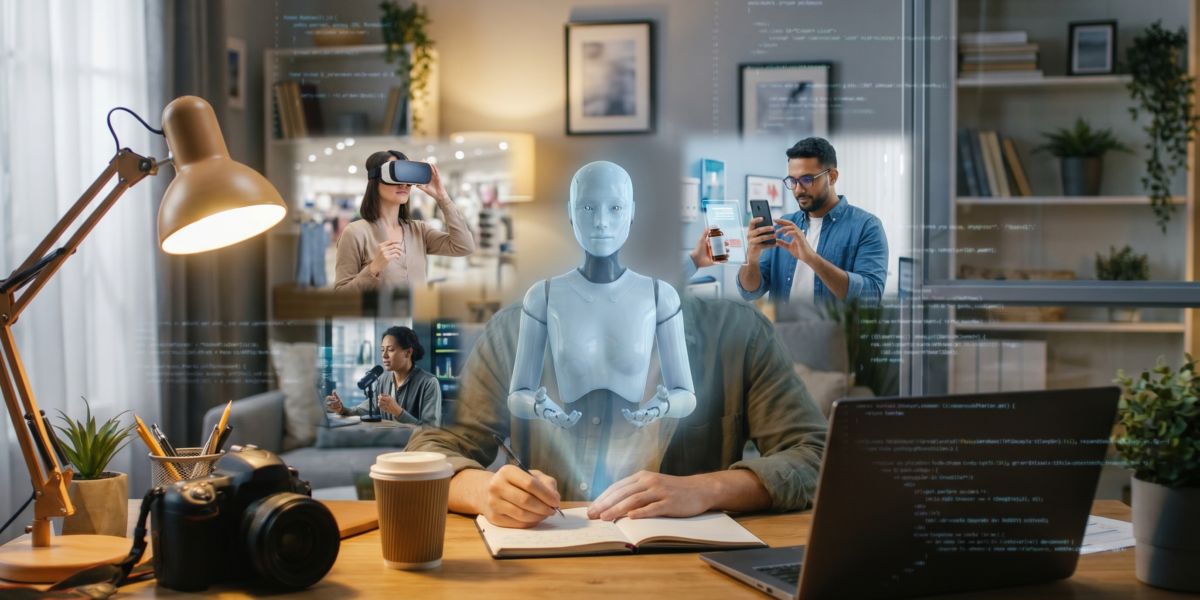
Interactive digital humans are AI-powered virtual entities designed to deliver highly personalized and immersive customer experiences across various digital environments like augmented reality (AR) and virtual reality (VR). They go beyond traditional chatbots by understanding intent, tone, and emotion, enabling more natural and efficient interactions for customers. These agentic AI systems can plan and complete entire workflows with minimal human input, moving from simple question-answering to complex problem-solving in customer service contexts.
TL;DR: Interactive Digital Humans Customer Experience at a Glance
Key Summaries of Interactive Digital Humans and CX
- AI-powered agents: Interactive digital humans are capable of planning and completing workflows with minimal human input, significantly enhancing customer experience.
- Technology drivers: Advancements in agentic AI and immersive technologies (like Apple’s Vision Pro) enable personalized interactions, emotional support, and AR/VR platform operation.
- Key benefits: Streamlining operations, reducing costs, improving service quality through handling repetitive tasks and providing immediate, near-real-time responses.
- Primary concerns: Data security issues, lack of attention to detail, and the “creepiness” factor that some users experience.
- Market growth: Human-machine interface sector expansion with companies like Razorpay Curlec winning digital CX awards in 2026.
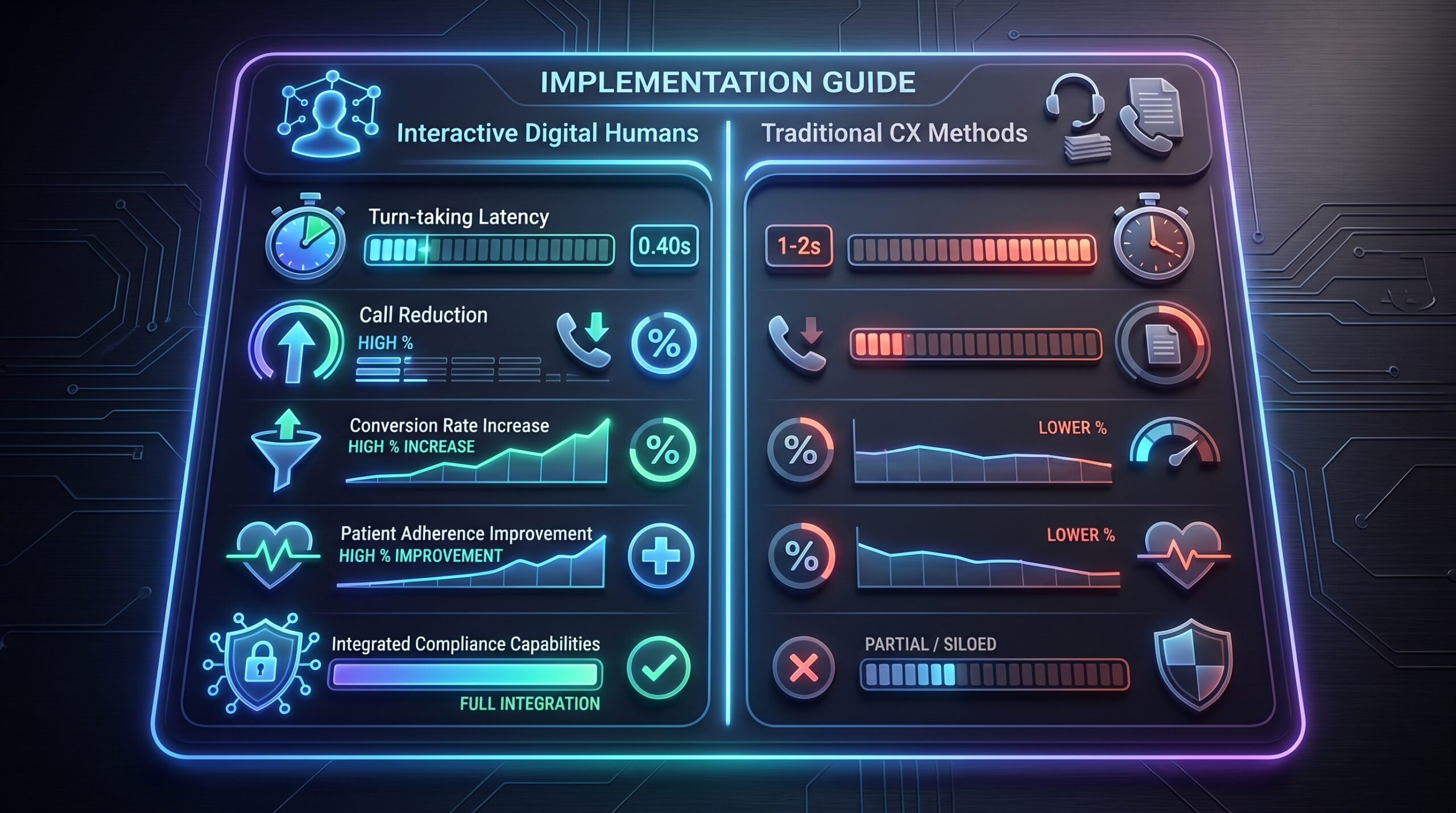
- Technical advances: Overcoming previous 1-2 second processing delays to achieve near-natural conversation speeds (0.40 seconds turn-taking latency).
- Implementation challenges: Customer experience modernization requires balancing digital-first approaches with human-centered design for diverse constituent needs.
Table of Contents
- What Are Interactive Digital Humans?
- Why Interactive Digital Humans Matter Now for Customer Experience
- How Interactive Digital Humans Drive Customer Experience
- Real-World Examples & Use Cases for Interactive Digital Humans
- Interactive Digital Humans CX: Comparisons and Alternatives
- Tools, Vendors, and Implementation Paths for Digital Human CX
- Costs, ROI, and Monetization Upside of Digital Humans CX
- Risks, Pitfalls, and Myths of Interactive Digital Humans CX
- FAQ: Interactive Digital Humans Customer Experience
- Glossary of Interactive Digital Humans Customer Experience Terms
- References & Further Reading on Digital Humans in CX
- What to Do Next: Action Plan for Interactive Digital Humans Implementation
Key Takeaways: Mastering Interactive Digital Humans for CX
Strategic Insights for Interactive Digital Humans in CX
- Agentic AI shift: The move from basic chatbots to agentic AI digital humans represents a fundamental change – these systems can complete complex tasks rather than just answer questions.
- Immersive technology integration: AR/VR platforms like Apple Vision Pro are becoming essential environments for digital human deployment, creating new customer engagement opportunities.
- Latency breakthroughs: The reduction from 1-2 second processing delays to 0.40 second turn-taking latency fundamentally changes conversation quality and user acceptance.
- Hybrid approach necessity: Successful implementation requires balancing digital-first strategies with human-centered design, especially for reaching diverse populations.
- Verified Human zones: The emergence of “Human Lobbies” in digital spaces indicates a need to preserve authentic human interaction alongside AI augmentation.
What Are Interactive Digital Humans?
Defining Interactive Digital Humans in Customer Service
Interactive digital humans are AI-powered virtual entities that can engage in two-way conversations using voice, video, and other modalities, delivering personalized and immersive customer experiences. Unlike traditional chatbots that operate on scripted responses, these systems use advanced natural language processing, computer vision, and emotional intelligence to create genuinely interactive experiences. They function as virtual customer service representatives, sales assistants, technical support agents, and brand ambassadors across digital channels.
These systems represent the convergence of multiple AI technologies into cohesive virtual personalities. They can maintain context across conversations, remember customer preferences, and adapt their communication style based on emotional cues. The most advanced interactive digital humans in 2026 incorporate real-time speech processing, facial expression analysis, and gesture recognition to create truly immersive interactions.
The Role of Agentic AI in Digital Humans
Agentic AI refers to AI systems that take ownership of tasks, plan steps, and complete entire workflows with minimal human input. This represents a fundamental shift from assistant-style AI to autonomous problem-solving capabilities. In the context of interactive digital humans, agentic AI enables these virtual entities to handle complex customer service scenarios without human intervention.
For example, an agentic digital human can process a customer’s insurance claim by gathering necessary information, accessing relevant systems, evaluating claim validity, initiating payout procedures, and following up with the customer – all within a single, coherent conversation. This contrasts with traditional systems that might handle only discrete steps before requiring human escalation.
Agentic AI systems in 2026 demonstrate sophisticated planning capabilities across business operations, customer experience, software, healthcare, and finance. They can break down complex requests into actionable steps, prioritize tasks based on business rules, and execute multi-step processes while maintaining context and compliance requirements.
Why Interactive Digital Humans Matter Now for Customer Experience
Customer Experience Modernization and Digital Humans
Customer experience modernization sounds straightforward but agencies struggle with execution. The challenge lies in designing alternative ways to reach individuals who are highly rural, have different preferences, or are not connected to traditional digital channels. Interactive digital humans address this gap by offering scalable, personalized interactions that can adapt to diverse user needs and accessibility requirements.
The evolution requires blending digital-first approaches with human-centered design elements. Companies like Granicus Experience Group offer persona development and journey mapping services specifically designed to help agencies navigate this complexity. Digital humans become the bridge between scalable digital efficiency and individualized human touchpoints.
Modern digital humans can operate across multiple channels simultaneously – from basic text interfaces for users with limited connectivity to immersive VR experiences for tech-savvy customers. This flexibility makes them particularly valuable for organizations serving diverse populations with varying levels of digital literacy and access.
Market Shifts Driving Interactive Digital Human Adoption
The human machine interface (HMI) sector is poised for impressive expansion in the coming years, driven by advancements in smart factory technology and interactive systems. This growth reflects broader market recognition of the value of sophisticated digital interactions. Companies like Razorpay Curlec winning the ‘Best PayTech for Digital Customer Experience’ at The Digital CX Awards 2026 demonstrates the competitive advantage offered by advanced digital CX solutions.
Consumer expectations have shifted dramatically toward seamless, personalized digital interactions. The pandemic accelerated digital adoption, and by 2026, customers expect brands to provide immediate, context-aware support across channels. Interactive digital humans meet these expectations by delivering consistent, high-quality experiences at scale.
The economics also favor adoption. AI-driven process automation and machine learning in finance, logistics, and customer experience can streamline operations, reduce costs, and improve service quality. As implementation costs decrease and capabilities increase, the business case for interactive digital humans becomes increasingly compelling.
Overcoming Traditional CX Limitations with Digital Humans
The primary friction in voice-based customer service in 2026 has been the 1–2 second “processing” delay common in standard APIs. This latency disrupts conversation flow and reminds users they’re interacting with technology rather than a human agent. Modern digital humans overcome this limitation through advanced processing architectures.
Thinking Machines’ model achieves a voice conversation turn-taking latency of 0.40 seconds, roughly the speed of a natural human conversation. This breakthrough eliminates the awkward pauses that undermine user experience in traditional voice AI systems. The improvement is measurable and meaningful – conversations feel natural rather than stilted.
Amazon’s Nova Sonic model represents another approach to real-time speech processing and more natural conversational interactions. These advancements mean digital humans can engage in fluid, context-aware dialogues that previously required human agents. The technology has reached a tipping point where the user experience justifies widespread adoption.
How Interactive Digital Humans Drive Customer Experience
Step-by-Step Mechanics of Digital Human Interaction
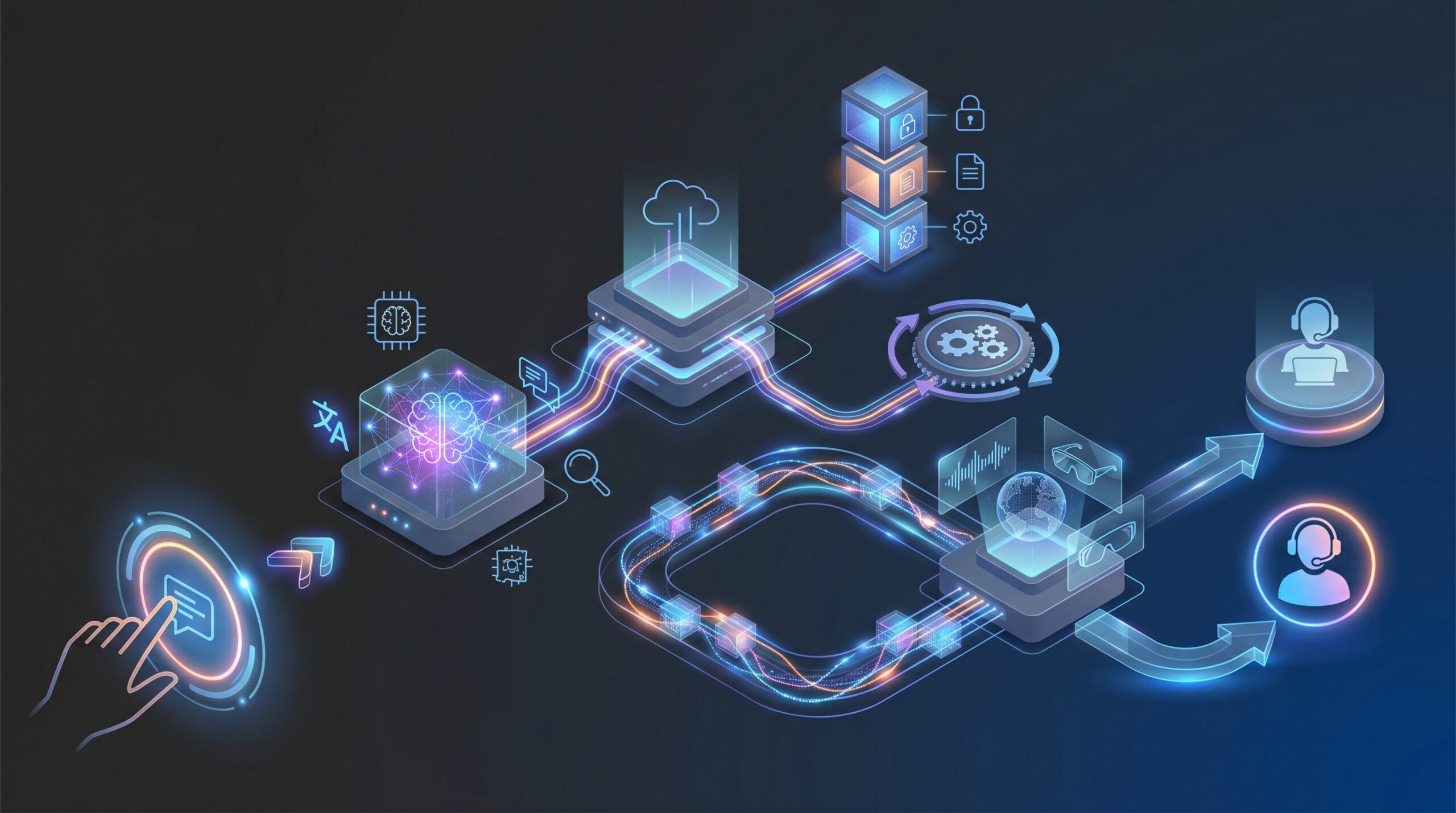
The interaction process begins when a customer initiates contact through text, voice, or immersive interfaces. The digital human uses natural language processing (NLP) and natural language understanding (NLU) to analyze the input for intent, tone, and emotional content. Advanced systems can detect subtle cues like frustration, urgency, or confusion from speech patterns and word choice.
Once the system understands the request, agentic AI capabilities kick in to plan and execute appropriate responses. This might involve accessing customer data from CDPs, retrieving information from knowledge bases, or initiating workflows in backend systems. The digital human maintains context throughout the interaction, remembering previous exchanges and adapting responses accordingly.
Response delivery utilizes multiple modalities – verbal responses through text-to-speech, visual representations through animated avatars, and in immersive environments, spatial audio and gesture-based communication. The system continuously evaluates conversation quality and can escalate to human agents when situations exceed its capabilities or when human intervention is preferred.
Personalization and Emotion Recognition in Digital Humans CX
Personalization represents one of the most significant advantages of interactive digital humans. By integrating with customer data platforms (CDPs), these systems can access comprehensive customer profiles including purchase history, preferences, past interactions, and demographic information. This enables truly tailored experiences that anticipate customer needs.
Emotion recognition technology allows digital humans to adapt their tone, pacing, and content based on the customer’s emotional state. If a system detects frustration, it might adopt a more empathetic tone and prioritize issue resolution. For excited customers, it might emphasize upsell opportunities or enthusiastic engagement. This emotional intelligence creates more satisfying interactions.
The combination of personalization and emotion recognition enables digital humans to provide what feels like individual attention at scale. Each customer receives interactions tailored to their specific situation and mood, creating the impression of a dedicated personal assistant rather than a generic automated system.
Immersive Experiences with Interactive Digital Humans
Immersive technologies like AR and VR platforms (including Apple Vision Pro) provide new dimensions for digital human interactions. In these environments, digital humans can guide customers through virtual product demonstrations, provide contextual information in physical spaces via AR overlays, or serve as hosts in virtual events.
In 2026, interactive models can be used to test services and people can attend real events remotely while still feeling personal without a physical venue. Digital humans enhance these experiences by providing personalized attention and guidance. They can answer questions, make recommendations, and facilitate networking in ways that scale impossible with human staff alone.
The immersive aspect also enables more natural interactions. Spatial audio allows digital humans to seem like they’re standing next to the user. Gesture recognition enables non-verbal communication. These subtle cues significantly enhance the sense of presence and engagement, making digital interactions feel more authentic and memorable.
Real-World Examples & Use Cases for Interactive Digital Humans
Digital Humans Enhancing Retail Customer Journey
Case Study: Virtual Shopping Assistant Implementation
A major retail chain implemented interactive digital humans in their AR shopping app to address declining in-store traffic while maintaining personalized service. The digital humans guide customers through virtual store aisles, provide product recommendations based on purchase history from their CDP, and demonstrate product features through interactive simulations.
The system reduced customer service calls by 40% while increasing conversion rates by 28%. Customer satisfaction scores improved particularly for complex purchases where personalized guidance was valuable. The digital humans could handle routine queries automatically while seamlessly escalating complex issues to human specialists when needed.
Implementation required integration with existing e-commerce platforms, inventory systems, and the customer data platform. The retailer used Granicus Experience Group’s journey mapping to identify key touchpoints where digital humans could add maximum value. The result was a hybrid model that combined digital efficiency with human warmth.
Healthcare: Interactive Digital Humans for Patient Support
Scenario: Chronic Condition Management
A healthcare provider deployed interactive digital humans to support patients with chronic conditions like diabetes. The digital human serves as a virtual health coach, reminding patients to take medications, tracking symptoms through conversational interfaces, and providing educational content tailored to individual health literacy levels.
The system integrates with wearable devices to provide context-aware recommendations. Emerging “Wellness-Aware” apps in 2026 can suggest “Zen Breaks” or alter UI to calming colors based on biometric data. The digital human adapts its communication style based on stress indicators, providing more supportive interactions during difficult periods.
Patient adherence improved by 35% compared to traditional reminder systems. The emotional support capabilities proved particularly valuable for patients experiencing anxiety about their conditions. The digital human could detect distress cues and either provide calming techniques or escalate to human caregivers when necessary.
Financial Services: Digital Humans for Banking and Insurance
Financial institutions face particular challenges with compliance, security, and complex products. Interactive digital humans address these while improving customer experience. Virtual tellers can handle routine transactions, while more advanced systems provide personalized financial advice based on comprehensive customer profiles.
Razorpay Curlec’s award-winning digital customer experience demonstrates the potential in financial services. Their systems streamline payment processes while maintaining security and compliance. Digital humans extend this approach to more complex interactions like loan applications, investment guidance, and insurance claims processing.
The agentic capabilities allow digital humans to navigate multi-step financial processes while ensuring regulatory compliance. They can explain complex terms in accessible language, gather required documentation through conversational interfaces, and maintain audit trails for compliance purposes. This combines efficiency with the personalized touch that financial decisions often require.
Interactive Digital Humans CX: Comparisons and Alternatives
Interactive Digital Humans vs. Traditional Chatbots
| Feature | Traditional Chatbots | Interactive Digital Humans (Agentic AI) |
|---|---|---|
| Core Capability | Rule-based, script-driven, answer FAQs | Understand intent, emotion, plan workflows, complete full tasks |
| Interaction Quality | Text-based, limited voice, often robotic | Multi-modal (voice, video, AR/VR), empathetic, human-like conversation |
| Personalization | Basic personalization based on user input, limited context | Deeply personalized using CDP data, emotional cues, long-term memory |
| Problem Solving | Simple, repetitive tasks, escalates complex issues | Handles complex multi-step problems, proactive problem-solving |
| Turn-taking Latency | Often noticeable delays (1-2 seconds) in voice interaction | Near-natural conversation speed (~0.40 seconds with advanced models) |
Why Digital Humans Outperform Basic Conversational AI
The fundamental difference lies in capability versus automation. Traditional conversational AI automates existing processes, while interactive digital humans create new capabilities. Agentic AI systems can tackle problems they haven’t encountered before by breaking them down into solvable components rather than relying on predetermined scripts.
This distinction becomes apparent in complex customer service scenarios. A traditional chatbot might successfully answer common questions but fail when faced with novel situations. An interactive digital human can analyze the new scenario, access relevant information sources, and construct an appropriate response pathway. This adaptability makes them suitable for dynamic business environments.
The emotional intelligence component represents another significant advantage. While basic AI might detect sentiment, interactive digital humans can respond appropriately to emotional cues. They can express empathy, adjust communication style, and build rapport – capabilities that significantly impact customer satisfaction and loyalty.
Tools, Vendors, and Implementation Paths for Digital Human CX
Key Technologies Enabling Interactive Digital Humans
The technology stack for interactive digital humans combines several advanced components. AI models like Amazon’s Nova Sonic provide real-time speech processing capabilities essential for natural conversations. Generative AI creates contextually appropriate responses beyond scripted interactions. Natural language processing (NLP) and computer vision enable understanding of both verbal and non-verbal cues.
Immersive platforms like Apple Vision Pro provide the environment for advanced interactions. These systems support spatial computing, gesture recognition, and environmental understanding that make digital humans feel present in the user’s space. Integration with customer data platforms (CDPs) ensures personalization based on comprehensive customer understanding.
The underlying infrastructure must support low-latency processing to achieve natural conversation speeds. Thinking Machines demonstrated the importance of this with their 0.40 second turn-taking latency. This requires optimized AI inference pipelines, efficient data access patterns, and robust networking infrastructure.
Leading Vendors in the Digital Human Space
The vendor landscape includes several categories of providers. Platform companies offer end-to-end digital human solutions with customizable avatars, conversation engines, and integration tools. These platforms typically provide the fastest path to implementation but may offer less customization than building with component technologies.
AI technology providers focus on specific capabilities like speech processing, emotion recognition, or natural language understanding. Companies like Thinking Machines excel at low-latency conversation models, while others specialize in visual rendering or knowledge management. This approach offers maximum flexibility but requires significant integration effort.
Implementation partners like Granicus Experience Group provide strategic guidance for deploying digital humans effectively. They help organizations identify use cases, design interaction flows, and integrate digital humans into broader customer experience strategies. Their human-centered design expertise ensures solutions meet actual user needs rather than technological possibilities.
Implementation Roadmap for Interactive Digital Humans
Phase 1: Strategy and Planning (Weeks 1-4)
- Define clear business objectives and success metrics
- Identify high-value use cases through customer journey analysis
- Assess technical infrastructure and integration requirements
- Establish cross-functional implementation team
Phase 2: Vendor Selection and Design (Weeks 5-12)
- Evaluate vendor options against use case requirements
- Develop conversational flows and interaction designs
- Create digital human personality and appearance specifications
- Plan integration with existing systems (CRM, CDP, knowledge bases)
Phase 3: Development and Testing (Weeks 13-24)
- Build or configure digital human capabilities
- Integrate with backend systems and data sources
- Conduct extensive testing for functionality, performance, and user experience
- Develop monitoring and analytics frameworks
Phase 4: Pilot Deployment and Optimization (Weeks 25-32)
- Launch limited pilot with controlled user group
- Gather feedback and performance data
- Refine interactions based on real-world usage
- Prepare scaling plan and organizational change management
Phase 5: Full Deployment and Continuous Improvement (Week 33+)
- Expand deployment to full user base
- Monitor performance against defined metrics
- Establish continuous improvement processes
- Scale successful use cases and add new capabilities
Costs, ROI, and Monetization Upside of Digital Humans CX
Calculating ROI for Interactive Digital Humans
ROI calculation must consider both cost savings and revenue generation. Cost savings come from reduced labor requirements, particularly for routine customer service interactions. A single digital human can handle thousands of simultaneous conversations, scaling far beyond human capacity. Additional savings come from reduced training costs, lower error rates, and consistent compliance adherence.
Revenue generation occurs through several mechanisms. Personalized upselling and cross-selling during service interactions can significantly increase transaction values. Improved customer satisfaction leads to higher retention rates and increased lifetime value. Enhanced brand perception can attract new customers preferring modern, efficient service experiences.
Quantifiable metrics should include:
- Reduction in average handle time for service interactions
- Increase in first-contact resolution rates
- Improvement in customer satisfaction scores (NPS, CSAT)
- Growth in conversion rates for sales interactions
- Decrease in escalations to human agents
- Reduction in training and staffing costs
Monetization Strategies with Interactive Digital Humans
Digital humans create monetization opportunities beyond basic cost savings. Personalized recommendations driven by CDP integration can significantly increase average order values. The system can identify complementary products, timing-based offers, and premium options tailored to individual customer preferences and behaviors.
Subscription models represent another opportunity. Customers might pay for premium access to digital human assistants that provide personalized shopping advice, financial guidance, or technical support. The always-available, deeply personalized nature of these interactions justifies premium pricing for certain customer segments.
Data monetization, when handled ethically and with proper consent, provides additional revenue streams. Aggregated, anonymized interaction data can reveal market trends, product opportunities, and service gaps. This business intelligence has significant value for strategic planning and partner relationships.
ROI & Monetization Upside Framework
Cost Savings:
- Reduced labor for routine CX.
- Lower training costs.
- Fewer errors, better compliance.
Revenue Generation:
- Increased transaction values via upsell/cross-sell.
- Higher customer retention and LTV.
- Enhanced brand perception & new customer acquisition.
Monetization Strategies:
- Personalized recommendations.
- Premium access subscription models.
- Ethical data monetization (aggregated analytics).
The Business Case for Advanced Digital Human Investment
The business case rests on both defensive and offensive considerations. Defensively, organizations risk falling behind competitors who offer superior digital experiences. Customers increasingly expect immediate, personalized service across channels. Companies lacking these capabilities face declining satisfaction and loyalty.
Offensively, advanced digital humans create competitive differentiation. They enable new service models, revenue streams, and customer engagement approaches. The technology represents a platform for innovation rather than just an efficiency tool. Early adopters can establish market leadership positions that are difficult to challenge.
The investment timeline has shortened significantly as technology matures. Cloud-based solutions reduce upfront infrastructure costs. Pre-built platforms decrease development time. The combination of lower costs and faster implementation makes the technology accessible to organizations of various sizes, not just large enterprises.
Risks, Pitfalls, and Myths of Interactive Digital Humans CX
What Most People Get Wrong About Digital Humans in CX
Myth: Digital humans will completely replace human agents.
Reality: Digital humans augment human capabilities rather than replace them. They handle routine interactions, allowing human agents to focus on complex, high-value activities. The most effective implementations use digital humans for initial contact and simple issues, with seamless escalation to humans for complicated scenarios.
Myth: Digital humans are just advanced chatbots.
Reality: The agentic capabilities fundamentally differentiate digital humans. They can plan and execute multi-step workflows, adapt to novel situations, and learn from interactions. This represents a qualitative leap beyond scripted chatbot functionality.
Myth: Implementation is primarily a technology project.
Reality: Successful implementation requires equal attention to organizational change, user experience design, and business process adaptation. Technology represents only one component of a holistic transformation.
Navigating the ‘Creepiness’ Factor and Trust Issues
The “uncanny valley” effect remains a significant challenge. When digital humans appear almost human but not quite, they can trigger discomfort. Mitigation strategies include transparently acknowledging the AI nature of the interaction, designing stylized rather than photorealistic avatars, and ensuring predictable, consistent behavior.
Trust building requires demonstrating reliability and competence over time. Digital humans should clearly communicate their capabilities and limitations. They should handle errors gracefully by acknowledging mistakes and providing clear paths to resolution. Privacy assurances and transparent data handling policies help alleviate security concerns.
User control mechanisms reduce discomfort by putting users in charge of the interaction. Options to switch between digital and human agents, adjust interaction style, or control data sharing help users feel empowered rather than subjected to technology.
Data Security and Privacy Concerns with Digital Humans
Interactive digital humans require access to sensitive customer data to provide personalized experiences. This creates significant privacy and security obligations. Organizations must implement robust data protection measures including encryption, access controls, and audit trails. Compliance with regulations like GDPR, CCPA, and industry-specific requirements is essential.
Transparency about data usage builds trust. Customers should understand what information is collected, how it’s used, and who has access. Clear opt-in mechanisms for data collection and straightforward privacy settings help customers feel in control of their information.
Security measures must address both external threats and internal risks. Regular security audits, employee training, and incident response plans ensure comprehensive protection. The consequences of data breaches extend beyond regulatory penalties to include significant brand damage and loss of customer trust.
Execution Challenges in Modernizing CX with Digital Humans
Customer experience modernization faces significant execution challenges. Agencies struggle with designing for diverse populations including highly rural individuals, those with different preferences, or people not connected to digital channels. Digital humans must be part of a multi-channel strategy that includes non-digital alternatives.
Balancing digital-first approaches with human-centered design requires careful planning. Digital efficiency shouldn’t come at the cost of alienating customers who prefer human interaction. The trend toward “Verified Human” zones in digital spaces indicates enduring value in authentic human connection. NVIDIA and SAP working on trusted AI agents for enterprise further emphasizes the drive for reliability.
Employee adaptation represents another challenge. Staff need training to work effectively alongside digital humans, handling escalated cases and focusing on high-value activities. Organizational structures and incentives may need adjustment to maximize the benefits of human-AI collaboration.
FAQ
Here are answers to frequently asked questions about interactive digital humans in customer experience.
How much does UneeQ cost?
The provided sources do not include pricing information for UneeQ. For accurate pricing, it would be best to consult UneeQ’s official website or contact their sales department directly. Pricing typically depends on factors like implementation scale, customization requirements, and ongoing support needs.
What is the digital customer service experience?
The digital customer service experience refers to the entire journey a customer has with a brand through digital channels, enhanced by technologies like AI, conversational agents, and immersive platforms to provide personalized, efficient, and seamless interactions. It encompasses all touchpoints from initial contact through issue resolution, delivered through digital interfaces rather than traditional in-person or phone channels.
What is the 10 20 70 rule for AI?
The provided sources do not mention or define a ‘10 20 70 rule for AI’. This may be a concept outside the scope of the provided research material, and is not directly relevant to interactive digital human customer experience. Organizations should focus on established AI implementation frameworks rather than seeking simplistic rules that may not apply to their specific context.
What are examples of digital experience?
Examples of digital experiences include interacting with products in a mixed-reality environment, using an interactive model to test services, attending real events remotely with a personal feel, using context-aware conversational AI for customer support, and receiving tailored content and product recommendations via online platforms. These experiences are often powered by technologies like interactive digital humans and represent the evolution of customer engagement beyond traditional digital channels.
Glossary of Interactive Digital Humans Customer Experience Terms
Key Definitions for Digital Human CX
- Interactive Digital Humans
- AI-powered virtual entities that can engage in two-way conversations using voice, video, and other modalities, delivering personalized and immersive customer experiences.
- Agentic AI
- AI systems that take ownership of tasks, plan steps, and complete entire workflows with minimal human input, moving beyond mere assistance to autonomous problem-solving.
- Immersive Brand Experiences
- Experiences that allow customers to interact with products or services in mixed-reality environments, attend remote events with a personal feel, or use interactive models to explore offerings before purchase.
- Human Machine Interface (HMI)
- The point of interaction between a human and a machine system, with the HMI sector experiencing significant expansion driven by smart factory technology and interactive systems.
- Customer Data Platform (CDP)
- A unified customer database that helps tailor customer experiences through personalized content and product recommendations, enhancing e-commerce optimization and personalization capabilities.
- Turn-taking Latency
- The delay between when one conversational participant finishes speaking and the other begins, with natural human conversation typically having very low latency (under 0.5 seconds).
- Apple Vision Pro
- A VR/AR platform where AI-powered digital human experiences can be implemented, supporting spatial computing and immersive interactions.
References & Further Reading on Digital Humans in CX
- FinTechtris (2026). “Immersive Experiences and Remote Participation Trends.”
- upGrad (2026). “Agentic AI Systems: Capabilities and Applications.”
- OpenPR (2026). “Digital Human Implementation Platforms and Market Growth.”
- VentureBeat (2026). “Advances in Conversational AI Latency Reduction.”
- Wikipedia (accessed 2026-05-13). “Human-AI Interaction Evaluation Factors.”
- Appinventiv (2026). “Conversational AI Evolution and Capabilities.”
- IBM (accessed 2026-05-13). “AI-Driven Process Automation Benefits.”
- The Digital Banker (2026). “Digital CX Awards 2026 Winners Analysis.”