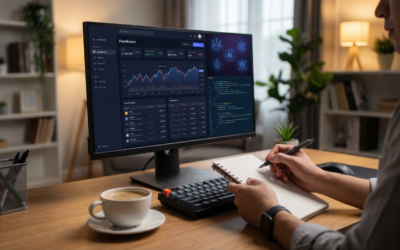
One trader reportedly made $2.4 million in 28 minutes through a highly leveraged, short-term trade involving Altera Corporation stock during a period of significant volatility. This specific event, if it occurred as described, would likely have capitalized on a rapid price movement, possibly triggered by unexpected news, an earnings report, or a major market event, using advanced trading strategies and substantial capital or access to high leverage.
A trader allegedly turned a significant profit of $2.4 million in less than half an hour by executing a high-risk, high-reward strategy on Altera stock, leveraging market volatility and precise timing.
The story of an individual making $2.4 million in just 28 minutes from an Altera trade has circulated in financial discussions, often cited as an example of extreme market opportunity and risk. This type of extraordinary gain typically involves specific conditions and advanced trading practices.
What Was the Altera Trade?
While specific public records detailing this exact trade are sparse, the core elements likely involve a concentrated, high-stakes position on Altera Corporation (now part of Intel) stock during a period of intense price fluctuation. Such rapid gains are usually associated with:
- Event-driven volatility: A major announcement, such as a merger, acquisition, or unexpected earnings report.
- High leverage: Using borrowed capital to significantly amplify potential returns (and losses).
- Short-term speculation: Executing a trade with a very narrow time horizon, aiming to profit from immediate price movements.
Altera, a prominent semiconductor company before its acquisition by Intel, often experienced volatility inherent in the tech sector, making it a potential target for such speculative trades.
Key Takeaways from High-Speed Trading Successes
- Extreme Volatility: Massive gains over short periods almost always occur during periods of high market instability or significant news events.
- Leverage is Key (and Risky): Magnifying capital through options or margin trading can turn small price movements into huge profits or catastrophic losses.
- Timing is Everything: Success hinges on entering and exiting trades with incredible precision, often requiring sophisticated tools and real-time data.
- Not a Common Occurrence: Such rapid, massive profits are exceedingly rare and not indicative of typical trading outcomes.
How Did One Trader Allegedly Make $2.4 Million in 28 Minutes?
To achieve such a significant return in such a short timeframe, the trader would have needed to employ a combination of sophisticated strategies, likely leveraging a major market event related to Altera. Here’s a hypothetical breakdown:
1. Identifying the Catalyst
The initial step would be recognizing an imminent or developing situation that would drastically impact Altera’s stock price. This could have been:
- An acquisition rumor or official announcement (Intel acquired Altera).
- A surprise earnings beat or miss.
- A major product announcement or technological breakthrough.
Reacting quickly to such news is paramount. Traders often use tools like AI trading apps or algorithms to sift through news and make decisions faster than humanly possible.
2. Strategic Positioning & High Leverage
The key to such outsized returns is leverage. The trader likely didn’t have $2.4 million in initial capital. Instead, they would have used:
- Options contracts: Buying out-of-the-money call or put options just before a major price swing. Options offer immense leverage, as a small premium can control a large number of shares.
- Margin trading: Borrowing funds from a broker to increase their purchasing power. However, margin calls can wipe out accounts quickly if the trade goes awry.
Understanding Leverage: If a stock moves 5% and you’re leveraged 10:1 through options, your return on capital could be 50% or more. However, the same leverage can lead to rapid and complete loss of capital.
3. Precision Execution and Exit
The “28 minutes” suggests an incredibly brief window for the trade:
- Rapid Entry: Placing a large order immediately after the catalyst became apparent, often pre-market or at market open.
- Explosive Price Movement: The stock price would have needed to move significantly and rapidly in the desired direction.
- Swift Exit: Selling the position (or closing the options) precisely at a peak, or before a reversal, locking in profits. This requires sharp decision-making or automated trading systems.
This type of trading success is not a sustainable long-term strategy and is fraught with immense risk. For those interested in managing risk in trading, understanding concepts like the 3-5-7 rule in trading is crucial, even for algorithmic trading.
Is This Type of Gain Replicable?
While theoretically possible for another lucky trader, replicating a $2.4 million gain in 28 minutes is exceedingly difficult and highly improbable for most investors. Key reasons include:
- Unpredictability of Market Catalysts: Major, immediate market-moving news is rare and hard to foresee consistently.
- Timing Difficulty: Identifying the exact entry and exit points in such a compressed timeframe is exceptionally challenging, even for seasoned professionals.
- Risk Tolerance: Such trades require an extremely high tolerance for risk and the willingness to lose the entire invested capital.
- Capital Requirements: Even with leverage, a significant amount of capital must be deployed to generate multi-million dollar returns from relatively small percentage moves.
- Market Impact: Large orders can themselves influence prices, especially in less liquid instruments.
Focused planning and risk management, as outlined in guides like how to turn $1000 into $10000 in a month, offer more practical, albeit less dramatic, paths to profit. For those exploring automated approaches, understanding agentic AI trading infrastructure might provide insights into advanced systems, but it doesn’t eliminate risk.
Risks Associated with High-Speed, High-Leverage Trading
The allure of quick millions comes with significant downsides:
- Total Loss of Capital: Leverage amplifies losses just as it amplifies gains. A slight wrong move can wipe out an entire account.
- Market Slippage: In fast-moving markets, the execution price might differ significantly from the quoted price, leading to unexpected losses.
- Emotional Decisions: The pressure of such high-stakes, short-term trades can lead to irrational decisions, even for experienced traders.
- Brokerage Requirements: High leverage often requires specific account types and substantial capital, limiting access for average investors.
Prudent trading, whether crypto or traditional stocks, emphasizes risk management and a structured approach. For instance, knowing if you need $25,000 for day trading crypto highlights the capital considerations for more active strategies.
Frequently Asked Questions (FAQ)
Was the Altera $2.4 million trade a verified event?
Specific details and verifiable public records of this exact multi-million dollar trade by a single individual in 28 minutes are scarce. It often circulates as an anecdotal example highlighting extreme market opportunities rather than a widely documented historical event with precise trader identification. However, such rapid, high-profit trades are theoretically possible under specific, volatile market conditions with significant leverage.
What kind of trading allowed such a quick profit?
Such rapid, large profits typically result from highly leveraged trades, often involving options or futures, placed just before or during a major, unexpected news event (like an acquisition or significant earnings surprise) that causes an immediate and dramatic price movement in the underlying stock, like Altera. The trader would have needed to enter and exit the position with extreme precision.
What are the risks of attempting such a trade?
The risks are extremely high. Leveraging capital severely amplifies potential losses, meaning a small adverse price movement can lead to the complete loss of invested capital, and potentially more if on margin. Such trades are highly speculative, unpredictable, and often influenced by factors beyond individual control. They are not recommended for most investors.
How common are trades making millions in minutes?
Trades yielding millions in minutes are exceptionally rare and are not a common occurrence. They represent extreme outliers in financial markets, requiring a perfect storm of unique market conditions, precise timing, significant capital or leverage, and often a degree of luck. Most successful trading strategies focus on consistent, smaller gains over longer periods with disciplined risk management.