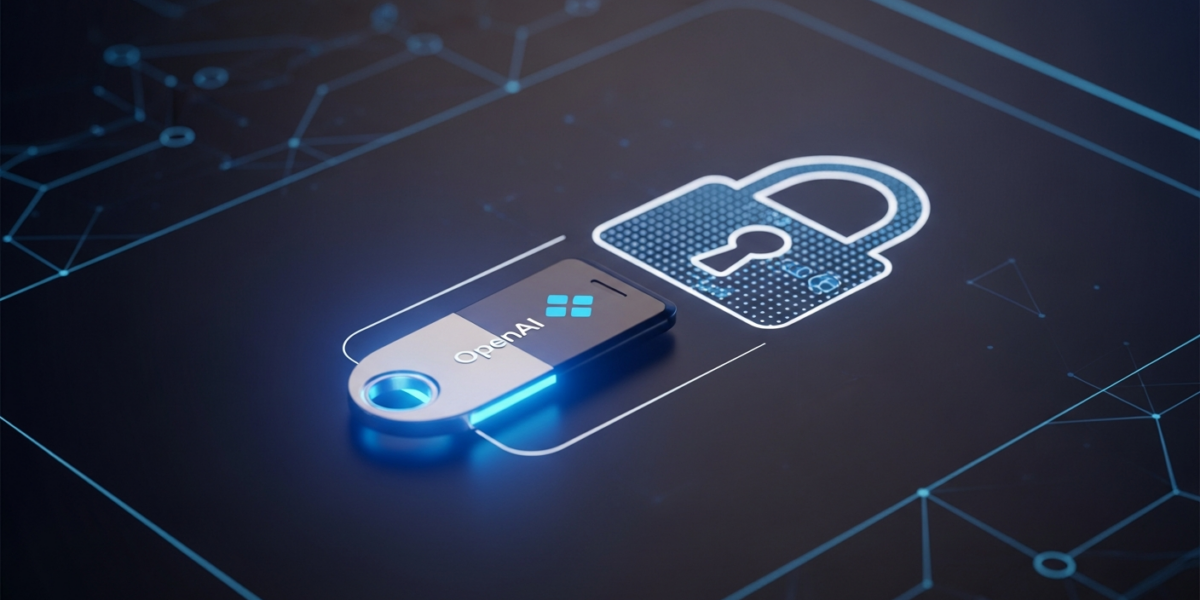
OpenAI has introduced Advanced Account Security, a new optional suite of protections designed to safeguard user accounts from phishing and takeover attempts. Launched on , this initiative emphasizes phishing-resistant login methods like passkeys and hardware security keys, including custom YubiKeys developed in partnership with Yubico. The move aims to provide a more robust security posture for users, particularly those at high risk, by replacing traditional passwords with stronger, hardware-backed authentication and implementing tighter account recovery protocols.
- OpenAI’s Advanced Account Security offers phishing-resistant login via passkeys or hardware security keys, including custom YubiKeys.
- The new security mode disables password-based logins and email recovery for enrolled accounts, significantly reducing common attack vectors.
- Users who opt-in will also benefit from shorter session durations, clearer session management, and automatic exclusion of their data from model training.
- OpenAI partnered with Yubico to offer co-branded YubiKeys, available for $68 for a pair, reinforcing hardware-backed authentication.
What changed
OpenAI’s Advanced Account Security fundamentally alters how users authenticate and manage their accounts, moving beyond traditional password-based systems. The core change is the mandatory adoption of phishing-resistant authentication methods: users enrolling in this mode must use either software-based passkeys or physical hardware security keys, such as YubiKeys, for login. This directly addresses the vulnerability of passwords to phishing attacks, as noted by WIRED, which reported that the feature “enforces strict access controls that would make account takeover attacks very difficult” [2, 4].
Crucially, for accounts enrolled in Advanced Account Security, password-based logins are disabled entirely, and email-based account recovery is no longer an option. This removes common attack vectors that rely on compromised email accounts or weak passwords [8]. Instead, account recovery processes are strengthened, requiring more robust verification steps. The Verge also highlighted that users receive alerts about new logins to their accounts, adding another layer of protection [5].
Beyond authentication, the new security bundle consolidates several protections, as detailed in OpenAI’s LinkedIn post mentioned by TipRanks. These include shorter session durations, which reduce the window of opportunity for unauthorized access if a session is hijacked, and clearer session management tools, allowing users to see and revoke active sessions [6]. A significant privacy enhancement is the automatic exclusion of user data from model training for accounts under Advanced Account Security [6, 8]. This provides an additional incentive for privacy-conscious users and those handling sensitive information through OpenAI’s services.
How it works
The Advanced Account Security system operates by replacing the traditional username-and-password login flow with a FIDO2-compliant authentication mechanism. When a user enrolls, their account is configured to only accept authentication via a registered passkey or hardware security key. Passkeys leverage the cryptographic capabilities of devices (like smartphones or computers) to generate unique, unphishable credentials for each service, eliminating the need for users to remember or type passwords [4].
Hardware security keys, like those from Yubico, provide an even stronger layer of protection. These physical devices store cryptographic keys securely and require physical presence and often a touch or PIN to authenticate. OpenAI has specifically partnered with Yubico to offer custom, co-branded YubiKeys, emphasizing this hardware-backed approach [3, 8]. Jerrod Chong, CEO of Yubico, stated that this partnership introduces “a new model for phishing-resistant security at scale for the AI ecosystem” [3]. When a user attempts to log in, the system prompts for the passkey or security key, which cryptographically verifies the user’s identity to OpenAI’s servers without transmitting any secrets that could be intercepted or replayed.
Account recovery under this advanced scheme is also redesigned. Without email recovery, users must rely on pre-registered backup keys or other highly secure, multi-factor recovery methods that are less susceptible to social engineering or email compromise. This shift ensures that even if an attacker gains access to a user’s email, they cannot easily regain control of the OpenAI account.
Why it matters for operators
For operators—whether they are founders building on OpenAI’s APIs, engineers integrating ChatGPT into their workflows, or consultants advising clients on AI adoption—this Advanced Account Security rollout is more than just a feature update; it’s a critical signal about the evolving security landscape in AI. The immediate implication is clear: if you or your team are handling sensitive data, intellectual property, or critical operational workflows via OpenAI services, enabling this feature is no longer optional but a baseline requirement. The cost of a data breach or account takeover, particularly for an AI-centric platform, can be catastrophic, leading to IP loss, competitive disadvantage, and severe reputational damage.
The partnership with Yubico and the emphasis on hardware keys also underscores a broader industry trend towards zero-trust architectures and hardware-backed security. Operators should view this as a mandate to re-evaluate their own internal security policies, especially concerning access to AI tools. If your team is still relying on password managers alone for OpenAI accounts, you are now operating below the new security bar set by a leading AI provider. This move by OpenAI will likely accelerate the adoption of passkeys and physical security keys across the tech ecosystem, making it a standard that operators should proactively integrate into their security playbooks for all critical SaaS applications, not just OpenAI.
Furthermore, the automatic exclusion of data from model training for enrolled accounts is a significant win for data privacy and compliance. For operators in regulated industries or those dealing with proprietary information, this provides an added layer of assurance. It reduces the risk of inadvertent data leakage through model training, a concern that has historically deterred some enterprises from fully embracing public AI services. This feature, combined with robust authentication, makes OpenAI a more palatable option for enterprise-grade applications, potentially unlocking new use cases for operators who previously held back due to security and privacy concerns.
How to try it today
Users can enable Advanced Account Security directly within their OpenAI account settings. The process involves navigating to the security section and following the prompts to register a passkey or a hardware security key. For those opting for a physical key, OpenAI, in partnership with Yubico, offers custom co-branded YubiKeys. These are available for purchase at $68 for a pair, providing a redundant backup for enhanced reliability [8]. Once enabled, users will be prompted to authenticate with their registered passkey or security key for all subsequent logins to their ChatGPT and Codex accounts [5].
Risks and open questions
- User adoption and education: While robust, hardware-backed security requires a shift in user behavior. The success of this initiative hinges on how effectively OpenAI can educate its diverse user base on the benefits and usage of passkeys and security keys, especially given the historical reliance on simpler, albeit less secure, password methods.
- Hardware dependency and loss: Relying solely on physical security keys introduces a new point of failure: the loss or damage of the key itself. While OpenAI offers a pair of YubiKeys for redundancy, the process for recovering an account if all registered keys are lost or inaccessible, especially without email recovery, needs to be exceptionally clear and robust to prevent users from being locked out of their accounts permanently.
- Integration with enterprise identity providers: For larger organizations using single sign-on (SSO) or enterprise identity providers, the integration of these advanced security features needs to be seamless. Operators will need clarity on how this new security layer interacts with existing enterprise authentication systems to avoid friction or security gaps.
- Cost barrier for high-risk users: While $68 for a pair of YubiKeys is a reasonable price for enterprise users, it might represent a barrier for individual researchers or developers in regions with lower purchasing power, potentially leaving some high-risk users without access to the strongest protection.
Sources
- Introducing Advanced Account Security | OpenAI
- OpenAI Rolls Out ‘Advanced’ Security Mode for At-Risk Accounts | WIRED
- OpenAI and Yubico Partner to Bring Custom Phishing-Resistant YubiKeys to OpenAI Users
- OpenAI’s Advanced Account Protection Dumps Passwords for Security Keys | PCMag
- OpenAI adds stronger security features for users at high-risk of hacks. | The Verge
- OpenAI Introduces Advanced Account Security Features for ChatGPT Users – TipRanks.com
- OpenAI adds advanced account security to ChatGPT to protect users from cyber threats – CXO Digitalpulse
- OpenAI launches hardware security keys for ChatGPT with Yubico partnership and disables password login for high-risk users