
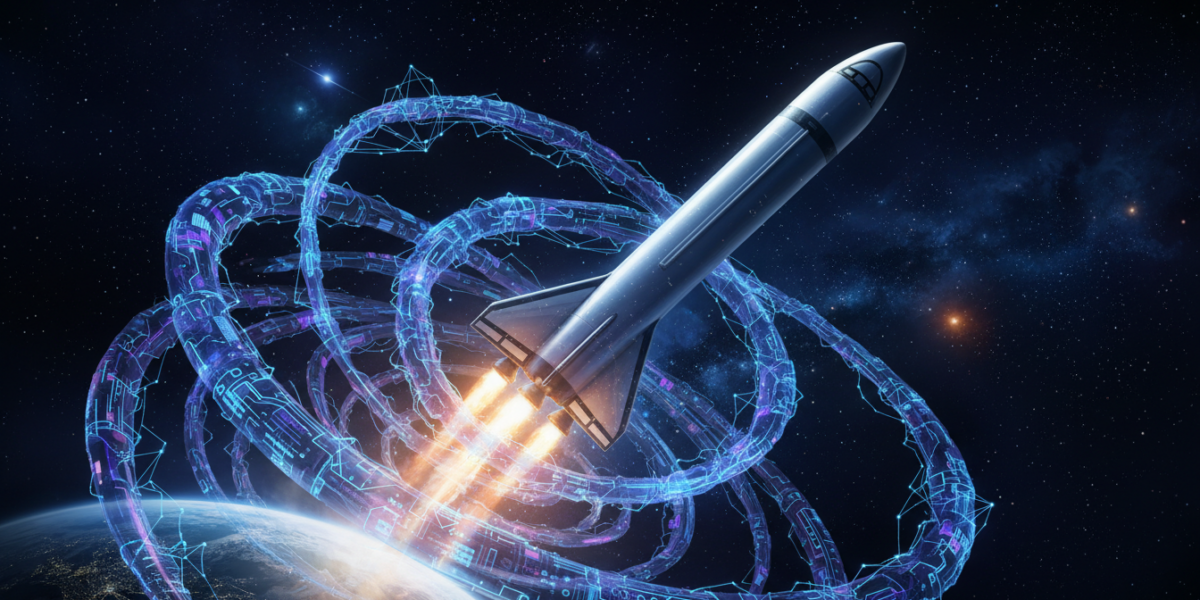
SpaceX acquired xAI, Elon Musk’s artificial intelligence company, in February 2026 in a $250 billion all-stock transaction. This merger combines advanced AI capabilities with SpaceX’s space technology, accelerating innovations like orbital computing, autonomous space operations, and smarter satellite networks.
TL;DR
- SpaceX acquired xAI for $250 billion, integrating AI deeply into space tech.
- The combined entity is valued at $1.25 trillion, with a potential $1.75 trillion IPO ahead.
- Key applications include orbital computing, AI-enhanced Starlink, and predictive rocket systems.
- Opportunities arise for tech professionals, investors, and entrepreneurs in AI-space convergence.
Key takeaways
- The SpaceX-xAI merger signals a major shift toward integrating AI with orbital and aerospace systems.
- Orbital computing and AI-enhanced space infrastructure are now immediate priorities, not distant concepts.
- Career, investment, and entrepreneurial opportunities are emerging at the intersection of AI and space tech.
- Regulatory and technical challenges remain, but the combined entity is positioned for rapid innovation.
What Is the SpaceX–xAI Acquisition?
SpaceX used its own stock to acquire xAI, avoiding a cash transaction and deeply integrating the two companies. xAI, known for its large language model Grok, is now embedded within SpaceX’s technology stack, enabling real-time AI applications across Starlink, rocket guidance, and interplanetary mission support.
Why This Matters Right Now
The convergence of AI and space technology accelerates innovation cycles, enables new business models like AI-as-a-Service from orbit, and enhances infrastructure capabilities. Professionals in AI, aerospace, and telecommunications, as well as investors and entrepreneurs, should take note of this structural shift.
How the Deal Works—And What It Unlocks
The all-stock deal aligns incentives and preserves capital. It enables tighter R&D collaboration, Grok-powered upgrades to SpaceX systems, and accelerated development of orbital data centers that offer latency and energy advantages over terrestrial alternatives.
Companies that merge deep tech domains often outperform single-track firms. This integration is a model worth studying for leaders and innovators.
Real-World Use Cases
| Application | How It Works | Beneficiaries |
|---|---|---|
| Satellite Network Management | AI optimizes bandwidth and prevents collisions | Telecoms, military, IoT |
| Predictive Rocket Maintenance | AI forecasts failures preemptively | SpaceX, aviation, logistics |
| Orbital LLMs | Low-latency AI inference from space | Developers, cloud providers |
Examples include Starlink using xAI for real-time network optimization, Starship employing AI for adaptive guidance, and orbital data processing eliminating Earth-bound latency.
Comparison With Other Big Tech Deals
| Acquisition | Value | Focus | Outcome |
|---|---|---|---|
| SpaceX/xAI | $250B | AI + space integration | Pending IPO (~$1.75T) |
| Microsoft/Nuance | $19.7B | Healthcare AI | Enhanced cloud AI tools |
| Google/DeepMind | $500M | General AI research | AlphaFold, Bard |
| Meta/Oculus | $2B | VR hardware | Quest headset line |
This deal is broader and more integrative, creating a new technology category rather than absorbing a competitor.
Tools & Vendors to Watch
Key players include orbital compute platforms like SpaceX Starlink and Amazon Project Kuiper, AI model hubs such as xAI Grok and OpenAI, simulation tools like NVIDIA Omniverse, and data providers like Planet Labs. These are increasingly designed for orbital integration.
Financial Implications
A $1.75 trillion IPO is anticipated, creating pre-IPO investment opportunities. New revenue streams will emerge from AI-enhanced space services, influencing sectors like cloud computing and telecommunications.
Risks & Challenges
Regulatory scrutiny, technical integration hurdles, and execution risks in uncharted territory like orbital AI at scale are significant challenges. However, early technical gains suggest strong potential.
Myths vs Facts
- Myth: This is just a financial move.
Fact: Technical integration is already yielding smarter systems. - Myth: Orbital computing is years away.
Fact: Testing is underway with Starlink satellites. - Myth: Only space companies are affected.
Fact: Impacts cloud computing, telecom, and security broadly.
FAQ
Q: When is the IPO expected?
A: Late 2026 or early 2027, pending regulatory approval.
Q: Will xAI remain publicly available?
A: Yes, but with deeper SpaceX integration.
Q: What is orbital computing?
A: Running servers on satellites to reduce latency and increase security.
What This Means for You—Next Steps
This week: Read a technical paper on AI in aerospace, identify a skill to learn, and follow leadership updates from SpaceX and xAI.
Glossary
- All-stock transaction: Acquisition paid with shares, not cash.
- Orbital computing: Computation performed on satellites or space-based platforms.
- LLM (Large Language Model): AI system trained on vast text data for language tasks.
- Pre-IPO: Investment rounds before a company goes public.