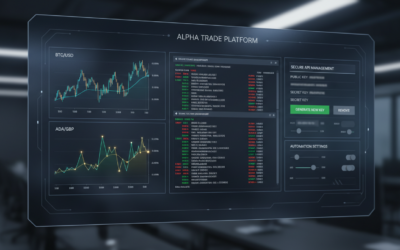
Setting up a self-hosted Freqtrade instance on a Virtual Private Server (VPS) involves deploying the open-source trading bot on a dedicated VPS to gain greater control, customization, and potentially lower costs compared to managed solutions. This setup is essential for serious crypto traders looking to optimize their trading bots’ performance and reliability.
TL;DR
- Self-hosting Freqtrade on a VPS gives you complete control over your trading bot’s environment, latency, and security.
- You avoid shared hosting risks like noisy neighbors, resource throttling, and third-party outages.
- A well-configured VPS can reduce latency to exchange APIs, improving execution speed for strategies that depend on timing.
- Initial setup requires command-line comfort, but the payoff is a robust, customizable, and low-cost automated trading system.
- Monthly VPS costs start around $10–$20, significantly cheaper than most cloud-hosted trading bot services.
- You retain full ownership of your strategies, logs, and keys—no black boxes, no vendor lock-in.
- Maintenance is required: you’re responsible for updates, backups, and monitoring.
Key takeaways
- Self-hosting Freqtrade on a VPS is the professional’s choice for reliability, latency, and control.
- Total cost is lower than managed services, with no hidden fees.
- Security is your responsibility—lock down your VPS and use restrictive API keys.
- This skill set has real career value in crypto and fintech.
What is Freqtrade and Why Use a VPS?
Freqtrade is an open-source algorithmic trading platform written in Python. It supports backtesting, strategy optimization, and live trading across multiple cryptocurrency exchanges. You define your strategy using customizable indicators, entry/exit logic, and risk management rules.
A Virtual Private Server (VPS) is a remote machine you rent from a hosting provider. Unlike shared hosting, you get dedicated resources (CPU, RAM, storage) and full root access. You control the OS, installed software, and security setup.
Why combine them?
Running Freqtrade on a VPS ensures:
- 24/7 uptime without keeping a local machine running.
- Low-latency connections to exchanges if your VPS is geographically close to exchange servers.
- Isolation from your personal network, reducing security risks.
- Resource consistency: no other applications compete for CPU or memory.
Why This Matters Now
Cryptocurrency markets operate nonstop. Manual trading isn’t scalable. Automated systems like Freqtrade enable around-the-clock strategy execution. But running a bot on your laptop or a Raspberry Pi introduces points of failure: power outages, internet drops, system crashes.
A VPS resides in a professional data center with redundant power, cooling, and gigabit internet. For traders serious about consistency, a VPS isn’t a luxury—it’s operational hygiene.
Moreover, as crypto trading grows more competitive, latency advantages matter. A VPS located in AWS us-east-1, for example, may shave milliseconds off order execution compared to a home connection. That can be the difference between filled and missed trades.
How Freqtrade on a VPS Works
At a high level:
- You rent a VPS from a provider (e.g., DigitalOcean, Vultr, UltraFX).
- You install a Linux OS (usually Ubuntu), then Python, Docker, and Freqtrade.
- You configure Freqtrade with your exchange API keys, strategy file, and settings.
- The bot runs continuously, polling exchange APIs for market data and executing trades per your strategy.
- You monitor performance via Freqtrade’s built-in web UI or Telegram bot.
The architecture is simple but powerful. Your VPS runs one or more Freqtrade instances, each with a dedicated configuration. You can trade multiple pairs or strategies in parallel without interference.
Real-World Use Cases
- Swing Trading Bot: A trader uses a VPS in Frankfurt to run a medium-frequency strategy on Binance. The VPS ensures uninterrupted operation during sleep or travel.
- Arbitrage Monitoring: A team runs a latency-optimized VPS in AWS Tokyo to spot price discrepancies between Japanese and U.S. exchanges.
- Backtesting Farm: A quantitative researcher deploys multiple Freqtrade instances to test hundreds of strategy variations simultaneously without bogging down a local machine.
Self-Hosted vs. Managed Solutions
| Aspect | Self-Hosted on VPS | Managed/Cloud Service |
|---|---|---|
| Cost | $10–$50/month | $30–$300+/month |
| Control | Full root and config access | Limited to UI options |
| Latency | You choose server location | Fixed, often unknown |
| Security | You manage keys and firewall | Vendor holds your keys |
| Uptime | Your responsibility | Vendor’s SLA |
| Customization | Unlimited | Restricted |
When to choose self-hosted:
- You have technical skills or willingness to learn.
- You trade seriously and want full control.
- Your strategy is proprietary or complex.
When a managed service might suffice:
- You’re new and want a quick start.
- You don’t want to handle sysadmin tasks.
- Your strategy is simple and low-frequency.
How to Choose and Set Up Your VPS
Choosing a Provider
Consider:
- Location: Proximity to your exchange’s API servers (e.g., Binance has servers in Tokyo, AWS us-east-1, etc.).
- Specs: Start with 1 vCPU, 2GB RAM, 20GB SSD. Scale up if running multiple bots or heavy backtests.
- Provider Reputation: Look for stability, support, and transparent pricing.
Some proven options:
| Provider | Starting Price | Key Feature | Best For |
|---|---|---|---|
| Vultr | $6/month | Global locations, hourly billing | Low-cost experimentation |
| DigitalOcean | $12/month | Simple UI, good docs | Beginners |
| UltraFX | Custom pricing | Low-latency optimized | High-frequency strategies |
| AWS Lightsail | $10/month | Integrated with AWS ecosystem | Those using other AWS services |
Step-by-Step Setup Guide
- Create a VPS Instance: Choose Ubuntu 22.04 LTS. Enable SSH key authentication—disable password logins for security.
- Secure the Server: Update packages, set up a firewall (UFW), and fail2ban to block brute-force attacks.
sudo apt update && sudo apt upgrade -y sudo ufw allow ssh sudo ufw allow 8080/tcp # For Freqtrade web UI sudo ufw enable - Install Docker and Docker-Compose: Freqtrade strongly recommends Docker for easy deployment and isolation.
sudo apt install docker.io docker-compose sudo usermod -aG docker $USER # Log out and back in to apply group changes - Deploy Freqtrade: Use the official Docker image.
docker pull freqtradeorg/freqtrade:stable # Create your configuration directory mkdir ft_userdata cd ft_userdata # Download the default docker-compose file curl https://raw.githubusercontent.com/freqtrade/freqtrade/stable/docker-compose.yml -o docker-compose.yml - Configure Freqtrade: Generate configuration templates:
docker run -v ./:/freqtrade/user_data freqtradeorg/freqtrade:stable new-config --config user_data/config.jsonEdit
config.jsonwith your exchange API keys, stake amount, and preferred pairs. - Start Trading: Launch in dry-run mode first to test.
docker-compose up -d - Access the Web UI: Visit
http://your-vps-ip:8080to view the trading dashboard.
Costs and Budgeting
- VPS: $10–$20/month for a basic instance. High-frequency setups may require $50+/month.
- Exchange Fees: Your usual trading fees still apply. Volume discounts may kick in.
- Network Costs: Usually included in VPS pricing. Watch for excess bandwidth charges if doing massive backtests.
- Your Time: Initial setup takes 2–3 hours if you’re experienced. Budget for ongoing monitoring.
A self-hosted setup is dramatically cheaper than platforms like 3Commas or CryptoHopper, which often charge percentage-based fees on volume or high monthly subscriptions.
Optimizing for Performance and Reliability
- Use SSD Storage: Faster read/write speeds for log files and database operations.
- Monitor Resource Usage: Use
htoporglancesto check CPU and memory. If Freqtrade uses too much RAM, reduce the number of pairs or increase the ticker interval. - Schedule Restarts: Cron jobs can restart the bot daily to clear memory leaks (rare but possible).
- Backtest Locally: Do heavy backtesting on your local machine to avoid VPS resource contention.
- Geographic Positioning: Use a VPS in the same region as your exchange’s API. For Binance, that often means Tokyo or AWS Virginia.
Risks and How to Mitigate Them
- API Key Exposure: If your VPS is compromised, attackers can withdraw funds. Mitigation: Use exchange API keys with IP whitelisting (allow only your VPS IP). Disable withdrawal permissions on the key.
- VPS Provider Failure: The host could have an outage. Mitigation: Choose a provider with a strong SLA. Have a backup VPS ready in another region.
- Bot Logic Errors: A bug in your strategy can lose money fast. Mitigation: Always run in dry-run mode first. Use tight stop-losses. Start with small capital.
- Data Loss: Your trade history and configs are on the VPS. Mitigation: Set up automated backups to cloud storage (e.g., AWS S3, Dropbox).
Myths vs. Facts
Myth: “A VPS guarantees profitable trading.”
Fact: It only guarantees uptime and low latency. Your strategy must be sound.
Myth: “Self-hosting is only for experts.”
Fact: Basic Linux and Docker skills are sufficient. Many guides exist.
Myth: “You need a powerful VPS for Freqtrade.”
Fact: A $10/month VPS handles most single-bot operations comfortably.
Myth: “Managed services are more secure.”
Fact: They can be, but you surrender control. With a VPS, you define the security.
How to Turn This Into a Career Advantage
Mastering Freqtrade and VPS deployment makes you valuable in several ways:
- Become a Bot Developer: Offer Freqtrade strategy development and hosting as a service. Charge monthly retainers or performance fees.
- Quantitative Analyst Roles: Showcase your backtesting and live trading results as proof of analytical skill.
- Infrastructure Consultant: Help trading firms set up low-latency, resilient bot infrastructure.
- Content and Education: Create advanced courses or write detailed guides (like this one). Affiliate links to VPS providers can generate revenue.
This isn’t just about making trades—it’s about building a skill set that intersects finance, programming, and systems administration.
Frequently Asked Questions
Can I run multiple bots on one VPS?
Yes. Use separate Docker containers or multiple config files. Monitor resources to avoid overload.
How do I update Freqtrade?
Pull the latest Docker image and restart the container.
Is Windows supported?
Freqtrade runs on Windows, but for a VPS, Linux is standard. Avoid Windows for a server.
What if my internet goes down?
The VPS continues running. You only need internet to access the web UI or SSH.
Can I use a VPN with my VPS?
Yes, but it may increase latency. Most traders use the VPS directly.
Key Takeaways
- Self-hosting Freqtrade on a VPS is the professional’s choice for reliability, latency, and control.
- Total cost is lower than managed services, with no hidden fees.
- Security is your responsibility—lock down your VPS and use restrictive API keys.
- This skill set has real career value in crypto and fintech.
Glossary
- Freqtrade: Open-source crypto trading bot platform.
- VPS: Virtual Private Server. A rented virtual machine with dedicated resources.
- Docker: Containerization platform that simplifies software deployment.
- API Key: Secure token allowing software to interact with an exchange account.
- Dry-Run: Mode where the bot simulates trading without placing real orders.
- Latency: Delay between sending an order and its reception by the exchange.
References
- Freqtrade Official Documentation
- DigitalOcean VPS Pricing
- Vultr Global Locations
- UltraFX Low-Latency Servers
- AI Unearths 23-Year-Old Linux Kernel Flaw: A New Era for Cybersecurity
- Iranian Missile Strikes on AWS: The New Reality for Cloud Security
This article was written based on available documentation and community knowledge as of 2026-04-05. Always verify with official sources before implementation.